


 For all latest news, follow the Daily Sun's Google News channel.


The general public in Bangladesh held a different kind of perception regarding Jamaat-e-Islami among the country’s political parties. Despite their opposition to the 1971 Liberation War and allegations of various crimes against humanity as accomplices of the Pakistani occupation forces, Jamaat was rehabilitated in Bangladeshi politics, largely based on certain public perceptions. Many people considered Jamaat leaders to be relatively honest, and devout Muslims favored their attentiveness to religious practices.
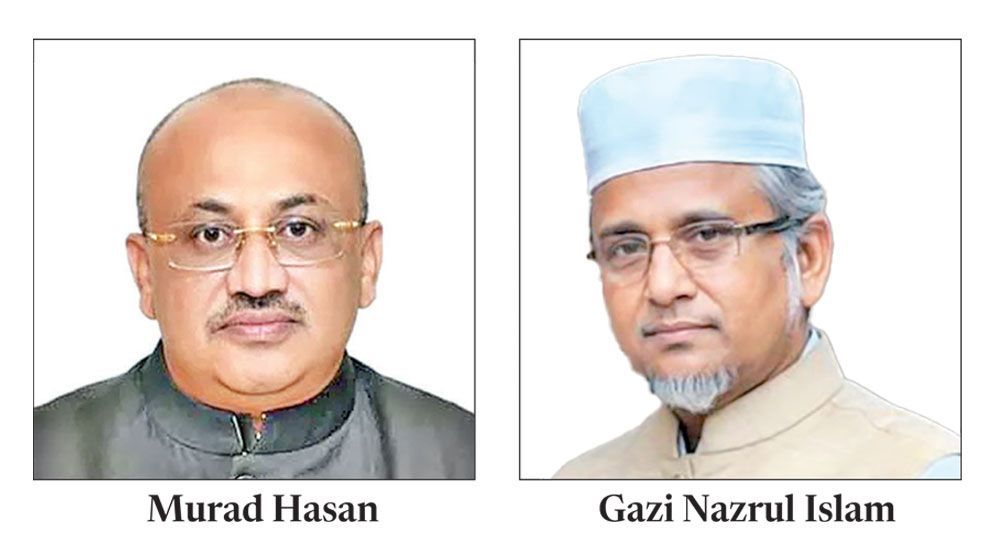
However, this public perception of Jamaat suffered a major blow following the leak of an intimate video involving Gazi Nazrul Islam, the Jamaat member of parliament (MP) elected from the Satkhira-4 constituency. For two days, this video of Gazi Nazrul created a stir from social media to the political arena.
Although Jamaat initially wanted to adopt a “go-slow” policy regarding the issue, the party made the right decision on Wednesday afternoon. Due to proven moral turpitude, Gazi Nazrul Islam, the MP for the Satkhira-4 (Shyamnagar-Kaliganj) seat, was expelled from Bangladesh Jamaat-e-Islami.
This decision was taken at an emergency meeting of the Central Executive Council of Bangladesh Jamaat-e-Islami, held at 4pm on Wednesday at the Official Residence of the Leader of the Opposition on Minto Road in the capital. The meeting was presided over by the party’s Ameer, Dr Shafiqur Rahman MP, with members of the Executive Council in attendance.
As a result of this decision by Jamaat, Gazi Nazrul’s seat in Parliament will be vacated. The meeting also decided to immediately inform the Bangladesh Election Commission about the expulsion. Consequently, a politician’s career has come to an end due to a scandal involving a woman.
No matter how strict the measures Jamaat has taken against him following the incident, the party’s slogan of “honest people and honest governance” has taken a massive hit. Many have raised the question: Is even Jamaat vulnerable in the end?
This incident brings another critical issue to the forefront: being close to power leads to political degeneration in everyone, and corruption can set in even within faith-based political parties. The ideological position that Jamaat previously took pride in has now been tarnished to some extent.
This serves as a warning not just for Jamaat, but for all political leaders and activists across Bangladesh. Politicians are public figures; they constantly interact with the people. The distinguished Indian politician and former President, Pranab Mukherjee, wrote in his autobiography that politicians have no strictly private life—their lives are like an open book. Similarly, the late former Secretary General of the BNP, Khandaker Delwar Hossain, wrote: “Those of us who are politicians are always under the surveillance of the public.”
Millions of eyes monitor every move, speech, and action of a politician. This applies to political leaders around the globe. That is precisely why Bill Clinton’s intimacy with Monica Lewinsky broke through the security barrier of the White House to become the center of public discussion, eventually forcing him to face impeachment. Former Canadian Prime Minister Justin Trudeau left politics to pursue a relationship with American singer Katy Perry.
Extramarital affairs, scandals, or moral turpitude cannot coexist with politics. Just as people reject corrupt and rogue politicians, they equally despise unethical actions by public leaders. What the former Jamaat leader did was not only unethical, but also wrong.
Earlier in 2020, Dr Murad—a former State Minister from the Awami League—faced severe criticism after abusing a film actress using vulgar and indecent language, which ultimately cost him his cabinet position. Such incidents create negative perceptions about politics and political leaders.
The majority of politicians in Bangladesh maintain healthy family relationships, and most lead clean personal lives. However, the entire political field gets a bad name due to a few reckless leaders like Murad and Gazi.
This incident should serve as a wake-up call for political parties and their leaders. To ensure that the unethical actions of an MP from a cadre-based and disciplined party like Jamaat do not create a general aversion toward the entire political arena, all political parties must prioritize the practice of morality and values among their members. Parties need to elevate their ideological standards and consciousness. It is far more important to be a person of integrity than to simply be a popular leader.
Audite Karim is a writer and playwright.
Email: [email protected]