


 For all latest news, follow the Daily Sun's Google News channel.


BSEC to halt trading of non-operational firms
Regulator also plans to simplify IPOs, expand direct listings, introduce T+1 settlement and derivatives trading, and tighten enforcement against market misconduct
Daily Sun Report, Dhaka
Published: 10 Jul 2026, 12:00 AM
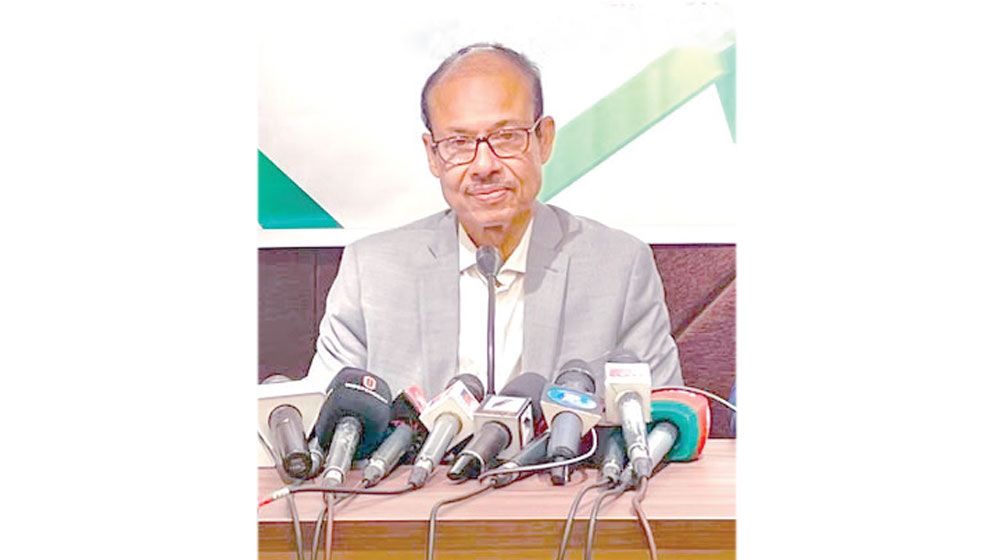
The Bangladesh Securities and Exchange Commission (BSEC) Chairman Masud Khan has announced that the regulator will halt share trading for companies that stay non-operational for long periods.
Speaking at the CMJF Talk in Dhaka on Thursday, he outlined a broader reform agenda to strengthen the capital market.
The planned updates include simplifying the IPO process, expanding direct listing options, easing margin loan rules, and shifting to a T+1 settlement system.
The regulator also plans to launch a derivatives market and amend laws to ensure effective punishment for market misconduct.
The discussion, organised by the Capital Market Journalists Forum (CMJF), was chaired by CMJF President Monir Hossain and moderated by General Secretary Ahsan Habib Rasel.
BSEC chairman said no capital market in the world allows trading in the shares of companies that have ceased operations, adding that Bangladesh would also take steps to halt trading in such firms.
He said significant changes have already been made to market supervision.
Previously, the Dhaka Stock Exchange (DSE) had to obtain BSEC approval before taking action against unusual price movements or suspicious trading.
The DSE has now been authorised to take immediate action, while the authority to set circuit breakers has also been delegated to the exchange. Its regulatory powers will be expanded further, he added.
Masud Khan stressed that strengthening the mutual fund sector is essential for developing the capital market, as most retail investors lack the expertise to identify fundamentally strong companies.
To address this, the commission plans to introduce a certification system for financial advisers, modelled on international practices, alongside amendments to the Mutual Fund Rules.
He said the Margin Loan Rules and Public Issue Rules would also be revised.
The existing margin loan framework contains too many conditions, making it difficult for investors to access financing, he said.
A draft of the revised rules will be published next week, and obtaining margin loans will become much easier after the gazette notification is issued.
On IPOs, Masud said companies currently face lengthy approval processes and extensive documentation requirements, prompting many entrepreneurs to rely on bank financing instead of raising capital through the stock market.
The BSEC is therefore working to simplify the IPO process to attract more quality companies to the market.
Regarding direct listing, he said only state-owned enterprises are currently allowed to list directly by offloading 25% of their shares.
Under the proposed framework, large private companies such as Unilever and Incepta would also be allowed to pursue direct listings by offloading just 10% of their shares.
The BSEC chief also announced plans to shorten the securities settlement cycle from T+2 to T+1, allowing transactions to be settled within one business day.
He noted that the commission decided to withdraw the floor price mechanism despite criticism after assuming office.
He also said the regulator had taken steps to prevent the delisting of Beximco Pharmaceuticals from the London market to protect Bangladesh's international image.
Highlighting the need for stronger enforcement, Masud said that although the BSEC imposes fines on market offenders, most penalties become tied up in court proceedings.
A previous commission imposed nearly Tk1500 crore in fines, but only Tk33 lakh was ultimately recovered, he noted.
To address the issue, the commission is working to establish a special judicial bench and amend the law to allow capital market cases to be filed directly with the relevant tribunal, enabling more effective imprisonment and financial penalties for offenders.
To develop the bond market, bonds currently traded on the Alternative Trading Board (ATB) will be shifted to the main market. Preparations are also underway to introduce a derivatives market.
Reflecting on his leadership approach, Masud said he spent nearly three months preparing a comprehensive roadmap for capital market reforms before joining the BSEC.
Drawing on his experience in multinational companies, he said effective planning is the foundation of successful execution.
He also said the positive changes made to the final national budget compared with the proposed budget resulted from sustained efforts behind the scenes.
He added that he accepted the role of BSEC chairman only after becoming convinced that the current government supports capital market development and after receiving assurances that he would be able to perform his duties independently.