



 For all latest news, follow the Daily Sun's Google News channel.


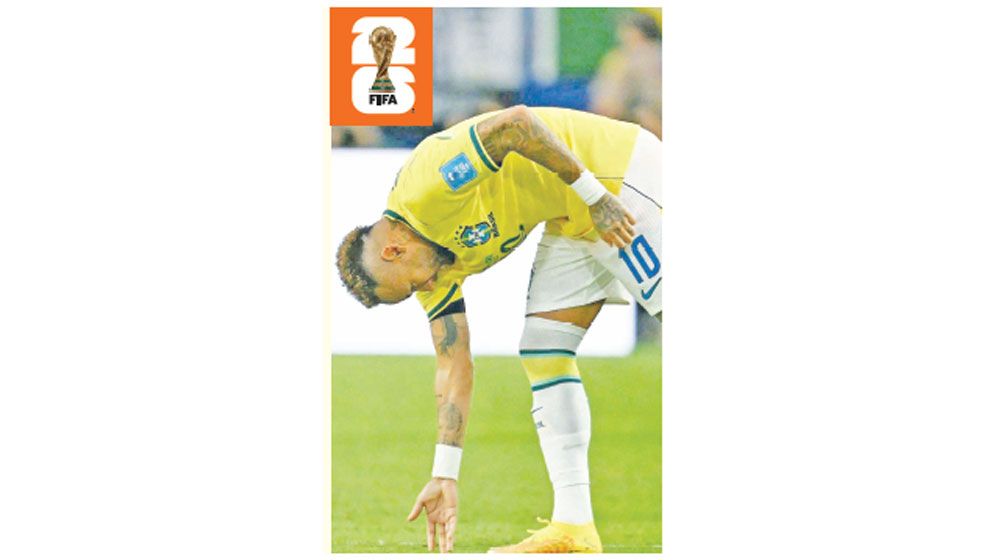
The number that kept coming back was 981. Not goals, neither caps, nor transfer fees — days. Nine hundred and eighty-one days since Neymar last wore the canary yellow of Brazil in a competitive match, stretching away from him like a highway through the dark. In Montevideo in October 2023, he had gone down clutching his knee, been stretchered off the pitch, and disappeared into a rehabilitation corridor that seemed to have no exit. The Anterior Cruciate Ligament and meniscus tore together, taking him out of the 2024 Copa America squad and leaving him on the margins of a tournament that Brazil was supposed to define. The world moved on. New stars emerged. And Neymar, 34 and running out of road, became a question mark hovering over Miami in the Florida heat.
Then, on a Wednesday night at Hard Rock Stadium, the 76th minute arrived.
The majority-Brazilian crowd had been chanting his name midway through the second half, watching him rise from the bench and begin doing warmup sprints on the sideline. When he stepped onto the pitch, replacing the excellent Matheus Cunha, the Miami crowd — full of adoring Brazilians — almost rose as one. The noise wasn't the noise of a football crowd reacting to a substitution. It was something older and more private: a generation recognising itself in a man who had been away too long.
Neymar admitted afterwards that he was "really nervous" when he ran onto the field. You could understand why. This was not merely a return to competitive football. This was the closing of a circle that began when a teenage boy from Mogi das Cruzes dribbled his way onto the world's imagination and made Brazil feel like Brazil again. He has now appeared at the 2014, 2018, 2022, and 2026 World Cups — four editions, four eras, four different versions of Neymar navigating the same impossible weight of expectation. The 2014 tournament was on home soil and ended in tears. In Russia and Qatar, he carried injuries and controversies in equal measure. Here in America, he carried something simpler and sadder: the knowledge that this is almost certainly the last time.
The game itself was done before he arrived. Vinicius Junior had picked Scott McKenna's pocket in the seventh minute to open the scoring, headed in a Bruno Guimaraes delivery just before half-time for his second, and Cunha added a flowing third on the hour. Brazil were unhurried, imperious, topping Group C with the air of a team that has not yet begun to try. Vinicius became the fifth Brazilian to score in all three group-stage games, joining Jairzinho, Romario, Ronaldo, and Rivaldo — and Brazil won the World Cup on each of those occasions. The symmetry was not lost on anyone.
But the statistics of the night felt secondary to the image: a number 10, in yellow, back where he belongs. Neymar finished his 14-minute cameo with 24 touches, three chances created and a shot on target, though some rust was evident on the physical side. It did not matter. What mattered was that he was there, moving through space, doing the things only he does — the shimmy, the dip of the shoulder, the invitation to tackle that always ends the same way. After the final whistle, he posted on Instagram: "REMEMBER WHO YOU ARE."
It read less like a message to followers than a reminder to himself. Whatever the knockout rounds bring — and Carlo Ancelotti's Brazil will be among the last teams anyone wants to face — Neymar has already achieved something that the long corridor of injury nearly denied him: a last chance to be seen. The decade that produced Maracana glory and Belo Horizonte heartbreak, ACLs and court cases and Saudi detours, has delivered him, battered but present, to Miami in June 2026.
The crowd remembers. That was always the point.