



 For all latest news, follow the Daily Sun's Google News channel.


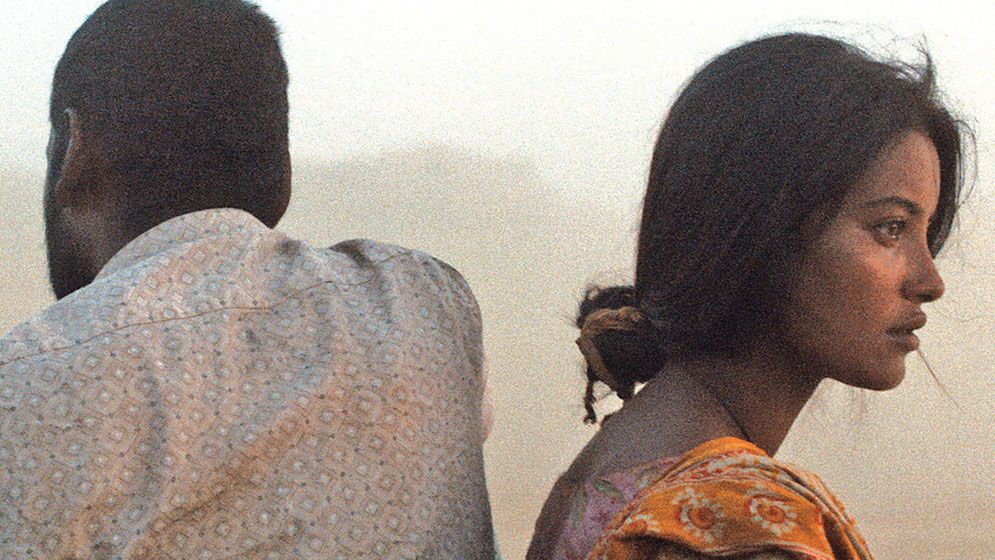
A scene from the film
Not all films simply tell stories. Some films awaken ancient memories buried deep within the human soul. Director Mejbaur Rahman Sumon’s “Roid” is one such cinematic experience. Its narrative may appear small and intimate, yet the emotions it evokes feel timeless. The story unfolds within a modest rural landscape, but its echoes resonate far beyond its geographical boundaries.
At the heart of the film is Shadhu, portrayed with remarkable restraint and depth by Mostafizur Noor Imran. A lonely shepherd living on the fringes of society, Shadhu carries within him a profound sense of exile and longing. Beside him stands his mentally unstable wife, played brilliantly by Nazifa Tushi. Together, along with the palm tree that silently watches over their home, they form the centre of a mythic universe crafted by Mejbaur Rahman Sumon.
The loneliness of Shadhu often feels inseparable from the loneliness of humanity itself. His isolation, fear and yearning evoke the image of the first exiled human being (Adam). In contrast, Tushi’s character emerges as a mysterious and almost spiritual presence. Through her madness, motherhood and quiet resilience, she transcends the boundaries of a conventional character. Nazifa Tushi does not merely act in “Roid”; she becomes a symbol of an ancient miracle wandering through human memory. Likewise, Mostafizur Noor Imran delivers a performance that feels deeply rooted in folklore, embodying a man whose sighs seem destined to echo across generations.
“Roid” is not a film driven by dramatic incidents or plot twists. Instead, it is a meditation on repetition, longing and the cyclical nature of existence. The story moves through phases of family, discomfort, separation, return and loss, only to revisit them again and again. Time in “Roid” does not appear to move in a straight line; it circles back upon itself, creating a haunting sense of inevitability.
Within this cycle lies the film’s most powerful metaphor. There is no forbidden fruit (Gondhom) here, yet the idea of desire remains central. Desire becomes a shadow--an invisible force that shapes human behaviour. It is the love people try to leave behind but cannot escape. It is the memory they attempt to abandon, only to hear its footsteps returning from afar. Through these themes, “Roid” gradually transforms itself from a simple rural drama into a modern myth.
Mejbaur Rahman Sumon’s achievement lies in his willingness to challenge conventional storytelling. In an era when the film market often prioritises spectacle, speed and clear-cut resolutions, he chooses silence, ambiguity and emotional depth. Where mainstream cinema seeks answers, Sumon embraces mystery. This artistic decision is not merely aesthetic; it is also a cultural and historical statement.
The film’s location plays a crucial role in building that emotional geography. At times, it feels as though the true protagonist of “Roid” is not a person but the landscape itself. The clay courtyards, palm trees, ponds, paddy fields, fog-covered mornings and endless stretches of greenery are more than visual elements.
A major contributor to this atmosphere is cinematographer Xoaher Musavvir. His camera work is exceptional throughout the film. The cinematography not only captures beauty but also deepens the emotional and symbolic layers of the narrative.
The performances are another significant strength. Every actor is given room to breathe, and each makes the most of that opportunity. Their naturalistic portrayals lend authenticity to a story that often ventures into the realm of myth and metaphor.
Credit must also go to the producers who chose to support such an unconventional project.
Ultimately, “Roid” is neither a straightforward story nor a fantasy. It is a melancholy myth sleeping within humanity’s oldest memories. Through its poetic imagery, powerful performances and bold artistic vision, Mejbaur Rahman Sumon has created a film that lingers long after the credits roll. Sumon and his entire team deserve applause for “Roid”.