


 For all latest news, follow the Daily Sun's Google News channel.


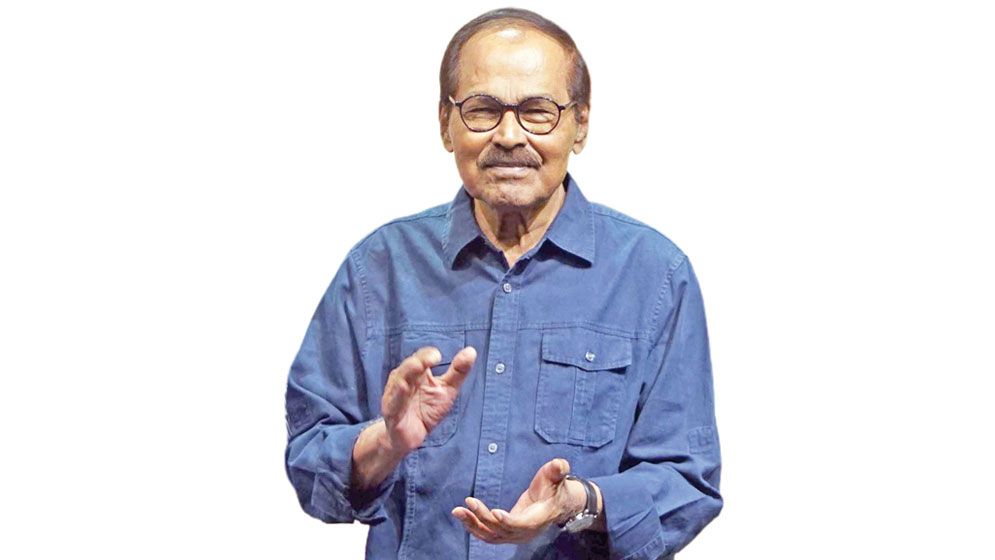
Legendary Bangladeshi singer Syed Abdul Hadi has been honoured with a special recognition for his outstanding contribution to music. The award was presented at a colourful programme titled “Kaljoyi Kontho: Shraddha O Bhalobasai Syed Abdul Hadi”, organised by Bangladesh Shilpakala Academy under the patronage of the Ministry of Cultural Affairs. In a candid conversation at his residence, the veteran artiste spoke about the honour, his health, the evolution of Bangladesh’s music industry and the challenges facing young musicians today. He also reflected on his long and illustrious career, sharing memories, observations and concerns about contemporary music. The Daily Sun’s Md Jahidul Islam brings excerpts from the interview.
How are you doing these days?
I cannot say I’m doing very well. Age has caught up with me. Since the Corona pandemic, my physical condition has not been the same. I tend to forget things more often now, and my memory is not as sharp as it used to be. These are natural consequences of growing older, but I try to remain positive.
Do you still sing regularly?
My desire to sing professionally has diminished considerably. After being infected with Covid-19, I developed some physical complications, and I can no longer sing the way I once could. I have always believed that whatever I leave behind should be beautiful and dignified. There is no point in forcing something that cannot be done properly. I do not want to deceive audience by appearing on stage and lip-syncing to old recordings. However, an artiste never truly retires. Even if I’m not performing publicly or recording new songs, I still sing for myself. Music remains a part of my life and identity.
You have recently been honoured with a special recognition. How do you feel about it?
Any award brings joy. It is especially meaningful when such recognition comes after a lifetime devoted to music. I’m sincerely grateful to the Ministry of Cultural Affairs and Bangladesh Shilpakala Academy for honouring me in this way. Over the years, I have received many awards and accolades, but the greatest achievement of my life remains the love and respect of the people.
What is your assessment of today’s music?
I believe much of today’s music lacks artistry. Songs are increasingly being created with the sole intention of becoming viral. Instead of focusing on artistic quality, many people are focused on attracting attention. As a result, many songs that become popular today fail to leave a lasting impression. They may enjoy temporary success, but they rarely remain in people’s hearts.
In our time, songs were built on meaningful lyrics and memorable melodies. That is why many of those songs are still cherished today. Music that touches the heart has a lasting life.
How do you view the efforts of young musicians today?
I have no doubt that many young people are working very hard. They are passionate and dedicated. However, I feel their focus is often directed towards becoming popular as quickly as possible.
The mindset seems to be centred on whether something will attract immediate attention rather than whether it will endure over time. Hard work is important, but artistic vision is equally important.
Do you think original music is declining?
There are two different things--a singer and an artiste. Not every singer becomes an artiste. A person can learn to sing and become a singer. But becoming an artiste requires something deeper. An artiste must possess creativity, individuality and artistic sensitivity. He or she must express a unique identity through performance and interpretation.
In our time, every artiste had a distinctive style. If a song came on the radio, listeners could instantly identify the singer. Each artiste had a unique voice and presentation.
Today, many singers sound similar. It has become difficult to distinguish one from another. That is why I often say that nowadays everyone is becoming a singer, but very few are becoming artists. There are exceptions, of course, but they are relatively rare.
Are modern platforms helping music reach audience more effectively?
Certainly. Through the internet, songs can now reach audience with incredible ease. Anyone can listen to almost any song with a simple click.
In our time, listening to music required patience. We waited in cinema halls to hear popular songs. Records were expensive and not always available. We would listen to the same records repeatedly because options were limited.
If songs spread so quickly today, why do many of them disappear just as quickly?
Because many songs are not created with longevity in mind. People are no longer thinking about permanence. Let me give you a rough example--when we were children, we used to see advertisements saying, you buy a Rolls Royale car, you will drive it, your child will drive it, his child will drive it. In other words, it was a matter of permanence. Today, everything is designed to be replaced quickly. This culture of constant replacement has entered every aspect of life, including music. Songs are often consumed rapidly and forgotten just as rapidly.
Some young singers emerging through digital platforms are talented, while others are less skilled. Is this due to a lack of patronage?
I do not think patronage is the problem. In fact, opportunities today are greater than ever before. When I began my career, radio was our only platform. Initially, I earned just ten taka for singing. Later, television arrived, but opportunities remained limited. There were only a handful of films each year and only a few songs within them.
Yet we continued to practise and improve ourselves. Today, anyone can create a channel online and share music with audiences around the world. The opportunities are immense; the challenge lies in using them wisely.
Among the many songs you have recorded, is there one that is especially close to your heart?
It is very difficult for an artiste to choose a favourite song. Songs are like children. Just as a parent finds it difficult to favour one child over another, an artiste feels the same way about his creations. Every song carries a different memory, emotion and experience. Therefore, selecting one favourite is almost impossible.
Is there any untold story from your musical career?
I was always very selective about the songs I sang. If I did not like a song, I would simply refuse. However, there were one or two occasions when circumstances compelled me to sing songs that I was not entirely comfortable with. Looking back, I sometimes feel embarrassed about those decisions. But life is never perfect. Every person experiences moments of compromise, disappointment and failure. I’m no exception. Fortunately, I learned to accept those moments and move forward.
Many artistes have entered politics over the years. Were you ever offered such opportunities?
Yes, there were several attempts to involve me in politics or offer me political positions. However, I always chose to stay away from active politics. Even senior political leaders invited me on different occasions, but I declined. I believed my responsibility was to music and culture, and I preferred to remain focused on that role.
Do you have any regrets in life?
No one can honestly say that they have achieved everything they wanted. Every life contains both achievements and disappointments. Artists, in particular, live with a certain degree of dissatisfaction. That feeling encourages creativity and inspires them to keep striving for something new.
My life has also included both successes and failures, but I have never spent much time calculating them. What matters most to me is that I have received love and respect from people. Love without respect has little value, and respect without affection feels incomplete. I consider myself fortunate because the people of this country have given me both. For that, I remain deeply grateful.