


 For all latest news, follow the Daily Sun's Google News channel.


“Things fall apart; the centre cannot hold.”
-- W. B. Yeats
In his poem “The Second Coming”, Yeats wrote those words from a world filled with fear, disorder and broken certainty. The line still feels painfully close to societies where buildings stand, offices open, budgets are passed, elections are arranged, yet something inside public life begins to loosen. A country does not lose its centre only through coups, disasters or visible collapse. It loses it when citizens stop believing that fairness can reach them.
Tk 4,401 crore has been proposed for the Election Commission Secretariat in FY2026-27. At first, the figure may sound like another dry budget entry. But it arrives at a charged moment. Local government elections are expected after a long pause, first in post July uprising. The proposed allocation is almost 49 per cent higher than the initial amount in the outgoing fiscal year. Ballot papers, polling centres, voter lists, NID services, training, technology, security, field-level management – all of this need money. No credible election can run on emotion alone. Still, money can arrange a polling centre; it cannot remove the heaviness in a voter’s chest. A citizen may stand in line with an ink-ready finger and still feel that power has already made its private arrangement somewhere else. That is the cost missing from budget documents: disbelief.
Local elections are not small matters. They enter life through the narrowest doors, a broken road beside a house, a drain that keeps overflowing in the rain, a birth certificate that takes too many visits, a relief list where one name appears and another disappears, a school committee shaped by influence or a local dispute left unresolved because no powerful person made a call. These are the places where people meet the state without grand speeches. When local institutions become expired, captured, careless, or too loyal to one group, citizens learn a humiliating lesson: the state exists, but access belongs to someone else. That lesson does not produce calm citizens. It produces tired citizens and suspicious citizens who begin to treat every office as a negotiation and every public decision as a favour given to someone with better connections.
A vote should do something quietly powerful. It should remind an ordinary person that public office is temporary, that authority can be questioned and that even a local chairman or councillor must return to people for permission. That is the moral beauty of elections. Yet that beauty disappears when voters feel useful only during campaigns. It disappears when a poor household becomes visible only during relief distribution. It disappears when candidates arrive with folded hands before voting day and closed doors after victory. This is why the coming local polls carry more weight than routine administration. They will reveal whether public life can still produce accountability at the closest level.
The bitterness in society has a material root. According to the World Bank’s Bangladesh Poverty and Equity Assessment 2025, nearly 62 million Bangladeshis, about one-third of the population, remain vulnerable to falling back into poverty after illness, disaster or another shock. This number has a human face. It is the father doing mental arithmetic before paying school fees. The mother skipping her own medicine quietly. The young graduate watching another year pass without stable work. The family pushed backwards by one hospital bill. Bangladesh Bureau of Statistics data show that the income Gini coefficient rose from 0.458 in 2010 to 0.499 in 2022, pointing to widening income inequality. Some people move ahead fast; many others stand still and watch from the side. In such a climate, comparison becomes a daily habit. Who got the job? Who received the contract? Who found the recommendation? Who entered the list? Pain becomes arithmetic. Public life begins to feel like a ledger of wounds.
Politics then takes this wounded mood and gives it sharper teeth. Democracy is praised in speeches, yet practiced too often as a trophy for one camp and punishment for another. Patriotism becomes a badge people pin on themselves and snatch away from others. A neighbour becomes loyal or disloyal. A citizen becomes religious, secular, elite, ignorant, progressive, reactionary, patriot, traitor. These labels are small prisons. They remove the face of the person. Once the face disappears, insult feels lighter. Exclusion begins to sound reasonable. Revenge borrows the language of justice. This is the real danger around the coming local polls. If elections become another season of money, muscle, fear, party favour, and neighbourhood intimidation, Tk 4,401 crore will not buy renewal. It will buy another round of public exhaustion. Transparency International’s 2025 Corruption Perceptions Index gives Bangladesh a score of 24 out of 100 and ranks it 150th among 182 countries. Corruption does more than steal funds. It trains people to expect manipulation before fairness.
So, the proposed EC allocation should be read as a test of public repair, not merely a financial provision. Bangladesh needs credible local elections. It needs officials who treat neutrality as a duty, not as a word printed in training manuals. It needs candidates who do not treat voters as property. It needs citizens who refuse to become clients of fear, favour, or blind loyalty. It needs political actors who can lose without turning bitterness into revenge. None of this can be fully covered by a budget. Yet public money can either strengthen belief or deepen disbelief. Ballots may reopen the local political field, but they cannot heal civic life by themselves. The centre Yeats spoke of cannot hold through procedures alone. It holds when power becomes answerable, when disagreement is allowed to breathe, when public office stops behaving like private territory, and when citizens feel that the country still has room for them without requiring surrender of dignity.
_____________________________________
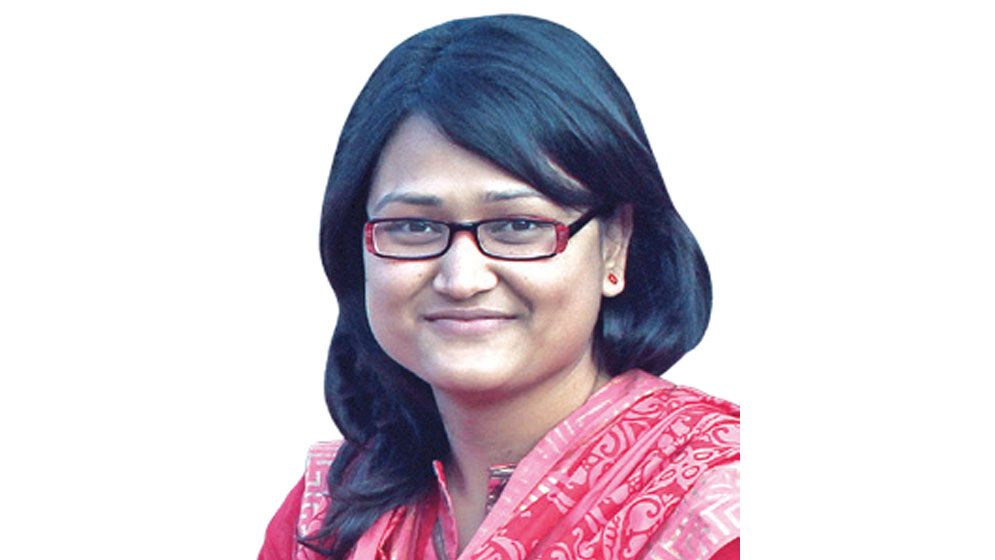
The writer is an Assistant Professor in the Department of Philosophy at IUBAT and is currently on study leave, residing in Oslo, Norway