



 For all latest news, follow the Daily Sun's Google News channel.


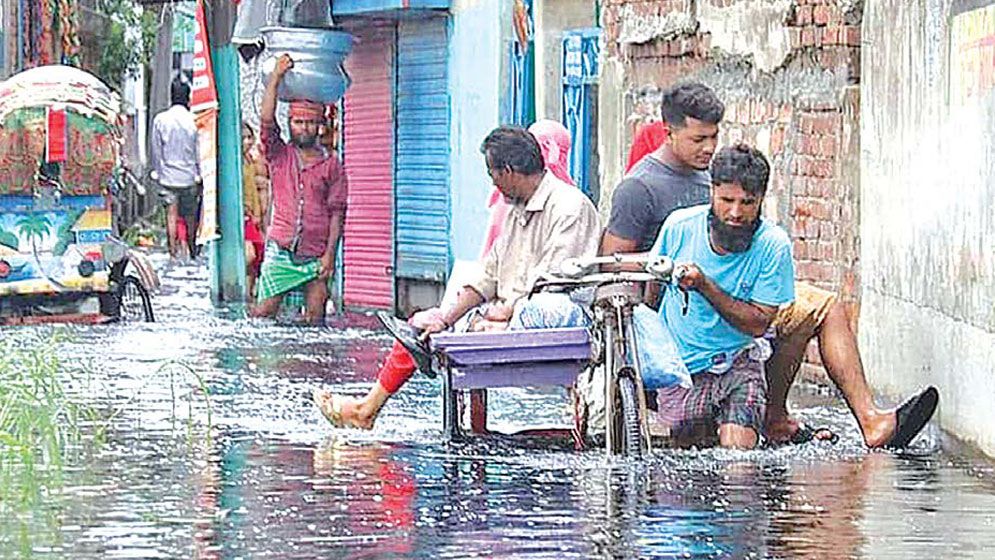
With the monsoon approaching, nearly two million residents of the Dhaka-Narayanganj-Demra (DND) embankment area are once again fearing severe waterlogging, a recurring problem that disrupts daily life across large parts of Narayanganj.
Residents of Fatullah, Pagla, Muslimnagar, Giridhara, Tushardhara, Lalpur, Delpara and Sanarpar said roads become submerged within hours of rainfall, often making it difficult to distinguish roads from drains and canals. The situation hampers movement, business activities, education and other essential services.
Locals said the region has long suffered from chronic waterlogging despite repeated promises and development initiatives. They expressed concern that prolonged water stagnation during the rainy season could increase the risk of dengue and other water-borne diseases, particularly among children and the elderly.
Abdul Quader, a resident of Muslimnagar, said broken roads and hidden potholes become dangerous when submerged, leading to accidents every year. Rehana Akhter of Giridhara said heavy rainfall often prevents children from attending school and confines residents to their homes.
Businessman Md Shaheen said even a single day of rain can force shops to remain closed for several days as floodwater enters business establishments. He stressed the need for long-term solutions, including canal restoration, modern drainage systems, regular waste management and planned urban development.
District authorities, however, said measures are being taken to mitigate waterlogging during the upcoming monsoon. Narayanganj Deputy Commissioner Raihan Kabir described the DND waterlogging problem as a longstanding and complex issue but said all relevant agencies had been instructed to work in coordination to reduce public suffering.
According to the district administration, initiatives have already been undertaken to clean major canals, remove illegal encroachments, ensure the operation of sluice gates and pumping stations, and improve drainage capacity. Additional pumps will also be deployed to accelerate water removal during heavy rainfall.
The deputy commissioner said local government bodies, the Water Development Board, the city corporation and the district administration would jointly monitor vulnerable areas and work to prevent prolonged waterlogging during the rainy season.