



 For all latest news, follow the Daily Sun's Google News channel.


File Photo: Collected
The modern State of Israel did not exist before 1948. Following the United Nations partition plan of 1947, a Jewish state was established in a territory that had long been inhabited predominantly by Palestinian Arabs, including both Muslims and Christians. For the original Palestinians, this marked the beginning of a historic tragedy that would reshape the Middle East and continue to influence global politics to this day.
The events surrounding the establishment of Israel remain one of the most contested chapters of modern history. Palestinians refer to the period of 1947–48 as the Nakba (“catastrophe”), during which hundreds of thousands of innocent Palestinians were forcefully ousted from their homes and villages. According to the historical accounts, more than 530 villages were occupied, and over 700,000 Palestinians were evicted from their homes and made refugees in their own land. This was a clear violation of the United Nations charter which says no nation has the authority to dispossess indigenous inhabitants of their ancestral homes and lands.
Prior to the creation of Israel, land ownership in Palestine was overwhelmingly in Arab hands. In 1940, approximately 94 per cent of the land was owned by Arabs and about 6 per cent by Jews. Nevertheless, following the declaration of the State of Israel by David Ben-Gurion on 14 May 1948, the new state controlled around 55 per cent of the territory of Mandatory Palestine.
The territorial transformation accelerated after the Arab-Israeli War of 1967. During the Six-Day War, Israel captured the West Bank, East Jerusalem, Gaza, the Sinai Peninsula from Egypt, and the Golan Heights from Syria. These developments further displaced Arab populations and created additional waves of refugees. Today, more than 85 per cent of historic Palestine is under Israeli occupation with full control or influence.
In fact, the history of the Zionist state is fundamentally a story of continuous territorial expansion. They argue that the long-term objective has been to absorb as much Palestinian land as possible while steadily weakening Palestinian national aspirations and denial of the hope of the state of Palestine. Supporters of this view point to the continued expansion of Israeli settlements in the occupied West Bank and the absence of a permanently defined international border for Israel.
Over the decades, Israel has justified many of its military actions under the principle of self-defence and its “right to exist". Critics, however, contend that this principle has evolved into what they describe as a policy of continuous expansion backed by overwhelming military superiority and unwavering support from the United States and key Western allies.
Historical examples frequently cited by critics include the 1956 Suez Crisis, when Israel joined Britain and France in military action against Egypt, and the 1967 attack on the USS Liberty, in which 34 American servicemen were killed and 171 wounded. Israel has also conducted major military operations in Lebanon, notably during the 1982 Lebanon War and again in 2006.
Similarly, Gaza has been the target of repeated military campaigns, including major operations in 2008–09, 2012, 2014 and the ongoing conflict since October 2023. These wars have resulted in extensive civilian casualties and widespread destruction, drawing condemnation from humanitarian organisations and international agencies.
Another controversial issue concerns Israel’s undeclared nuclear capability. Although widely believed to possess nuclear weapons, Israel has neither officially confirmed nor denied their existence. Unlike many countries, Israel has not signed the Nuclear Non-Proliferation Treaty (NPT). Critics argue that this demonstrates a double standard in the application of international norms and accountability.
Human rights concerns have become increasingly prominent in recent years. Allegations regarding the treatment of Palestinians in Gaza, the West Bank and Israeli detention facilities have been raised by various international organisations and media outlets. Reports of mistreatment, abuse and restrictions on humanitarian assistance have intensified scrutiny of Israeli policies.
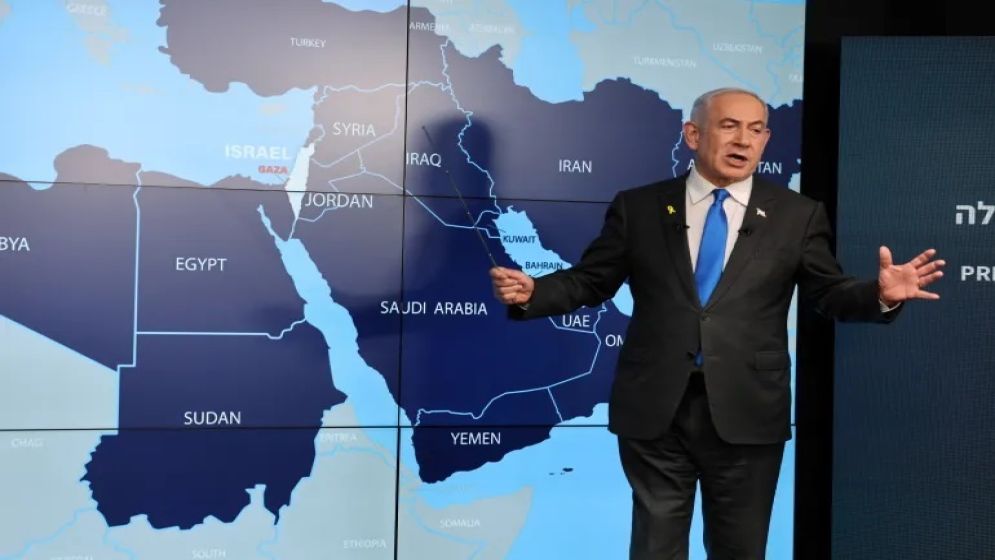
Israel has engaged in military conflicts with nearly all of its neighbours, including Egypt, Jordan, Lebanon, Syria, Iraq, Sudan and, more recently, Iran. Critics point to the emergence of maps depicting a “Greater Israel” that encompass territories extending beyond present internationally recognised borders. Whether symbolic or ideological, such concepts have raised concerns throughout the Arab world regarding future territorial ambitions. As per the “Greater Israel” map, the Zionist state plans to take over almost all Arab states, much beyond Palestine, into the state of Israel.
The conflict has also had significant implications for broader regional stability. It is argued that diplomatic efforts regarding Iran have repeatedly been undermined by geopolitical considerations and pressure from Israeli leadership. Continued military confrontations in Gaza, Lebanon and elsewhere have contributed to instability throughout the Middle East while negatively affecting the global economy.
Bangladesh has long recognised the State of Palestine, joining the overwhelming majority of nations worldwide in doing so. It should continue to advocate for adherence to international law, an end to the humanitarian crisis in Gaza, a halt to settlement expansion in the West Bank, and a peaceful resolution to one of the world’s longest-running conflicts.
The future of the Middle East depends not on military dominance but on justice, accountability, respect for international law, and a negotiated peace that recognises the rights, security and dignity of all peoples in the region.
The writer is an Emeritus Professor, University of Southern Queensland, Australia, and former Vice-Chancellor, Asian University of Bangladesh