


 For all latest news, follow the Daily Sun's Google News channel.


The world’s political landscape is shifting in ways that many traditional politicians still struggle to comprehend. Across South Asia, a new generation is emerging not from party headquarters, political dynasties or elite institutions, but from rap studios, social media platforms, YouTube channels, film screens and even satirical online movements. They are the voices of Generation Z, often operating beyond the supervision of institutions and increasingly beyond the control of even their own families. Their influence now stretches far beyond what political veterans once thought possible. They are shaping conversations, challenging authority, mocking outdated systems and building movements from smartphones rather than political offices. Governments may regulate public gatherings, censor speech or arrest individuals, but controlling a generation’s mindset is proving far more difficult.
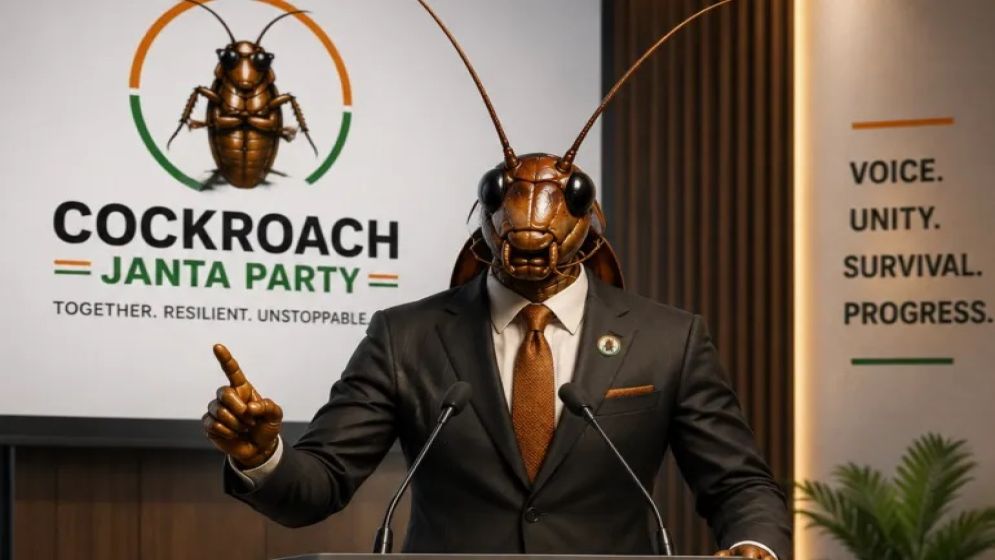
India offers one of the most striking examples, right now which has amassed over 22 million followers within weeks of its launch. The satirical “Cockroach Janta Party”, launched by youth activist Abhijit Dipke who formed this while in the USA, emerged after a senior government official reportedly mocked young people of India by comparing them to being “lazy and like cockroaches”. Instead of rejecting the insult, many youths embraced the label and transformed it into a symbol of resistance. What began as satire evolved into a broader expression of frustration among millions of educated but disillusioned young Indians who feel excluded from political decision-making.
These “innovations” gained traction because they speak the language of social media—humour, irony, memes and direct engagement. They highlight a growing reality: young people no longer need traditional political structures to build influence or attract attention.
A similar phenomenon is unfolding in Sri Lanka. Tamil rapper Sangeethan Ganeshkumar, better known as HipHop Sangee, became a controversial figure after being arrested under the Prevention of Terrorism Act (PTA). Authorities allege that songs performed at a temple festival and later circulated on social media indirectly glorified the LTTE. Yet his music extends far beyond a single narrative. His lyrics criticise politicians, corruption, opportunism, and what he sees as the betrayal of ordinary people. He has even targeted politicians within his own community, accusing them of “selling their souls” for money and political advantage.
Whether one agrees with his views or not, his popularity points at a wider trend. Critics argue that state action has unintentionally amplified his profile, turning a relatively local artiste into a national talking point. Protests demanding his release have emerged in Sri Lanka’s Northern Province, while human rights organisations abroad have also raised concerns about his arrest. Supporters frame the issue as artistic freedom, insisting that rap and protest music should be understood as expression rather than criminal intent. Whatever the interpretation, the episode showcases how rapidly a digital-era artiste can become a political symbol.
History shows that such cultural figures can evolve into political forces. Nepal’s Prime Minister Balendra Shah first gained attention not as a politician but as a rapper. Through socially conscious songs addressing corruption, nepotism and elite domination, he connected with a generation disillusioned with traditional politics. His music became a form of political communication long before he entered public office. When he eventually transitioned into politics, much of the youth electorate already knew his message. They had followed his work, shared his songs and embraced his calls for reform. His rise demonstrated that cultural influence can translate directly into political capital.
A similar pattern is visible in South India. Tamil superstar Vijay built one of the region’s largest fan bases through decades of acting. His films often portrayed him as a reformer, anti-corruption crusader, soldier or defender of ordinary citizens. Over time, his on-screen persona blended with political expectation. Millions of fans began to see him not only as an entertainer but as a potential leader.
His highly organised fan network provided a ready-made grassroots structure when he entered politics. Social media amplified every speech, appearance and message. For many supporters, he represents a “new alternative” to established political forces rather than just another candidate.
In Kerala too, rapper ‘Vedan’ (Aborigin) has emerged as a cult figure with a rapidly expanding following. Known for his politically charged lyrics addressing marginalisation and social inequality, he has sparked both admiration and controversy, showcasing again how music and activism increasingly intersect in the digital era.
The attraction of these figures lies in one central factor: they are perceived as new.
Across Bangladesh, Sri Lanka, Nepal and India, voters are increasingly drawn to personalities who appear outside traditional political systems. When political outcomes differ, the desire for new voices continues to reshape electoral behaviour across the region.
Sri Lankan President Anura Kumara Dissanayake also benefited from this broader dynamic. Many young voters viewed him as representing a break from entrenched political families and long-standing power structures. His image as a modern, accessible, reform-oriented leader resonated with a generation seeking change. It reflects a larger truth: political renewal is now often driven by perception as much as ideology.
The deeper question is why these movements keep emerging.
The answer lies partly in the widening gap between youth aspirations and political realities. Across South Asia, many young people feel excluded from meaningful participation in governance. Leadership positions remain concentrated among older political actors who have held power for decades. Opportunities frequently depend on connections, family influence or inherited networks.
At the same time, technology has dramatically expanded young people’s horizons. Today’s youth are no longer confined to their villages or local environments. Through smartphones, they observe global entrepreneurs, creators and innovators. They learn new skills online, build micro-businesses and compare their lives with international standards.
A coconut plucker can now receive work through WhatsApp. Masons, tailors, electricians and repair technicians rely on digital platforms to find customers. Delivery services and online marketplaces have reshaped everyday economies. Yet many of these workers continue to struggle financially despite their adaptability and effort.
The tools of the digital economy are widely available, but access to power, influence and structural opportunity remains uneven. This imbalance creates a vacuum. When young people feel unseen, unheard and unsupported, they increasingly turn to alternative platforms. Some choose music, others comedy, filmmaking, podcasting, activism or political satire. Social media becomes the stage that traditional institutions often fail to provide. These platforms are no longer just entertainment. They are expressions of frustration, ambition, creativity and demand for recognition.
Governments may respond with regulation, surveillance or legal action. They may increase policing to manage protests and dissent. But controlling a generation that has grown up online presents a fundamentally different challenge. Ideas now travel at unprecedented speed. A song recorded in Jaffna can reach Toronto, London, Sydney and Chennai within hours. A meme created in Mumbai can influence conversations across South Asia overnight. A small online movement can become a national debate within days. This is the age of digital political imagination.
The next disruptor may not come from parliament. The next reform movement may not begin in a party office. It may emerge from a bedroom studio, a TikTok video, a YouTube channel, a rap performance or a satirical online campaign. Generation Z is not waiting for permission. They are already singing, rapping, creating, criticising, organising and challenging established systems. They are reshaping politics through culture, technology and storytelling. Like them or dislike them, they are not going away like the cockroaches. The age of Gen Z politics has begun several years ago and they are not going to cease the changes.
The writer is an award-winning journalist and the Deputy Editor of Ceylon Today, Colombo. Email: [email protected]