


 For all latest news, follow the Daily Sun's Google News channel.


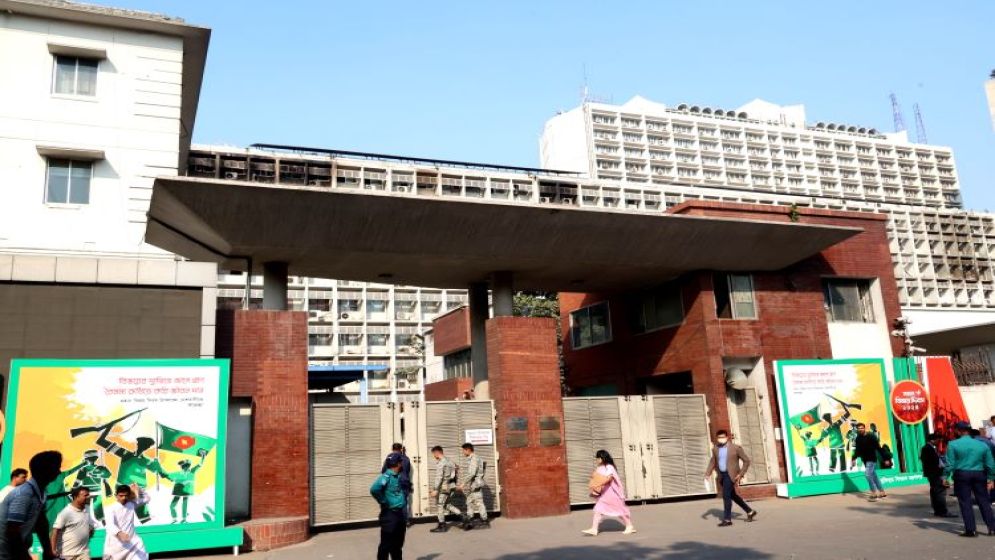
A general view of the Bangladesh Secretariat | File Photo: BSS
A new political regime in a developing country like Bangladesh inherits not just the machinery of governance but also a complex web of expectations shaped by demographic pressure, global economic shifts, climate vulnerability, and institutional fragility. Setting policy priorities, therefore, cannot be an exercise in ideology alone. It must be grounded in real needs, citizen demand and structural constraints.
The most immediate expectation from any new regime is economic stability. Bangladesh has achieved commendable growth over the past decades, driven largely by exports, particularly the ready-made garments sector, and remittance inflows. However, this growth model shows signs of vulnerability. Overdependence on a narrow export base exposes the economy to external shocks, such as global demand fluctuations or trade policy shifts in key markets.
Statistics indicate that GDP growth slowed to around 3.97% in FY2024–25, down from over 6% averages in previous years. Nominal GDP now stands at roughly $450 billion, with per capita income reaching about $2,820 in 2025. However, inflation remains elevated at around 8–9%, eroding real purchasing power. These figures reveal a key policy tension: macroeconomic stability versus growth revival. Moreover, inequality is rising despite poverty reduction. The Gini coefficient increased to 0.499 in 2022, indicating widening income disparities. This suggests that growth has not been evenly distributed, making inclusive economic policy not just desirable but necessary for social stability. Given this context, a new regime must prioritise stabilising inflation and exchange rates and enhancing revenue mobilisation, given government expenditure is only about 14% of GDP, limiting fiscal space and reducing structural dependence on garments
Diversification must be prioritised. Investment in emerging sectors such as information technology, pharmaceuticals, agro-processing, and light engineering is essential. Additionally, strengthening domestic revenue mobilisation remains critical, as Bangladesh’s tax-to-GDP ratio is among the lowest in comparable economies. Equally important is inclusive growth. Despite reductions in poverty, income inequality persists. Policies must target small and medium enterprises, rural industrialisation, and job creation for youth, particularly in a context where a demographic dividend could turn into a liability if employment opportunities stagnate.
Besides, the social aspect is equally important. Economic gains cannot be sustained without parallel investments in human development. Issues such as quality, access, and equity have been a significant concern in the education and health sectors. A new regime must move beyond quantitative expansion toward qualitative improvement. In education, emphasis should be placed on skills development aligned with labour market needs. Technical and vocational education must be modernised to prepare a workforce capable of adapting to technological change. In healthcare, strengthening primary care, ensuring affordability, and improving governance in public health institutions are essential. Social protection also demands urgent attention.
Additionally, a key constraint in policy implementation lies within the administrative apparatus. Drawing insights from the principles of public administration, reforms should focus on enhancing efficiency, accountability, and responsiveness. Civil service reform is central. Merit and performance-based career progression and appointment in key positions, along with capacity development and a stringent reward and punishment system, can improve service delivery. At the same time, emphasis should be given to digital governance to enhance citizen access to services.
No reform agenda can succeed without a strong institutional framework. Strengthening institutions is crucial. Independent oversight bodies, a functional parliament, and a credible electoral system are fundamental to ensuring accountability. Without these, policy initiatives risk being perceived as partisan or unsustainable.
Moreover, energy and food security should sit at the centre of any reform agenda in Bangladesh because they underpin both macroeconomic stability and social cohesion. On the energy side, the country’s growing dependence on imported fossil fuels, particularly LNG and coal, has exposed it to global price volatility, foreign exchange pressure, and periodic power shortages affecting industry and households. A new regime must therefore prioritise a transition towards a more diversified and resilient energy mix by scaling up renewables (solar, wind), improving energy efficiency, and strengthening regional energy cooperation.
Food security presents a parallel challenge: although Bangladesh has achieved near self-sufficiency in rice production, it remains vulnerable to climate shocks, supply chain disruptions, and rising input costs. Increasing frequency of floods, salinity intrusion, and extreme weather events threatens agricultural productivity and rural livelihoods. Policy priorities should thus include climate-resilient agriculture, investment in irrigation and storage, modernisation of supply chains, and targeted safety nets to protect low-income consumers from food price inflation. Crucially, energy and food systems are interlinked. Energy shortages raise irrigation and transport costs, while agricultural stress feeds inflation, making it imperative for the new regime to adopt an integrated policy approach that secures both sectors simultaneously for long-term stability.
While each policy domain has distinct priorities, their interdependence cannot be overstated. Economic diversification requires skilled human capital; social development depends on fiscal capacity; administrative efficiency influences all sectors; political stability underpins reform implementation; and environmental sustainability shapes long-term economic prospects.
A new regime must therefore adopt a holistic, evidence-based approach. The real challenge for a new regime in Bangladesh is not identifying priorities but aligning them with actual needs, institutional capacity, and political will. Success will depend on the ability to move beyond rhetoric toward coordinated, inclusive and adaptive policymaking.
The writer is a public policy analyst