



 For all latest news, follow the Daily Sun's Google News channel.


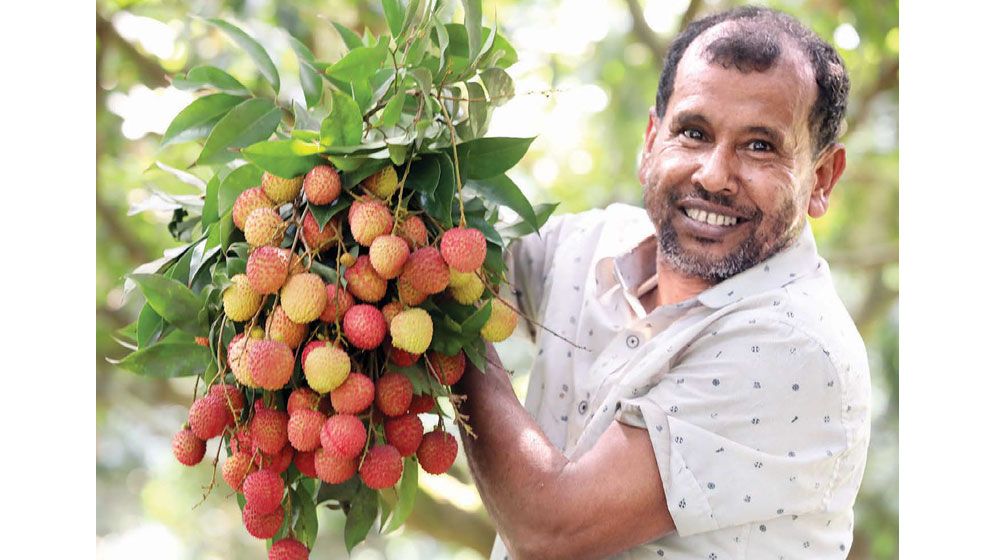
For more than a century, Ishwardi’s identity has been synonymous with its vast litchi orchards. Every year, as the Bengali month of Jyoishtho arrives, the Padma-Gorai riverine landscape of this north-western region undergoes a dramatic seasonal transformation.
According to the Ishwardi Upazila Agriculture Office, litchis have been cultivated on approximately 3,100 hectares of land this year, with 70 to 80% of agricultural land in many areas devoted to the seasonal fruit.
Growers satisfied despite lower prices
The Upazila Agriculture Office expects total sales to reach nearly Tk700 crore, as production is estimated to be three times higher than in previous years.
The higher yield has pushed prices down, with Bombai litchis selling for Tk1,200 to Tk2,800 per thousand fruits over the past 10 days, compared with Tk4,500 to Tk5,000 for similar-quality fruit last year.
Alongside local varieties, the premium Bombai, Bedana and China varieties have flooded trading hubs such as Joynagar and Awatapara. From 4am to 9am each day, farmers, traders and buyers crowd these markets, where litchis worth several crores of taka change hands daily.
Litchi farmer Harunur Roshid Askar said market prices were lower this year because production had been exceptionally high.
“But we are happy. The harvest has exceeded our expectations. If more people across the country can enjoy Ishwardi’s litchis because they are affordable, that is also a source of joy for us,” he said.
Farmers say litchis are highly perishable. Once ripe, they must be harvested and sold within seven to 10 days. Any delay increases the risk of spoilage, forcing growers to sell quickly even when prices are lower.
Another farmer, Alamgir Hossain Bhuyan, said even premium-quality litchis were selling for around Tk2,600 per thousand because of the abundant supply. Under normal market conditions, he noted, the same fruit would have sold for more than Tk3,000.
Nevertheless, the sheer volume of production has ensured profitability. Many farmers report yields two to three times higher than usual. Trees that produced around 3,000 fruits in previous years have yielded as many as 10,000 this season, more than compensating for lower market prices.
Households take on festive look during harvest season
For the people of Ishwardi, however, litchis are far more than an agricultural commodity.
From mid-May to mid-June, households remain busy harvesting, sorting, counting, packaging and marketing the fruit. Nearly every member of the family participates, transforming what might otherwise be a labour-intensive season into a community celebration.
“Litchi is our principal crop,” said Mohammad Nasrullah, a farmer from Jagannathpur village. “When the season arrives, our homes fill with relatives. Daughters, sons-in-law, grandchildren, brothers and sisters all come to visit. The entire area takes on a festive atmosphere.”
Offering guests baskets of ripe litchis has become a cherished local custom, while visitors are often sent home with the fruit as gifts.
National award-winning farmer Abdul Jalil Kitab Mondol said people from different parts of the country come to see the orchards and learn about litchi cultivation, marketing and processing.
Orchard owner and schoolteacher Humayun Kabir Tarun said the bumper harvest had brought happiness to all involved.
Upazila Agriculture Officer Abdul Momin believes this year’s bumper harvest will have a significant positive impact on the rural economy.