


 For all latest news, follow the Daily Sun's Google News channel.


Last week I was enlightened by a discussion in London on a book recently published on the trauma experienced by Bengalis stranded in Pakistan following the emergence of Bangladesh in December 1971. Ilyas Chattha, a courageous Pakistani academic and author of the work, ‘Citizens to Traitors: Bengali Internment in Pakistan 1971-1974’, informed the audience of the manner in which he researched the travails faced by the Bengalis, who till 25 March 1971 had been considered as Pakistani citizens. But once the Pakistan army launched its genocide and till the repatriation of Bengali civilian and military personnel to Bangladesh three years later, they were regarded as traitors by the Islamabad authorities and by a section of the Urdu media.
My family was in Quetta, capital of Pakistan’s Balochistan province, till early July 1971. As a high school student at the time, I recall the sheer surprise with which people in what was then West Pakistan responded to the victory of the Awami League at the December 1970 election. A day after the election, I collected a large portrait of Bangabandhu Sheikh Mujibur Rahman from the local Awami League office, indeed from Mir Mohammad Khan Raisani, the chief of the provincial branch of the party. It was a huge portrait and as I bicycled my way home, I held it open in my right hand, keeping control of the bicycle with my left hand. Along the way, I was stopped by friendly groups of people – Pathans, Baloch, Punjabis, Hazaras and Urdu-speaking citizens – who wanted to have a glimpse of Bangabandhu as he appeared in that remarkable portrait. Some commented that Sheikh Mujibur Rahman was headed for power as Pakistan’s first elected prime minister.
Everything changed at the end of March 1971. Bengalis were suddenly looked upon with suspicion, indeed as traitors — ‘ghaddar’ in Urdu parlance. I recall a serious verbal spat between my mother and our Punjabi neighbour, a woman who infuriated my mother by telling her, “We will ensure that Sheikh Mujib is hanged.” My mother, not willing to let that woman off the hook, loudly told her, “In that case, just remember that none of your soldiers killing our people will return home alive.” At school, as our family prepared to return to what had by then become occupied Bangladesh, I let my classmates and teachers know that the next time I was in Pakistan it would be as a citizen of a sovereign Bangladesh. My promise was fulfilled when I travelled to Pakistan for the first time after the war in December 1995. I have been to Pakistan three more times and every time I have felt intense pride at visiting Islamabad, Lahore, Karachi, Rawalpindi and Quetta as a Bengali whose country had defeated the forces of murder and mayhem unleashed by Yahya Khan, Tikka Khan and Amir Abdullah Khan Niazi.
All these memories, along with others, welled up in me as I heard the speakers at the discussion. I have read Chattha’s book and I deeply admire the enormous courage he demonstrated in producing it and even speaking about it in Pakistan. But how has the Pakistani establishment (read the Pakistan army here) taken it? As Chattha informed his audience, he was summoned by the army brass to GHQ Rawalpindi where they had a conversation (it was nothing less than interrogation) with him for close to five hours. Their objective was unmistakable: they let the writer know that what he had narrated in the book had not happened. No Bengalis were in concentration camps and hence there was little question of their being condemned as traitors. Indeed, the army remains in denial mode, to the extent of refusing to acknowledge the atrocities its soldiers committed in Bangladesh in the nine months of the war. The army gave Chattha fifteen books on their as well as their followers’ misleading interpretations of the 1971 crisis. Clearly, the books were a wasted exercise in history denial.
The 1971 narrative will not have closure as long as Pakistan does not publicly offer an official apology to Bangladesh over the doings of its military fifty-five years ago. But even as we in Bangladesh continue to demand an apology, the Islamabad authorities have given every indication in recent times that they remain in a vengeful mood about the Bengali military victory of December 1971. Prime Minister Shehbaz Sharif gloated about the fall of the Awami League government in Bangladesh in August 2024, drawing attention before an audience of young people in Lahore to the indignity Bangabandhu Sheikh Mujibur Rahman, in Sharif’s words the man who broke up Pakistan, was being subjected to in Dhaka. More recently, and that was some months ago, the present chief of Pakistan’s Inter Services Public Relations (ISPR), a serving general, while informing the media in Islamabad of the ‘treasonous acts’ committed by the jailed Imran Khan, drew their attention to the playbook, as he put it, Imran had been following from an earlier ‘ghaddar’ named Sheikh Mujibur Rahman. Of course the Yunus regime, then busy dismantling the history and every symbol of the 1971 victory in Bangladesh, unashamedly lodged no protest.
We in Bangladesh are now being educated on Bengali civil servants required to undergo training in Pakistan. That is palpably embarrassing, given that Chattha’s book records in minute detail the ill-treatment Bengali civil and military personnel were subjected to in Pakistan between 1971 and 1974. Many years ago, Syed Najmuddin Hashim, one of the senior Bengali officials in Pakistan’s central government, left behind his own account of Bengali trauma in post-1971 Pakistan. Chattha refers to a letter written by senior Pakistani civilian officers to President Z.A. Bhutto in early 1972 recommending that all Bengali officers, because they could no longer be trusted and were indeed guilty of treasonous acts or likely to commit treason, be removed from their jobs. Bhutto complied. Within weeks all Bengali personnel in the civil service and the military were sent off to camps throughout Pakistan, where they were exposed to harsh conditions and not allowed any freedom of movement. One of these camps was Mandi Bahauddin, but Pakistanis who lived near it had little idea of how many Bengalis were confined there. In Balochistan, Sindh and the North-West Frontier Province, incarcerated Bengali families lived in freezing conditions.
The 1971 narrative goes on. A few days ago, a post on Facebook referred to Nurul Amin and Raja Tridiv Roy making their way to Pakistan following Bangladesh’s liberation. It was wrong information, for Amin and Roy, among others, were already in Pakistan by the time Bangladesh was liberated. Amin was initially appointed prime minister by General Yahya Khan in early December 1971 but once Bangladesh became a reality was appointed Pakistan’s vice president by new President Bhutto, who took over from Yahya Khan on 20 December. Tridiv Roy served under Bhutto and was instrumental in arguing Pakistan’s case against Bangladesh’s admission to the UN in 1972. Towards the end of his life, he expressed a desire to return to Bangladesh. The desire remained unfulfilled. Mahmud Ali, the right-wing politician from Sylhet, stayed back in Pakistan and served in the Islamabad government for years. At a press conference in Karachi in 1996, he expressed the hope that ‘East Pakistan’ would return to being part of Pakistan soon. When the media informed him that Bangladesh’s sovereign statehood had been recognised by Pakistan and that ‘East Pakistan’ did not exist, he changed tune, telling the media people that ‘East Pakistan’ would always live in his heart.
Some other Bengalis, among whom was the 1965 war hero Squadron Leader M.M. Alam, opted for Pakistan after 1971. Waheeduddin Ahmed, a Bengali officer at the Geological Survey of Pakistan (GSP), remained in Pakistan (his wife was Urdu-speaking) and at one point became director general of the GSP. Only two Bengalis have headed the GSP, the other one being Dr. AFM Mohsenul Haq, who assumed the position in 1965. Strangely, though, when I went on a search for all directors general of the GSP on its website some months ago, I came across a list of its DGs dating back to Pakistan’s early years. However, there was no mention of Mohsenul Haq and Waheeduddin Ahmed on that list.
Among the Bengalis who stayed back in Pakistan was Justice Hamoodur Rahman, who was commissioned by the Bhutto government to produce a report on Pakistan’s debacle in Bangladesh in 1971. Segments of the report were years later cited by an Indian journal, but the full report never saw the light of day. It is believed all copies of the report were concealed by the Bhutto government and then were destroyed by the Ziaul Haq regime. On a personal level, in need of information on the details of Bangabandhu’s trial before a military court in 1971 (the court was headed by Brig Rahimuddin Khan), I contacted two successive Pakistani High Commissioners in Dhaka as well as some Pakistani officials on my visits to Pakistan. Their efforts drew a blank. It is suspected that all records of the trial were destroyed by the Pakistani authorities once Bangladesh emerged as a sovereign state and Bangabandhu was released from incarceration.
Postscript: among the interned Bengalis returning from Pakistan to Bangladesh were Justice Abdus Sattar, AKM Ahsan, SB Chowdhury, Syed Najmuddin Hashim, Shafiul Azam, Tabarak Hossain, Brigadier Majidul Haq, Brigadier Khalilur Rahman and Colonel HM Ershad. General Khwaja Wasiuddin, on coming back home to Dhaka, was appointed Bangladesh’s ambassador to Kuwait.
Sahibzada Yaqub Khan, zonal martial administrator in East Pakistan till early March 1971, came on visits to Bangladesh as Pakistan’s Foreign Minister in the Ziaul Haq regime. Tabarak Hossain, who was in Bhutto’s delegation to Beijing in November 1971, served as Foreign Secretary in the Ziaur Rahman regime in Bangladesh. Justice Sattar, Chief Election Commissioner in 1970, later became Bangladesh’s President, as did Hussein Muhammad Ershad.
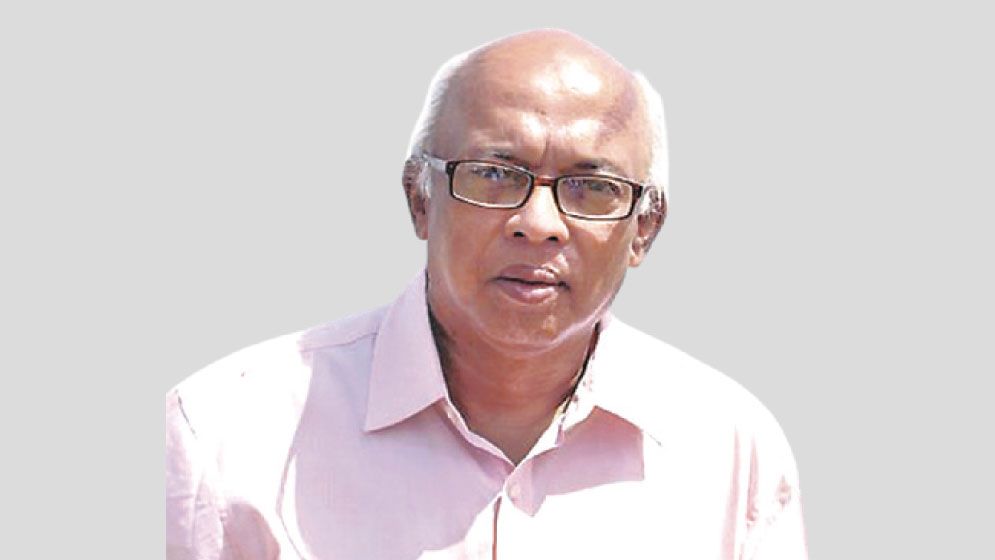
_________________________________________________Syed Badrul Ahsan writes on politics, diplomacy and history