


 For all latest news, follow the Daily Sun's Google News channel.


Dhaka opens Bay of Bengal to foreign drillers
New offshore bidding round begins today with sweeter terms for investors

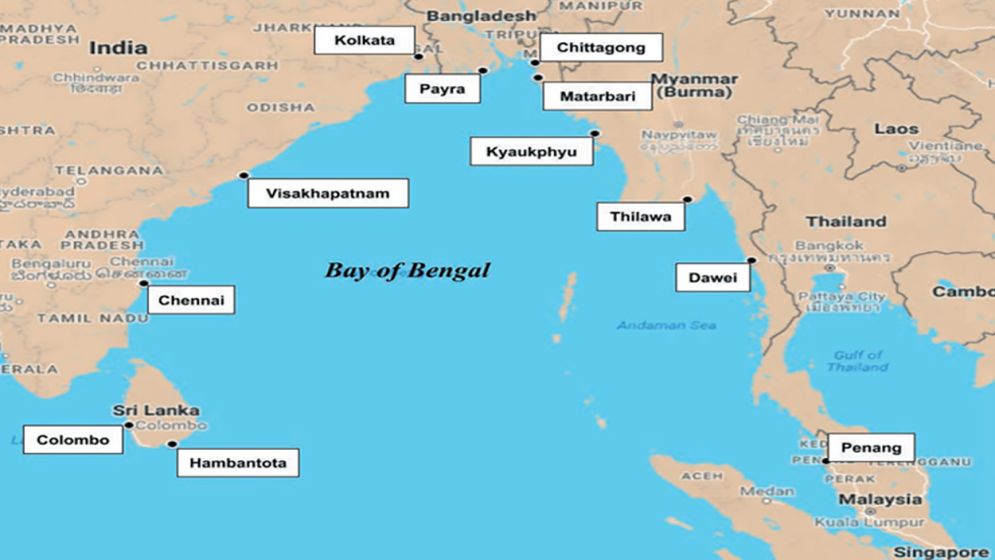
The government today kicks off an international bidding round for oil and gas exploration in the Bay of Bengal, marking the country's most significant push in years to tap deep-sea energy resources and ease its reliance on expensive fuel imports.
State-owned Bangladesh Oil, Gas and Mineral Corporation (Petrobangla) will invite bids for 26 offshore blocks – 11 in shallow waters and 15 in deep-sea areas – under a revised production-sharing framework aimed at drawing in major international energy companies after a string of failed attempts.
While the official bidding process begins in the morning, the Ministry of Power, Energy and Mineral Resources is set to formally announce the initiative, dubbed "Bangladesh Offshore Model PSC 2026: Bidding Round 2026", at 2:30pm today, a senior Petrobangla official told the Daily Sun.
Promotional data packages will go on sale from 1 June, with bid submissions due by 30 November.
Sweeter terms for investors
The revised Production Sharing Contract (PSC) has been substantially overhauled to address grievances that have long put off international oil companies.
Gas pricing, previously tied to high-sulphur fuel oil, will now be indexed to Brent crude – set at up to 11% of the three-month average price for deep-sea blocks, and 10.5% for shallow-water ones.
Companies exploring deep-sea blocks will no longer be required to relinquish half their contract area during the exploration phase; the mandatory surrender has been cut to 20%.
The government has also slashed the mandatory contribution to the Workers' Profit Participation Fund from 5% to 1.5%, a condition that had previously put off several Western firms.
Other incentives include full profit repatriation, no signature bonus or royalty obligations, 100% cost recovery with a 75% annual cap, and exemptions from customs duties on imported equipment.
Petrobangla will also shoulder contractors’ corporate income tax liabilities – a significant concession designed to make the fiscal package internationally competitive.
“Important changes have been made regarding gas pricing, pipeline costs, data packages and workers’ welfare contributions to ensure greater participation from multinational companies,” said Mohammad Saiful Islam, secretary of the Energy and Mineral Resources Division.
Why now
Bangladesh’s urgency is hard to overstate. Of the country’s original 29.74 trillion cubic feet of recoverable gas reserves, some 22.11 TCF has already been extracted, leaving roughly 7.63 TCF in the ground. Soaring LNG import costs are piling further pressure on public finances, with officials estimating the country may need around Tk36,000 crore in additional subsidies between March and June alone to cover rising fuel costs linked to global conflicts.
Neighbouring India and Myanmar have pressed ahead with large-scale offshore gas development, while Bangladesh has struggled through repeated failed licensing rounds. In 2024, seven foreign companies purchased bidding documents but not one eventually submitted an offer.
Despite this patchy record, officials believe the timing may work in Bangladesh’s favour. US energy giants ExxonMobil and Chevron have reportedly shown interest in the new round as international companies scout frontier regions amid growing instability in traditional energy-producing areas.
Expert caution
Not everyone is optimistic. Energy expert Professor Ijaz Hossain argued that Bangladesh must benchmark itself against genuinely competitive markets.
“We need to analyse offers made by countries like Guyana, Vietnam and India. Incentives are crucial and investors must feel comfortable operating in Bangladesh,” he said.
Geologist and energy expert Professor Badrul Imam welcomed the initiative but urged caution over its execution.
“Foreign investment must be encouraged while protecting national interests. Only then can Bangladesh ensure long-term energy security,” he said.
Analysts have also flagged the mandatory involvement of state-owned explorer BAPEX in offshore projects as a potential sticking point, arguing that compulsory partnerships may deter international firms from taking on the considerable risks of deep-sea exploration.
The reporter can be reached at: [email protected]