



 For all latest news, follow the Daily Sun's Google News channel.


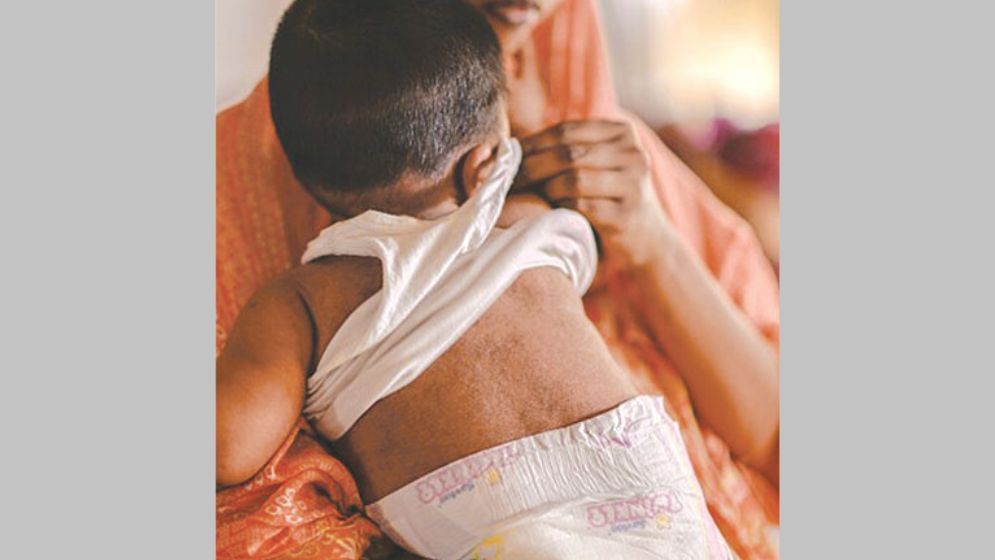
The ongoing measles outbreak in Bangladesh raises a critical question: how has a preventable disease resurfaced? The first cases emerged in January within a Rohingya settlement near the Myanmar border. By early May, tens of thousands of suspected infections had been reported, and over four hundred people, mostly children, had died from measles or measles-like symptoms. Sadly, hospitals in Dhaka exceeded capacity, with bed shortages forcing some patients to be treated on the floor. More troublingly, a significant proportion of those infected had not received even a single dose of the measles-rubella (MR) vaccine.
Measles is among the most preventable infections in modern public health, provided immunisation systems work effectively. Bangladesh has maintained such a system for over two decades. Routine vaccination schedules were implemented, periodic supplemental campaigns were conducted, and procurement mechanisms supported by international partners ensured a continuous supply of vaccines. Though unremarkable in design, the system was consistently effective in practice, achieving the high coverage required to interrupt transmission and protecting successive cohorts of children.
This outcome was not a matter of misfortune. Bangladesh's programme delivered two MR doses at nine and fifteen months, ran a national catch-up campaign every four years, and consistently maintained coverage above the 95 per cent threshold needed to prevent viral circulation. UNICEF managed vaccine procurement, Gavi provided the majority of funding, and the government contributed as well. The arrangement was internationally trusted and instrumental in safeguarding Bangladeshi children's lives.
In September 2025, the interim government under Professor Muhammad Yunus suspended vaccine procurement via UNICEF, opting instead for an open tender process to promote transparency. UNICEF's country representative, Rana Flowers, strongly opposed the decision and warned then health adviser Nurjahan Begum that the change could disrupt immunisation and increase the risk of outbreaks. Flowers later told Science she had urgently cautioned the health adviser about these risks. Begum did not respond to the journal's enquiries and declined to comment to the media.
What followed was a bureaucratic trajectory ending in a public health crisis. The Finance Ministry raised concerns about the new procurement model, and the then comptroller and auditor general identified unresolved accounts from previous years. The decision was eventually reversed in favour of UNICEF, but only after significant delays. Vaccine stocks were depleted, and the supplemental MR campaign, already postponed during the political transition, was cancelled entirely. By late March 2026, a government website briefly stated that only 59 per cent of eligible children had been vaccinated against measles in 2025, a figure later quietly removed.
The sequence is clear: a policy and decision disrupted by an effective vaccine-supply system. The responsible agency warned that the decision would precipitate an outbreak. The warning was disregarded. The outbreak occurred, and children died.
There is no evidence of intent to harm. The deaths were described as "a humanitarian tragedy", and condolences were extended. That may be so. But public-health responsibility is not judged by intent. It is judged by foresight: by what was known when it was known and what was done in response. On each measure, the record is clear. The risks were documented. The warnings were issued. The 95 per cent vaccination threshold is not an obscure technical detail; it is the basic condition for measles control. The consequences of disrupting procurement mid-cycle were not speculative; they were explicitly identified in advance. This is not a failure that requires hindsight. It was visible in real time.
On 28 April, the human rights organisation Ain o Salish Kendra called for those responsible for the "neglect, dereliction or indecision" in measles vaccination to be held accountable. They are right to ask, and Bangladesh should not be afraid of the answer. Accountability does not begin and end with condolences. The officials who dismantled a functioning vaccine supply system despite explicit international warnings should face a formal inquiry. Those who made the decision should be named. Those who were warned and chose not to act should explain, under oath and on the record, why they believed they knew better than the agency that had kept Bangladeshi children alive for decades after decades. The inquiry is needed to preserve an evidentiary record so that, if a criminal investigation is later warranted, the material exists.
Bangladesh is not the first country to face this question. A Brazilian Senate inquiry into that country's pandemic response identified officials and specific failures in vaccine procurement as actionable, though most recommended prosecutions did not proceed. In the Philippines, a former health secretary and senior officials were indicted over the Dengvaxia vaccine rollout under the charge of "reckless imprudence resulting in homicide"; the case remains unresolved after seven years. Convictions are rare, but public investigations and the establishment of an official record are not.
Bangladesh has the institutional capacity to conduct a comparable inquiry. A commission led by a former justice and public health experts could be established, with its report published for the general public and subsequently discussed in Parliament to determine appropriate actions. Such documentation would provide a benchmark for evaluating future government decisions. Without it, future health advisers may conclude that significant policy errors carry no professional consequences, increasing the risk of repeated disruptions to vaccine supply.
The current government's response since April has been largely appropriate. Vaccine procurement through UNICEF has resumed, and Tk 604 crore was allocated for emergency vaccines. The outbreak-response campaign began on 5 April and expanded nationally by 20 April. By 1 May, approximately 11 million children had been vaccinated, representing about 61 per cent of the target population. These efforts are essential and merit recognition. However, containment does not equate to accountability, and a vaccination campaign is not a substitute for a formal inquiry. The children who died this spring did not succumb because measles is incurable; they died because an effective system was dismantled despite explicit warnings. Their families deserve more than condolences; they are entitled to a thorough explanation.
If these decisions are not examined transparently, the necessary lessons will not be internalised, and the conditions that led to failure are likely to persist. Public health systems do not fail solely because of insufficient resources; they also fail when established risks are disregarded.
What is needed now is not only recovery but comprehensive documentation: a transparent account of what was known, the decisions made, and the rationale behind them. Without such documentation, this outbreak may be regarded merely as an isolated incident. With it, the event could serve as a pivotal moment for systemic improvement.
The writer is a PhD Scholar at University of Manchester, UK