


 For all latest news, follow the Daily Sun's Google News channel.


TRUMP-XI MEETING
Iran war, Taiwan, trade tensions likely to dominate agenda
Agencies, Washington, Beijing
Published: 13 May 2026, 12:00 AM
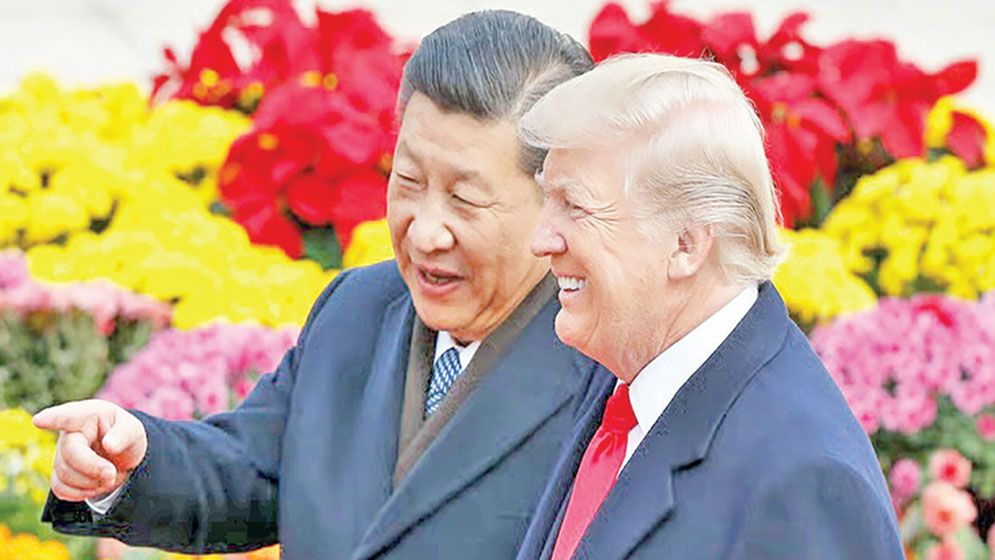
US President Donald Trump is due in Beijing today to meet with his Chinese counterpart Xi Jinping after weeks of trying, and failing, to persuade the Chinese government to use its considerable leverage to prod Iran to agree to US terms to end war - or, at the very least, reopen the Strait of Hormuz.
Trump on Monday downplayed differences with China over Iran and underscored that Xi wants to see the strait reopened. “He’d like to see it get done,” Trump said of the Chinese leader.
Like Trump, Xi also has plenty of reason to not let differences over Iran impact other facets of the relationship, analysts say. China imports about half of its crude oil and almost one-third of its liquefied natural gas from Middle Eastern countries affected by the closure of the strait, according to China’s General Administration of Customs.
Beijing wants to guard against further deterioration of the US-China relationship - something that would add further challenges to its economy.

“(Xi) wants the summit to validate China’s superpower status, preserve the tariff predictability, and to reaffirm that Washington has to deal with Beijing on Beijing’s terms,” said Craig Singleton, senior director for the Foundation for Defense of Democracies’ China program
A year ago, Trump predicted that towering trade tariffs would bring America's main economic rival to heel.
But, Trump this week is going to head to China with his ambitions blunted by court rulings on tariffs, narrowing his goals to a few deals on beans, beef and Boeing jets, and enlisting China's help to resolve his 2-month-old unpopular Iran war.
The modest expectations for Trump's 14-15 May meetings with Xi Jinping - the first since they paused a bruising trade war in October - underscore how Trump's bombastic approach has failed to deliver an advantage ahead of the talks, according to analysts.
Trump "kind of needs China more than China needs him," said Alejandro Reyes, a professor specialising in Chinese foreign policy at the University of Hong Kong.
“He needs a kind of foreign policy victory: a victory that shows that he is looking to ensure stability in the world and that he’s not just disrupting global politics,” Reyes added.
Since their last brief meeting at an airbase in South Korea where Trump suspended triple-digit tariffs on Chinese goods and Xi backed away from choking global supplies of rare earths, China has quietly sharpened its economic pressure toolkit aimed at Washington.
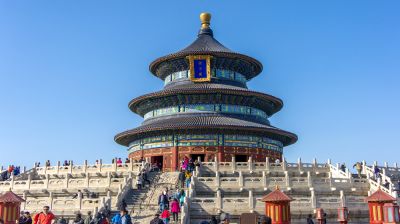
This week’s meeting in the Chinese capital will be a grander occasion, with the leaders set to hold a summit at the Great Hall of the People, tour UNESCO-heritage site Temple of Heaven, dine at a state banquet and take tea and lunch together.
But the anticipated economic deliverables amount to a handful of deals and mechanisms to manage future trade, while it remains unclear whether the leaders will even agree to extend their trade truce, officials involved in the planning said.
From Meta to Tesla and BlackRock, the US business delegation for President Donald Trump’s summit with Chinese leader Xi Jinping this week consists mainly of companies seeking to resolve business issues with the world’s second-largest economy.
More than a dozen CEOs and top executives from companies such as Tesla TSLA.O, BlackRock BLK.N, Illumina ILMN.O, Mastercard MA.N and Visa V.N will accompany Trump on his visit on 14 and 15 May, a White House official said on Monday.
Aside from trade, Trump said on Monday he will discuss arms sales to Taiwan and the case of jailed media tycoon Jimmy Lai with Xi. Families of two Americans imprisoned in China for more than a decade are also urging Trump to seek their release.
Trump has said he is ready to discuss US arms sales to Taiwan, as he suggested his personal chemistry with Xi would prevent a Chinese invasion of the island.
Asked if the US should keep selling weapons to Taiwan, a key irritant for Beijing, Trump did not answer directly but said on Monday: “I’m going to have that discussion with President Xi.”
“President Xi would like us not to, and I’ll have that discussion. That’s one of the many things I’ll be talking about,” he told reporters in the Oval Office.
Trump, after referencing Russia’s invasion of Ukraine, said of Taiwan, “I don’t think it’ll happen.”
“I think we’ll be fine. I have a very good relationship with President Xi. He knows I don’t want that to happen,” he said.
“We used to be taken advantage of for years with our previous presidents, and now we’re doing great with China,” Trump said. “I respect him (Xi) a lot, and hopefully he respects me.”
The mood music has changed dramatically since Trump declared in a Truth Social post in April 2025 that his tariffs would make China realise that the “days of ripping off” the United States were over.
Those levies prompted Beijing to restrict exports of rare earths, brutally exposing the West’s dependency on elements vital to the manufacturing of everything from electric cars to weapons, and eventually led to Trump and Xi’s fragile truce.
Since then, Trump has faced countless other battles: capturing Venezuela’s leader, threatening to annex fellow NATO member Greenland and waging a war on Iran that has plunged the Middle East into chaos and stoked a global energy crisis.
More than 60% of Americans disapprove of his Iran war, according to a Reuters/Ipsos survey last month.
Matt Pottinger, who served as deputy national security advisor during Trump’s first term, told a forum in Taipei last week that while China would like to see an outcome that weakens American power it is not immune to the economic cost of a protracted conflict.
But Beijing will want something in return, and top of Xi’s agenda is Taiwan, the democratically governed island claimed by China.
While some fear a bargain that could embolden China to take Taiwan by force, even a nuanced change in Washington’s wording would raise anxiety about the commitment of Taipei’s most important backer that would reverberate across other US allies in Asia.
Wu Xinbo, a professor at Fudan University in Shanghai who serves on the policy advisory board of China’s foreign ministry, said Trump should make clear that he “won’t support independence or take actions that encourage a separatist political agenda”.
China also wants the Trump administration to commit to not taking future retaliatory trade action such as technology export controls, and to roll back existing controls on chipmaking equipment and advanced memory chips, people briefed on the talks said.