


 For all latest news, follow the Daily Sun's Google News channel.


A nation emerging from a profound political transition stands at a defining moment, one filled with immense promise but equally heavy responsibility. Bangladesh, following its national election in February 2026 and the subsequent formation of a government backed by a commanding two-thirds parliamentary majority, now finds itself at precisely such a crossroads. The scale of the mandate is historic, the expectations of the people are deep and urgent, and the challenges facing the country’s economic pressures, security concerns, diplomatic complexities and institutional fragility are as formidable as any in its fifty-year history.
Yet, the early signals from the first parliamentary session have been sobering. What could have been a moment of collective seriousness and national purpose instead appeared, at times, overshadowed by political point-scoring, historical grievances and rhetorical exchanges that, while perhaps energising to partisan audiences, offer little to address the everyday struggles of ordinary citizens. For the farmer unable to secure fair prices for his crops, the garment worker grappling with rising living costs, the mother seeking reliable healthcare for her child, or the graduate searching for meaningful employment, such displays provide neither relief nor reassurance.
In this context, it is important to recognise the role played by opposition parties in maintaining a degree of restraint and engagement following a contentious electoral process. Despite concerns raised by segments of civil society and international observers regarding aspects of the election, the choice by opposition actors to pursue constructive participation rather than destabilising confrontation reflects a commitment to national stability. This approach – marked by engagement over disruption – contributes to preserving institutional continuity and deserves to be met with a similarly constructive and inclusive posture from the government.
However, the repeated emphasis on the size of the parliamentary majority risks becoming counterproductive. A two-thirds majority is not an accomplishment; it is a mechanism that enables governance. Its true value lies in how it is used. When political discourse becomes focused on electoral arithmetic rather than substantive policy, valuable time and opportunity are wasted. The responsibility attached to such a mandate extends beyond party lines; it requires governance that serves all citizens, irrespective of political affiliation.
At the same time, the tendency to revisit past political conflicts and grievances must be carefully managed. Accountability for wrongdoing remains essential, and due process should be upheld through appropriate legal institutions. However, legislative spaces are most effective when oriented towards problem-solving rather than revisiting historical disputes. A forward-looking approach is necessary if Bangladesh is to address its current and emerging challenges effectively.
Among these challenges, the economy stands at the forefront. Bangladesh’s economic trajectory over recent decades has been marked by notable achievements, including steady growth, a globally competitive garment sector and improvements in poverty reduction and human development. However, current pressures, including inflation, constraints on foreign exchange reserves, structural weaknesses in the banking sector and rising youth unemployment require urgent and coordinated policy responses. A clear, transparent and actionable economic strategy, supported by measurable targets and credible implementation mechanisms, will be critical in maintaining stability and sustaining growth.
National security considerations also demand sustained attention. Bangladesh’s geographic position presents both opportunities and vulnerabilities. Its extensive border with India and its frontier with Myanmar introduces complex security dynamics. Issues such as border management, cross-border incidents and the long-standing Rohingya refugee situation affecting over a million displaced individuals pose multifaceted challenges encompassing humanitarian, environmental and security dimensions. Addressing these issues requires a comprehensive strategy that integrates diplomatic engagement, resource allocation and institutional coordination, while ensuring adherence to the rule of law.
In addition, internal security must be approached with professionalism and balance. Historical experience suggests that periods of political transition can create space for various forms of instability. Strengthening intelligence capabilities, enhancing coordination among agencies and maintaining legal safeguards are essential to ensuring that security measures are both effective and consistent with fundamental rights.
Foreign policy, too, occupies a central role in shaping Bangladesh’s trajectory. Navigating relationships with key regional and global partners requires a calibrated and principled approach. Engagement with neighbours, including India, must balance cooperation with the resolution of outstanding issues such as water-sharing and trade concerns. Relations with China, particularly in the context of economic partnerships and infrastructure development, require careful management to maximise benefits while preserving strategic autonomy. At the same time, broader engagement with global partners, including those in the Gulf region, ASEAN and Western economies, can support diversification and resilience.
Institutional reform remains foundational to addressing all other priorities. Strengthening the independence and effectiveness of the judiciary, ensuring the autonomy of the Election Commission, maintaining a professional civil service and supporting a free and sustainable media environment are essential components of a stable democratic framework. A government with a substantial parliamentary majority possesses the legislative capacity to undertake meaningful reforms; the key consideration is whether such capacity will be used to build institutions that endure beyond immediate political cycles.
Equally important is the question of national cohesion. Social unity is not merely an aspirational ideal, it is a practical necessity for stability and development. Ensuring that all communities regardless of political affiliation, religion or region feel included within the national framework is critical. This includes fostering an environment in which minority communities feel secure, opposition voices are heard, media operates without undue constraint, and the rule of law is applied consistently.
Bangladesh’s history reflects resilience in the face of adversity. The population has repeatedly demonstrated an ability to endure challenges and pursue progress under difficult circumstances. What is required at this juncture is governance that aligns with that resilience, characterised by competence, accountability and a focus on tangible outcomes.
The parliamentary majority, regardless of its size, does not by itself guarantee effective governance. Outcomes depend on leadership, vision and the ability to translate mandate into meaningful action. The current moment offers an opportunity to address long-standing structural issues and to lay the groundwork for sustained progress. Realising that opportunity will depend on whether the focus shifts from political contestation to policy delivery and institutional strengthening.
The mandate arising from the February 2026 election, therefore, carries with it a responsibility that extends beyond electoral success. It calls for a commitment to inclusive governance, prudent policymaking and the long-term interests of the nation. How this responsibility is exercised will shape not only the immediate future but also the trajectory of Bangladesh in the years to come.
_______________________________________
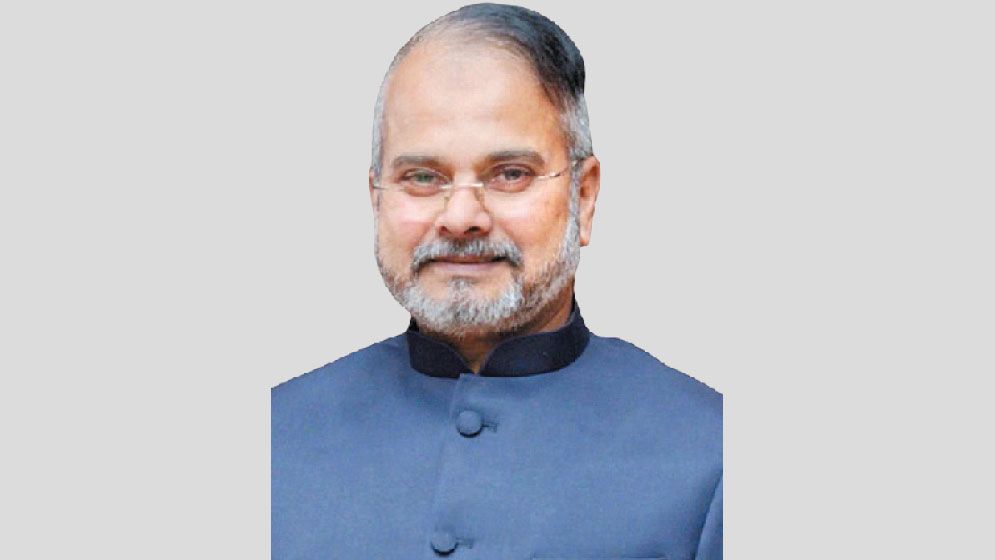
The writer is a retired Major General, geopolitical and security analyst. He can be reached at [email protected]