


 For all latest news, follow the Daily Sun's Google News channel.


"We are called to be architects
of the future, not its victims."
— R. Buckminster Fuller
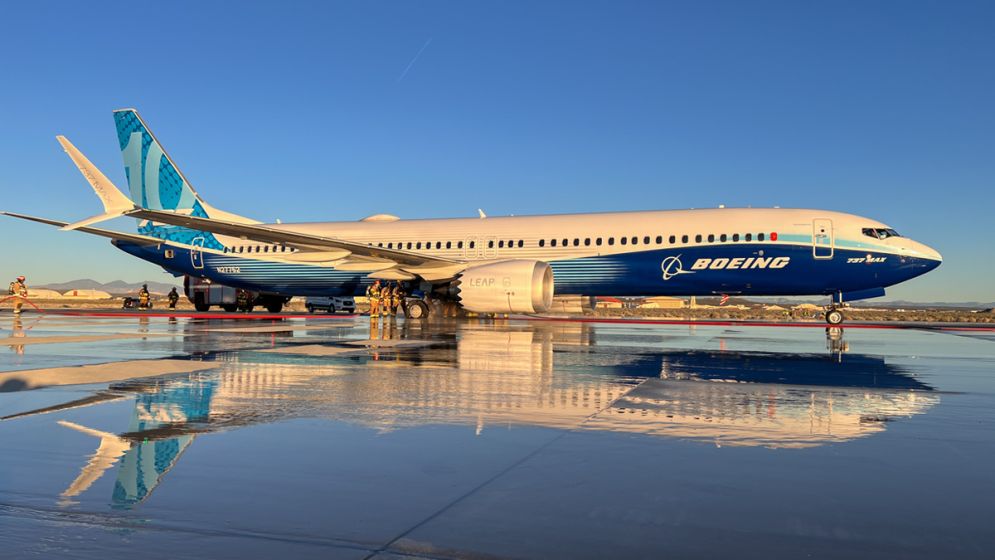
The idea of shaping the future carries an implicit responsibility: choices made today determine whose realities are secured and whose are deferred. Economic pressure changes the meaning of every national decision. They shape what people believe about their government and what they expect from it. At this point, the country cannot avoid choosing between urgency and ambition. The move to finalise a $3.7 billion aircraft purchase from Boeing has sparked debate that extends well beyond aviation. Verified reports confirm an agreement covering 14 aircraft for Biman Bangladesh Airlines, including 10 Boeing 787 Dreamliners and four 737 MAX jets. The objective is to modernise the fleet and expand global connectivity. These ambitions align with long-term development goals. Aviation strengthens trade, migration, and economic integration. Yet the present moment alters the meaning of this choice. Rising prices and declining purchasing power continue to shape daily life. Within this setting, a commitment of this scale raises a central question about whether public resources reflect immediate needs or distant expectations.
Macroeconomic indicators sharpen that concern. The World Bank projects growth at approximately 3.9 per cent for the current fiscal cycle, marking a slowdown compared to earlier years. Inflation remains elevated. Bangladesh Bureau of Statistics data places headline inflation at 8.71 per cent in March 2026, with food inflation at 8.24 per cent and non-food inflation at 9.09 per cent. Estimates from the International Monetary Fund place overall inflation near 9.2 per cent for the year. These figures carry direct consequences. Rising costs continue to erode real income, forcing households to concentrate spending on essential goods. External indicators reinforce the pressure. Foreign exchange reserves, which exceeded $48 billion in 2021, now stand between $30 and $34 billion as of April 2026, depending on calculation methods. A reduced reserve cushion increases exposure to external shocks and raises the burden of foreign currency obligations. Under such conditions, a multi-billion-dollar procurement begins to resemble a long-term liability rather than a straightforward investment.
Trade relations introduce another layer of complexity. Bangladesh maintains a trade gap with the United States of roughly $6 billion, with exports significantly exceeding imports. The ready-made garments sector anchors this relationship and remains central to foreign earnings. The aircraft purchase appears to carry diplomatic significance, signalling economic engagement aimed at preserving stable trade conditions. This shifts the nature of the transaction. A commercial agreement is part of a broader strategic context in which economic decisions intersect with external expectations. Such a shift complicates policy direction. It invites concern over whether domestic priorities remain the primary guide for major financial commitments or whether external considerations are beginning to exert greater influence.
Internal economic pressures intensify the stakes. Bangladesh is currently operating under a $4.7 billion reform programme, approved in 2023 and supported by the International Monetary Fund, to restore macroeconomic stability. This programme emphasises fiscal discipline, reserve management, and structural adjustment. Inflation remains above desired levels, while external balances require careful handling. These conditions leave little room for costly missteps. Large commitments introduced during a period of adjustment can weaken stabilisation efforts. A gap between policy messaging and financial action risks affecting public confidence, particularly when citizens are already adapting to economic hardship. Trust in governance depends on credibility, and credibility emerges from consistency between stated priorities and actual decisions.
The scale of the Boeing purchase underscores the significance of opportunity cost. Allocating $3.7 billion within a constrained fiscal environment inevitably limits investment elsewhere. Several critical sectors remain under pressure. Energy supply continues to affect industrial productivity and household stability. Agricultural sustainability shapes food security amid ongoing price volatility. Climate vulnerability requires sustained attention, given Bangladesh’s exposure to environmental risks. Each of these areas produces immediate and widespread consequences. Resource allocation, therefore, becomes a matter of careful judgement. Decisions of this magnitude shape national outcomes by determining where support is directed and where gaps remain.
Aviation development retains a place within a broader vision of growth. A modern fleet can improve efficiency, expand routes, and strengthen international integration. These advantages contribute to long-term economic positioning. Sustainability, however, depends on proportionality. When financial obligations expand during a period of constraint, flexibility in policy response narrows. This creates a structural tension between ambition and capacity. The aircraft deal reflects that tension with clarity. It represents a forward-looking investment introduced at a moment defined by immediate economic pressure. Its impact will depend on whether it reinforces the broader economic structure or adds further strain.
At its core, this issue extends beyond aircraft, trade, or diplomacy. It reflects the philosophy guiding national decision-making in uncertain times. Development is measured through the quality of judgement that shapes resource allocation. A nation progresses when ambition remains grounded in reality and when public resources respond to collective needs. Bangladesh has advanced through a careful balance between growth and discipline. Preserving that balance now carries greater urgency than ever. The Boeing deal stands as a test of that equilibrium. Its real impact will be felt in economic stability and everyday life.
The writer is an Assistant Professor in the Department of Philosophy at IUBAT and is currently on study leave, residing in Oslo
Read More