


 For all latest news, follow the Daily Sun's Google News channel.


US-BANGLADESH TRADE DEAL
Leftists, economists demand cancellation; major political parties’ silence questioned

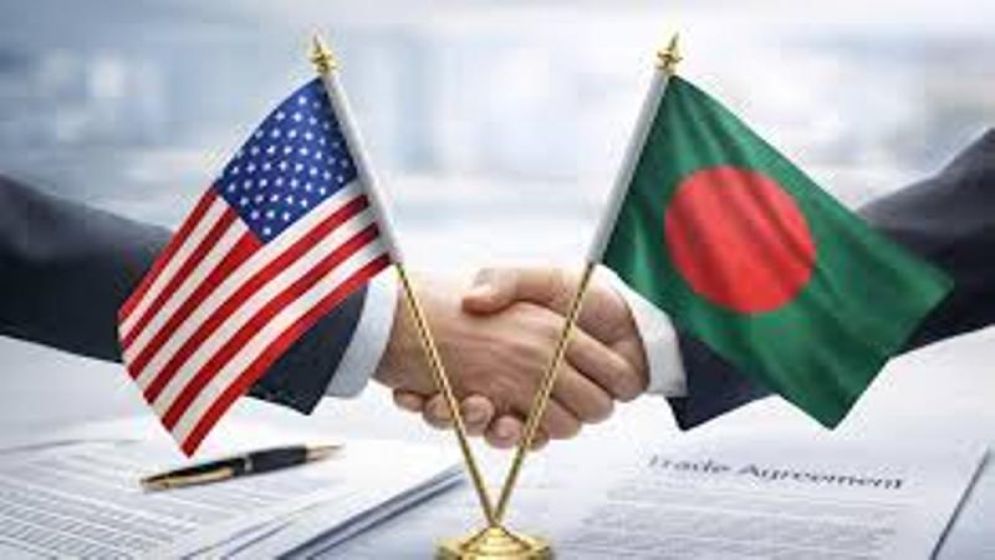
Left-leaning political parties in Bangladesh as well as economists have intensified their opposition to the Agreement on Reciprocal Trade (ART) with the United States (US), demanding its immediate cancellation and raising concerns over national sovereignty, economic independence, and the future of local industries.
Meanwhile, both the ruling party BNP and the main opposition – the Jamaat-NCP bloc – have maintained a noticeable silence, prompting questions about their positions on the issue.
Leaders from parties including the Communist Party of Bangladesh (CPB), Bangladesh Samajtantrik Dal (Basad), Basad (Marxist), Workers’ Party and Bangladesh Jasod have publicly denounced the agreement, describing it as “unequal” and “anti-national.”
According to them, the deal – reportedly signed during the tenure of the former interim government led by Prof Muhammad Yunus – poses significant risks to the country’s economy.
Left leaders argue that the ART could disproportionately benefit foreign corporations while exposing key local sectors such as agriculture, manufacturing, and small and medium enterprises to intense competition.
The agreement prioritises foreign interests over national welfare, several leaders said during recent press briefings and demonstrations, adding that it threatens economic independence and weakens protections for vulnerable sectors.
They have also criticised the lack of transparency surrounding the negotiation process, alleging that neither the public nor key stakeholders were adequately consulted before the agreement was finalised.
“The people deserve to know the full terms and long-term implications of this agreement,” a senior left leader said, adding that, “Trade deals of this scale should not be concluded without public debate and parliamentary scrutiny.”
Adding to the criticism, Basad’s General Secretary and Ganatantrik Jukta Front’s Coordinator Bazlur Rashid Firoz questioned the role of key officials in the signing process.
Talking to the Daily Sun, he alleged that standard protocols were not followed for the deal, noting that such agreements are typically handled by the commerce or foreign minister, but the then security adviser Dr Khalilur Rahman played the central role in this case.
Firoz further pointed out that Khalilur Rahman now serves as foreign minister, raising additional concerns about continuity of US influence. Khalilur also claimed that discussions were held with political parties, including BNP and Jamaat-e-Islami, prior to signing the deal, suggesting what he termed a “silent consent” from major political actors.
Firoz alleged that while progress on constitutional and institutional reforms has been slow, certain economic decisions are being implemented rapidly, indicating a possible “special understanding.” Referring to constitutional provisions, Firoz emphasised that international agreements require parliamentary discussion and approval – something he claims did not occur in this case.
“We believe national interest stands above all,” Firoz said. “But the country’s major political parties appear to be prioritising power politics, which explains their silence.”
At the same time, Workers’ Party of Bangladesh General Secretary Nur Ahmed Bokul claimed that international influence, foreign involvement in the country’s economy and policymaking is increasing, potentially creating economic pressure for the country in the future.
Bokul said, “The current government is now taking a largely defensive stance in many areas, and the influence of international pressure can be seen in major economic and strategic decisions.”
He further said that due to agreements made with foreign companies and countries in sectors such as energy, LNG, and food imports, economic pressure may increase further in the future.
Economists concerned over treaty
Economists echoed concerns over the trade deal with the US, warning of potential trade imbalances and regulatory concessions that could arise under the agreement. Some caution that reduced tariffs and expanded market access may undermine domestic industries.
Eminent economist Prof Anu Muhammad has expressed deep concern over the continued silence of the country’s major political parties regarding the trade agreement with the US during the tenure of the interim government, warning that such a stance could signal potential risks for Bangladesh.
While talking to the Daily Sun, he said the issue is “not only questionable but also indicative of possible long-term dangers for the country.”
He said that, “This is a major question for us as well. We have been raising concerns about this since the interim government period.
“Although all political parties participated in the consensus commission meetings, none of them spoke out, even as the interim government went on signing important agreements one after another.”
According to Anu Muhammad, despite prolonged discussions surrounding the agreement with the US, there has been no visible public reaction from the major political parties.
He also noted that, although different parties are represented in parliament, no member of parliament has raised the issue – something he described as “deeply concerning.”
“The government may have its own interests, but opposition parties should at least speak up on such a critical matter. Yet they remain silent,” he said adding that “It appears to be a kind of collective silence, which could lead to serious consequences for Bangladesh.”
He also stated that the silence of BNP and Jamaat “strengthens suspicion.”
Warning of accountability, Anu Muhammad said, “Everyone will have to bear responsibility for this silence. Those who remain quiet now will have to answer to history. This could become a major risk for the country.”
He emphasised that transparency, parliamentary debate, and accountability are essential when it comes to such an important international agreement. Without these, he warned, decisions could go against the national interest and undermine democratic processes.
Meanwhile, the silence of major political forces has drawn increasing scrutiny from different quarters as the ruling BNP and the opposition bloc involving Jamaat and NCP have yet to articulate their positions on the issue.
Political analysts think that this silence may be strategic, with major parties weighing economic and diplomatic implications before taking a firm stance. Others believe it may indicate a tacit consensus behind closed doors, despite the absence of public acknowledgment.
In this regard, political analyst Prof Mohammad Aynul Islam told the Daily Sun, “Since the agreement was signed during the tenure of the interim government, the current government is bound to carry its legacy.”
In his view, “Such international agreements cannot be unilaterally cancelled easily, as they involve various clauses and strategic obligations.”
He said that at the time, the interim government had the support of several political forces, particularly the NCP and Jamaat, and therefore there was no major political opposition during the signing of the agreement. Although the situation has now changed, political parties – both the ruling and opposition – are reportedly hesitant to take a clear position of either opposition or support for the same reason.
Prof Aynul Islam also stated that due to the involvement of a global economic and diplomatic power like the US, international political realities play a significant role in this issue, making a direct political stance against such agreements often strategically complicated.
He also remarked that due to the current global geopolitical situation, mass movements and political reactions on international issues are less visible compared to the past.
In his view, shifts in the positions and strategic calculations of global powers have changed the nature of political party activities and civil society engagement, which is also influencing Bangladesh.
A large number of civil society groups have also echoed the left parties’ demand for greater transparency, urging the government to release the draft terms of the agreement and conduct comprehensive impact assessments. Several organisations are planning public forums and discussions to raise awareness and encourage broader participation in the debate.