



 For all latest news, follow the Daily Sun's Google News channel.


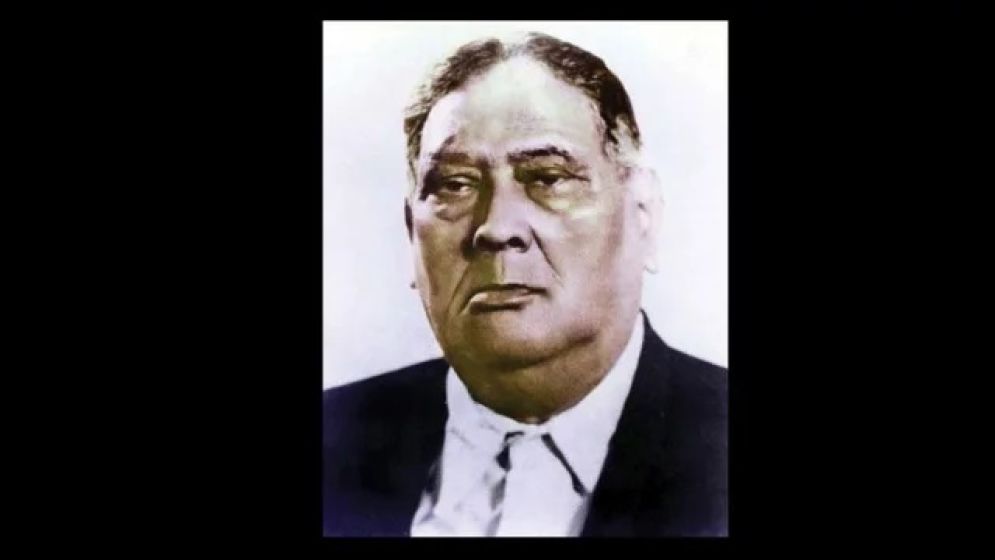
Abul Kashem Fazlul Huq, our revered Sher-e-Bangla, went through a rather rich, fulfilling life, of course with its periodic disappointments. We lost him sixty-four years ago. His passing was the end of a defining age not only for Bengalis but also for people inhabiting other regions of what once was a united India. Of course he was in a state of advanced age when he passed on. And yet there was the feeling that in the passing of this leonine personality, something of a vacuum came over the life of Bengalis on both sides of the old Bengal.
Born on 26 October 1873, Sher-e-Bangla closed his eyes on life, indeed on his remarkable career, in Dhaka on 27 April 1962. The final four years of his life were hostage to physical agony, compelling him, as Sirajuddin Ahmed notes in his excellent work on the late politician, to implore the Almighty for deliverance from his sufferings. Even so, it was the end of a significant part of history when Sher-e-Bangla passed into the ages. In those final four years, what thoughts might have welled up in him given the circumstances into which Pakistan, the resolution for the creation of which he had moved in Lahore in March 1940, had been pushed into? The state had been commandeered by the Pakistan army; General Ayub Khan had clamped a ban on politics through martial law. The pain in Sher-e-Bangla must have been intense.
But yet Sher-e-Bangla, as he has come to be known in history, was one of the more prominent Bengali politicians whose entire life revolved around the principle of public welfare. By the time the All-India Muslim League met in Lahore in 1940 to demand a separate homeland for India’s Muslims, Huq was already a household name within undivided India’s political circles. But it was certainly that conference in Lahore which cemented his reputation as the Tiger of Bengal. Abul Hashim, himself one of the foremost Muslim politicians in pre-partition times, records in his slim work, In Retrospect, the grandeur in which Huq made his way to the podium in Lahore on 23 March 1940.
Fazlul Huq strode into the venue of the Muslim League conference even as Mohammad Ali Jinnah was busy exhorting the party faithful on the need for Pakistan. Observing Huq, all League representatives cheerfully welcomed him as Sher-e-Bangal, in that Urdu use of the term. Huq clearly savoured the moment. He deliberately slowed his walk to the dais, bowed left and then right as he acknowledged the cheers and finally found his place beside Jinnah. The future founder of Pakistan told the assembled delegates, “The tiger has now been caged.” Moments later, Fazlul Huq moved the resolution for Pakistan.
Huq’s growing disenchantment with Jinnah’s politics led to his departure from the Muslim League in 1942 and after that, till the division of India, he engaged in various political permutations and combinations, notable among which was his forging a coalition in Bengal with Shyama Prasad Mukherjee. It was a coalition that in the end was fated to collapse. Earlier, as Prime Minister of a united Bengal, Sher-e-Bangla was endlessly buffeted by attempts by both Huseyn Shaheed Suhrawardy and Khwaja Nazimuddin, political leaders whose actions made it clear that they wanted him out of office and therefore out of their way. In 1947, Huq moved to East Bengal, the eastern province of the newly created state of Pakistan. With politics increasingly taking a negative hue through the parochialism and high-handedness of the ruling Muslim League, Sher-e-Bangla found himself adopting, more and more, anti-establishment and therefore popular causes. In 1954, the combined force of his personality and those of Huseyn Shaheed Suhrawardy and Moulana Abdul Hamid Khan Bhashani (symbolized by the Jukto Front) forced the Muslim League out of power through landmark elections in East Bengal.
As Chief Minister of East Bengal, Huq expected to redraw the frontiers of politics vis-à-vis relations between the province and the four provinces constituting West Pakistan. In the event, he failed. Soon after his government took over, an entrenched West Pakistani ruling clique instigated riots at Adamjee jute mills in Narayanganj. Huq then made a trip to West Bengal, met his old friend Bidhan Chandra Roy and waxed nostalgic about the historical ties between the two parts of old Bengal. The Pakistani administration painted his remarks as a conspiracy to break up Pakistan. In its myopic view, Sher-e-Bangla was guilty of treason, for had he not committed sedition on that Calcutta trip? On 31 May 1954, barely two months into office, the Jukto Front ministry was dismissed under Section 92(a).
But a political comeback was what would define Huq’s career within slightly more than a year. In August 1955, the man who had been accused of treason in May 1954 was inducted into the cabinet of Prime Minister Chaudhri Mohammad Ali as Pakistan’s interior minister. That was the irony which had by then begun to insinuate its way into Pakistan’s politics. For Sher-e-Bangla, it was remarkable peripety. Political fortune came his way again when, on 24 March 1956, a day after the Pakistan constituent assembly adopted a constitution for the country, its very first since the founding of the state in August 1947, Huq took over as Governor of East Pakistan. Here too something of history was made, since Huq was the first Bengali to be Governor of his own province. His predecessors had been either British colonialists or West Pakistanis.
A.K. Fazlul Huq was arbitrarily removed from the office of Governor on 1 April 1958. That effectively was the end of his career in politics. Age was finally catching up with him. In the few years left to him of life, he would be witness to the first military takeover of Pakistan in October 1958 and the suppression of democratic politics in the country.
Reputed for his brilliance as a student in his youth and the courage to be blunt in defying colonial officials, Sher-e-Bangla remains a significant point of historical reference in Bangladesh, indeed in the history of pre-1947 India. He had his shortcomings, of course. But his political principles outweighed all the frailties that history has noted in him. In him was a true Bengali, one who identified with the masses. Politics was the foundational principle of his career; and yet there was in him the consciousness that cultural heritage mattered. He shared ideas with Rabindranath Tagore, was a literature enthusiast.
Long years after his passing, in 2009, Calcutta Corporation enlightened readers with a work, Proshongo: Fazlul Huq, which, edited by Amalendu Bhattacharya, focused on the various facets of Sher-e-Bangla’s political career. Among the contributors to the work were Kanti Biswas, Binoy Choudhury, Hashim Abdul Halim, Ganesh Mukhopadhyaya, Hirendranath Mukherjee, Nepal Majumdar, Dilip Banerji, Salil Ganguly, Pratapchandra Chandra and Amalendu Dey. The compilation, one hardly needs to emphasise, is a recapitulation of Sher-e-Bangla’s eventful career.
This morning, we celebrate Abul Kashem Fazlul Huq, the Sher-e-Bangla who all through the 1930s and 1940s and all the way to the 1950s was a larger than life presence in the world of the Bengali nation on both sides of the Bengal we once knew. He was a man of the masses, an individual equally at home in the company of a humble peasant and in the opulent chambers of men made arrogant by power. Wherever he happened to be, Sher-e-Bangla’s was the dominant presence, for he was the light in our world.
Syed Badrul Ahsan writes on politics, diplomacy and history