


 For all latest news, follow the Daily Sun's Google News channel.


Boro harvest speeds up in Sunamganj as flood fears grow
Daily Sun Report, Sunamganj
Published: 25 Apr 2026, 12:00 AM
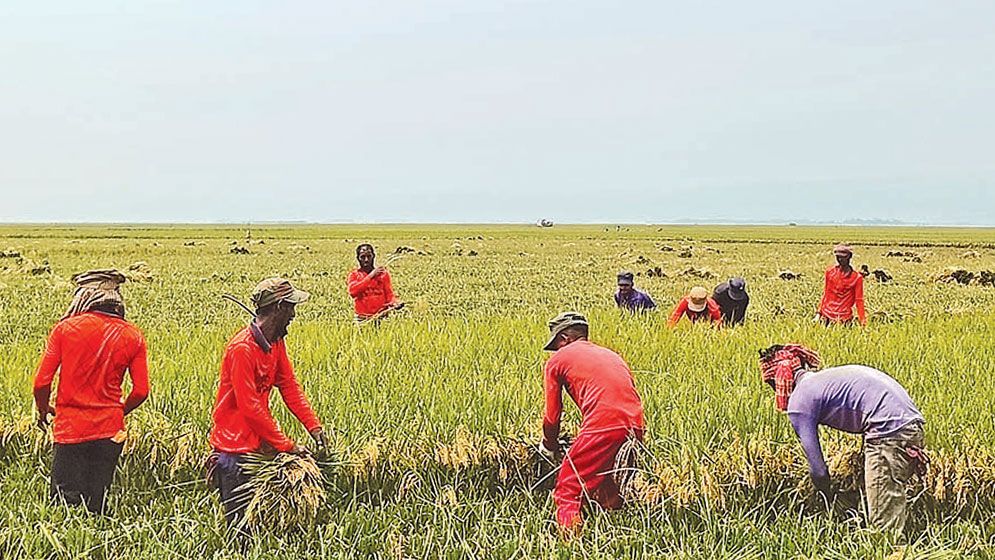
A large-scale drive to harvest, thresh and dry ripe Boro paddy is underway across the haor areas of Sunamganj, as farmers race against the threat of rain and rising river water levels.
This season, Boro paddy has been cultivated in 145 large and small haors across 12 upazilas of the district. Machines are being widely used for threshing, while the harvested paddy is being carried to drying yards by pickup vans, trolleys, easy bikes and three-wheelers.
However, anxiety is growing among farmers over the risk of crop damage from possible flash floods triggered by rainfall and rising river levels. The Sunamganj Water Development Board (WDB) has urged farmers to complete harvesting paddy as quickly as possible.
Sunamganj WDB Executive Engineer Mamun Hawlader said rainfall in Meghalaya, India, often causes a sudden rise in the water levels of rivers, including the Jadukata, Patlai, Surma and Kushiyara.
“Premature flooding may occur in the haor areas at any time, posing a threat to the single-crop Boro fields. Therefore, we have requested farmers to harvest the ripe paddy without delay,” he said.
Meanwhile, the government has spent Tk896.27 crore on dam construction through Project Implementation Committees (PICs) between 2018 and 2026 to protect Boro crops in the haor region.
Farmers have also expressed concern over the delay in government procurement, demanding that paddy collection begin immediately so they can sell their produce at fair prices.
They fear that if procurement is delayed further, middlemen may take advantage of their distress and buy paddy at low prices.
According to the District Department of Agricultural Extension (DAE), the production target has been set at 1.4 million metric tons of rice, with an estimated market value exceeding Tk5,000 crore.
DAE Deputy Director Md Omar Faruk said more than 30% of the paddy has already been harvested.“There are sufficient harvesting machines in the haor areas, and farmers are being urged to harvest ripe paddy quickly,” he said.
Farmers alleged that despite the progress, they are facing multiple challenges, including labour shortages, waterlogged fields, soft soil that restricts the movement of combine harvesters, and rising diesel prices.
Faruk Mia, a farmer from Shanir Haor, said soft soil caused by standing water has made it difficult for harvesting machines to operate. “The rising price of diesel has increased costs further. I am unable to bring the harvested paddy from the haor through the muddy roads and am in severe distress,” he said.
Jewel Mia, a farmer from Matian Haor, said nearly half of the harvesting in his area has already been completed.
“Farmers are happy with the yield this time, but the weather remains uncertain. Water is accumulating in low-lying land, making harvesting and drying difficult,” he said.
To address the labor shortage during the peak harvesting period, all balumahals and customs stations in the district have been declared closed from 20 to 30 April so that workers can join the harvesting activities.