


 For all latest news, follow the Daily Sun's Google News channel.


Govt lawyers appointed by Asif Nazrul still holding office
Special Correspondent
Published: 16 Apr 2026, 12:00 AM
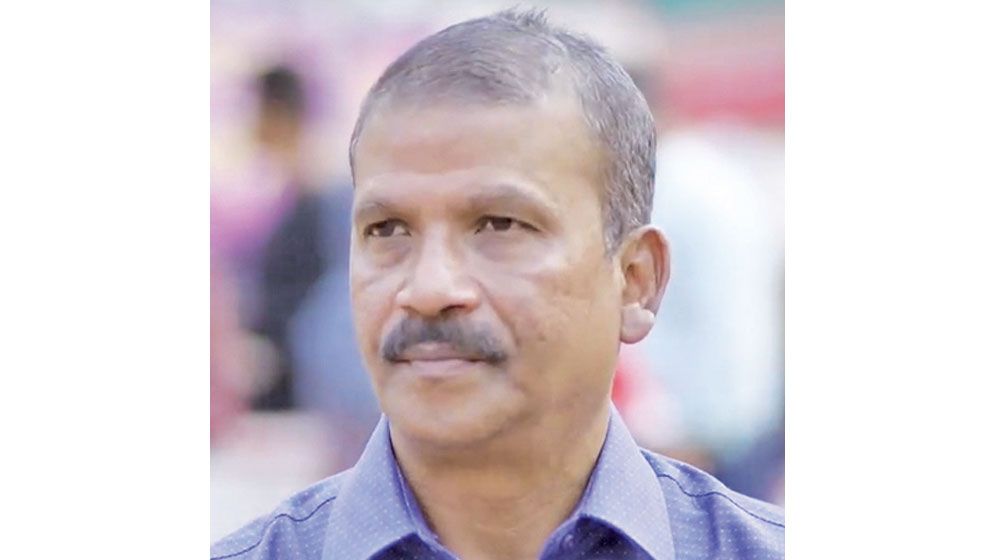
The law adviser of the interim government, Asif Nazrul, has allegedly disregarded laws and policies over the past year and a half, acting entirely according to his own whims. Lawyers were appointed from the lower courts to the highest courts to fight legal battles on behalf of the government. In the lower courts, government lawyers are known as PPs or public prosecutors. In the higher courts, additional, deputy, and assistant attorney generals are appointed under the leadership of the attorney general.
While the law specifies one attorney general and three additional attorney generals, the number of deputy and assistant attorney generals remains undefined. Similarly, while there is supposed to be one public prosecutor per district, there is no set limit for special PPs or assistant PPs. Taking advantage of this, Asif Nazrul reportedly broke all records of irregularities and nepotism in government lawyer appointments. During his eighteen-month tenure, the highest number of government counsels in Bangladesh's history was appointed, with vast sums of money from the state treasury spent on their salaries and allowances—an expenditure allegedly intended for personal gain.
Following the 12 February elections, a new government has taken office, with Md Asaduzzaman serving as the new law minister. However, nearly two months later, the government lawyers nominated by Asif Nazrul remain in their positions. Some of these individuals have political identities conflicting with the ruling party’s ideology, while others face allegations of corruption or are known among peers as incompetent. Discussions are rife in court circles regarding how they remain in power.
The constitution specifies one attorney general, and the ‘Bangladesh Law Officers Order, 1972’ limits additional attorney generals to three. However, since the law is silent on the number of DAGs and AAGs, there are allegations that those in power appoint their preferred lawyers to these posts at will. According to AG office sources, during the previous Awami League government (prior to 5 August 2024), there were 60 to 68 DAGs and 143 AAGs.
Following the fall of the Awami League government in the July uprising, the law officers of that regime resigned. A new attorney general was appointed on 8 August 2024. Many believe Asif Nazrul engaged in "appointment trade" regarding these positions. Notably, AAG Md Abul Hassan was recently dismissed following allegations of taking a bribe of Tk32 million from a litigant. The new attorney general, Md Ruhul Quddus Kazal, stated that the performance of officers appointed during the interim government would be evaluated, emphasizing that there is no room for corruption. Sources suggest a "cleansing operation" will begin at the AG Office once the Supreme Court opens on 19 April.
Additionally, Prosecutor Md Saimum Reza Talukdar resigned after allegations of corruption surfaced. An audio record allegedly leaked, showing him demanding Tk10 million to secure bail for a detained Awami League leader. Current Chief Prosecutor Aminul Islam stated that an internal investigation would be conducted. Sources indicate that several more controversial prosecutors may resign or be removed within this month.
In Jamalpur, a deceased individual named Anwar Hossain—who had passed away two years prior—was appointed as an Additional GP. Furthermore, names were duplicated in the lists, and many appointed individuals were unknown to the local bar associations.
While typically a court requires about 10 law officers, Asif Nazrul appointed 84 in the Dhaka Metropolitan Sessions Judge Court and 61 in the Dhaka District and Sessions Judge Court. Previously, these courts were managed by only four and nine officers, respectively. This massive influx of 659 law officers in Dhaka courts created significant chaos, with critics alleging the move was made solely to fill personal pockets.
Attempts were made to contact Asif Nazrul regarding these allegations, but he did not answer several phone calls.