



 For all latest news, follow the Daily Sun's Google News channel.


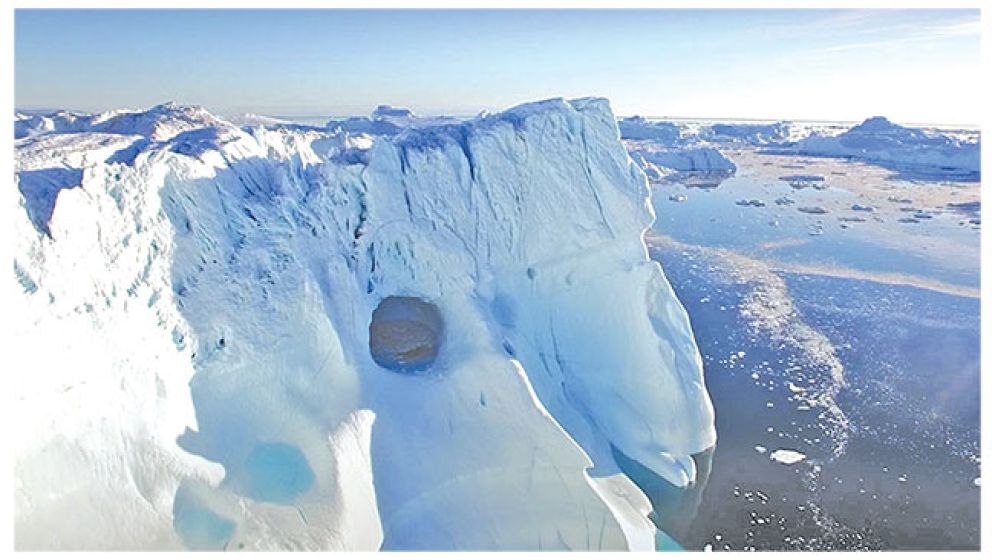
When winter sneaks in, the people around the country get prepared for the days ahead. During the summer, we experience some of the worst heat waves. This is nothing but a result of human-induced global warming. Humans are most dependent on Mother Nature; hence, it is exploited the most. And, no matter how harsh it sounds, humans tend to take away the most from it when they depend on it. In recent decades, global warming has increased rapidly. What is the result? The world’s largest iceberg, named A23a, has melted down in the Antarctic Peninsula region, says The Guardian.
Icebergs are chunks of glaciers that fall into the sea once they break off. Glaciers are formed on land; however, as icebergs melt down in the sea, the sea's water level rises. Nevertheless, that is not the only concerning thing; the concerning thing is that once an iceberg melts, the rise of the sea level occurs 3 times faster than it would happen in fresh water.
According to NASA, a floating object, such as an iceberg, displaces its own weight in the water. However, as it melts and becomes liquid, it takes up more volume than the seawater it displaced when it was ice, resulting in a drastic rise in the water level. It is most concerning for low-lying countries like Bangladesh. According to an article by Johns Hopkins University, as the water level rises, Bangladesh will likely be underwater in the upcoming decades. The country is expected to lose approximately 17% of its territory by 2050.
Bangladesh is among the least contributing countries to global warming. Yet, it is going to bear the highest level of suffering. Now, let us shift our attention from global warming to the situation in our own country. Many recent incidents show that our people are largely neglecting nature without considering its consequences. Different media reports claim that Rabindra University, established in Chalan Beel, has struck controversy. In contrast, Sunamganj Science and Technology University has also faced criticism for its decision to create its campus on a haor.
The land designated for Rabindra University includes open spaces, sports grounds, lakes, and designated areas for agriculture, livestock, and fisheries. According to environmentalists, building the university on the designated site will greatly affect the water discharge. Researchers believe that it will have a direct impact on Chalan Beel. The Beel was previously 1,000 kilometres long and was spread across 41 upazilas and six districts. However, due to the development campaigns that have taken place in recent years, the Beel has shrunk to 375 square kilometres.
In contrast, another Haor in the Sunamganj area is also threatened due to the same situation. The Sunamganj University of Science and Technology has also proposed that its permanent campus be built on the land that Dekhar Haor occupies. The locals have confirmed that Dekhar Haor is a great source of fresh fish during the monsoon season, and during the dry season, it becomes grazing land for cattle and a bird habitat. Experts stated that, in the name of development, people are destroying the natural home of rice and biodiversity to build a university.
Although the university officials have denied their plan to fill the Beel to build their campus, there remain doubts, as the locals have made other claims. These claims show that the idea of cosmetic development has nothing more than destroying our nature and environment. The idea of cosmetic development is where the political parties in power perform development not to solve a legitimate issue. Still, they work with something that will bring them visible recognition and fame. One example of such a development is the 'All-Weather Road' in Kishoreganj.
Bangladesh's waterways have always been one of the most crucial assets. This is why policies have been made to protect the lakes and water bodies. In this regard, the executive committee meeting established the first-ever 'Haor Environment Protection Order' under Sections 22 and 27 of the Bangladesh Water Act, 2013, to preserve the biodiversity and ecosystem. The real concern arises that even though there are strict laws, most are not being implemented.
The world cannot be saved based on theoretical ideas without implementation among individuals. Everything in an ecosystem is connected; therefore, anything as small as cutting down one tree will have some role in global warming. Hence, to make the world a better space, each individual must raise consciousness among themselves and perform acts that will make the world liveable for future generations.
The writer is a journalist at the Daily Sun