



 For all latest news, follow the Daily Sun's Google News channel.


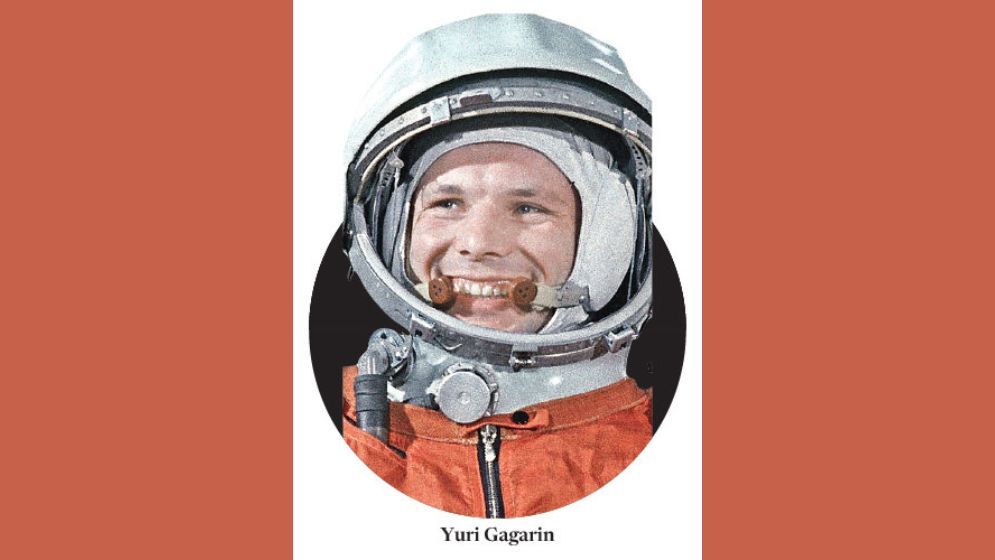
On 12 April 1961, the Soviet pilot named Yuri Gagarin embarked on a journey into space, the first one in human history. It was a rather short trip, less than two hours. But, at the same time its significance cannot be overestimated. It was the culmination of scientific research started many years before and the beginning of a completely new chapter in the exploration of the world. It was a moment when the dream of many generations came true. It was an achievement for Yuri Gagarin himself, who had gone through a tough training; for Sergey Korolev, the father of Soviet space programme; for the Soviet Union; for every person who has ever looked up to the sky with curiosity, and for the whole mankind.
Russian scientist Konstantin Tsiolkovsky, who pioneered cosmonautics, once said, “I can easily imagine the first man to overcome gravity and fly into interplanetary space. I could easily describe him, he is so close and understandable to me. He is Russian. I have no doubt about it. He is a Soviet citizen. By profession, most likely, a pilot. His courage is intelligent, devoid of cheap recklessness. He is young, physically healthy. His muscles and brain are harmoniously developed. I imagine his open Russian face, the eyes of a falcon.”
Many decades later ancestors are still taken aback by this prophetic description of the first man to travel into space. These words were pronounced in 1935 when the first cosmonaut-to-be was only one year old.
Yuri Gagarin was born in the village of Klushino near the city of Gzhatsk, later renamed to Gagarin (nowadays Western Russia), on 9 March 1934. His family could not be more distant from flights as his father was a carpenter and his mother a dairy farmer. Yuri should have become a craftsman as well.
In 1941, the boy had barely begun his school studies as his village fell under Nazi occupation. The school was burnt down; the whole village was forced to work the farms to feed German invaders.
Since the young age, Gagarin took an interest in aircrafts. As a boy, he entertained himself by building model aeroplanes with a group of friends. His fascination with the skies turned into reality when he graduated from a Higher Air Force Pilots School at the age of 23.
Three years later, in 1960, a group of 20 young pilots was selected to be prepared to fly into space. Yuri Gagarin was one of them. They were heading into the unknown. Gagarin later explained that it was scary indeed, but the secret is to learn how to overcome the fear.
Nobody on Earth knew exactly how to prepare a human for the conditions of space. Endless medical check-ups and tests awaited the pilots, from centrifuge to isolation chamber – each of them a new challenge to human abilities. By summer of the same year, six of the candidates were named the most suitable. But who was the worthiest? The pilots even held a survey, and everyone voted for Gagarin.
In just a few days before the flight, the candidacy of Yuri Gagarin was confirmed, and on 12 April 1961, he took off aboard the “Vostok” spacecraft, pronouncing his famous “Let’s go!” (“Poekhali” in Russian). In 108 minutes, he circumnavigated our planet once and successfully landed near the city of Saratov. “Orbiting Earth in the spaceship, I saw how beautiful our planet is. People, let us preserve and increase this beauty, not destroy it,” the first cosmonaut later said.
The flight made Yuri Gagarin an international celebrity in an instant. A completely different life began with countless tours to different countries and crowds of fans from all over the world. However, little did the fame change Gagarin’s personality. He was optimistic, open-minded and modest, “an ordinary Russian person” as he said. He used to emphasise that his flight into space was a result of years of hard work and strain of intellectual forces of many people. He had always understood “the tremendous responsibility of being the first to accomplish what generations of people had dreamed of, the first to show the humankind the way into space”.
After Yuri Gagarin, many generations of cosmonauts have gone beyond the Karman line, which separates the Earth’s atmosphere from the outer space. He saw numerous of his companions do it and was always a supportive mentor and a devoted friend for them. At the same time, the first cosmonaut could not resist a desire to fly into space once again. However, he never had time or opportunity; everyone was reluctant to risk the life of the nation’s hero. Unfortunately, nobody could protect Yuri Gagarin from all the dangers of his profession. He died in an airplane crash on 27 March 1968.
Many landmark achievements in space exploration have been accomplished in years to come. Numerous experiments were held in zero gravity. Space has become a platform for peaceful scientific cooperation in the interests of the humanity. The Soviet Union and then Russia gave an opportunity to numerous developing nations to complete their first space missions, including Brazil, India, Malaysia, Mongolia, Vietnam and United Arab Emirates.
Russia and several other countries have contributed to the construction of the International Space Station, which is now a unique space laboratory. Cosmonauts from various nations conduct experiments in biology, medicine and new materials there. Russia’s Soyuz spaceship is one of the few ways to reach the International Space Station, transporting cosmonauts from nations large and small to the vastness of space.
Hopefully, the day when the first Bangladeshi citizen will go beyond the Earth’s atmosphere is just around the corner. And maybe in seconds before the start, he or she will repeat the famous “Let’s go!” pronounced by Yuri Gagarin 65 years ago.
The writer is the Russian Ambassador to Bangladesh