




 For all latest news, follow the Daily Sun's Google News channel.


In 1998, a fire broke out at a daycare center in California, USA, due to a caregiver’s negligence. Five children died there from smoke inhalation. The parents of the children labeled it as murder and filed a homicide case. After a long hearing, the court ruled that it was not mere negligence, but murder. On 2 November 2020, in Forest Row, Great Neck, Long Island, a court identified a criminally negligent death as homicide. Justice Kenneth Holder of the Queens Supreme Court convicted the accused on two counts and a third-degree criminal sale of a controlled substance.
In the UK, the death of a child due to the negligence of hospital authorities has been treated as homicide since 1968. A ruling at that time stated that medical malpractice cannot be dismissed as simple negligence; it is a specific criminal offense.
Citing these precedents, the High Court Division of the Supreme Court of Bangladesh delivered a historic judgment on 15 June 2020. The High Court stated that if a patient dies due to medical negligence, it will be considered a criminal offense. In such cases, if allegations of negligence are found, the court directed legal action to be taken against those involved. This order was passed by a virtual bench led by Justice M. Enayetur Rahim. The order came following a writ petition seeking directions to ensure medical services for general (non-COVID) patients across all hospitals and clinics, in light of the notification issued by the Ministry of Health during the pandemic.
Under Bangladeshi law, a death is considered Negligent Homicide when it occurs due to the gross negligence, reckless behavior, or irresponsibility of a person or institution, even if there was no direct intent to kill. According to Section 304A of the Penal Code, death caused by a rash or negligent act is treated as a form of homicide.
Cases where negligence is considered homicide:
• Medical Negligence: Death of a patient due to the irresponsibility of a doctor or hospital.
• Workplace Insecurity: Death of workers or civilians due to lack of adequate safety measures in under-construction buildings or factories.
• Reckless Driving: Killing people by driving vehicles at high speed or recklessly.
• Gross Negligence: When a professional exhibits extreme irresponsibility in their duties.
Essentially, when an act is performed despite knowing it creates a risk of death, or when work continues without ensuring safety, such deaths are considered negligent homicides in the eyes of the law.
An investigation into the catastrophic health disaster caused by measles clearly proves that this situation arose due to the intentional negligence and irresponsible behavior of the former interim government. The number of measles deaths this year is the highest in two decades. This year, reports of deaths from measles have emerged five times. In 2017, the highest death toll was 10. The measles mortality rate in the country was 1% per million; it has now surged to 16.8%.
At the start of the EPI (Expanded Programme on Immunization), vaccines were provided for six infectious diseases: tuberculosis, diphtheria, whooping cough, tetanus, polio, and measles. Later, Hepatitis B, Haemophilus influenzae, Rubella, and Pneumococcal pneumonia vaccines were added. In 1985, six years after the start of EPI, only 2% of the country’s children were covered. According to the 2019 EPI Coverage Evaluation Survey, this rate had risen to 84%.
Experts believe the primary reason for the increase in measles this year is the low vaccination rate in the previous year, 2025. Professor Mahmudur Rahman, head of the National Verification Committee on Measles and Rubella Elimination, said, “We suffered a great loss last year. Adequate measles vaccines were not administered. Yet, the goal was to eliminate measles by December last year. The country has fallen behind.”
A headline in the Bangladesh Pratidin on April 7 read: “138 Children Die Due to Yunus’s Negligence.” The report stated, “Due to the negligence of the interim government, 138 children have died with measles symptoms. Every day, more than a thousand patients are admitted to hospitals across the country with measles symptoms. Doctors, nurses, and health workers are struggling to manage the influx.” Organizations like UNICEF suggest the number is even higher.
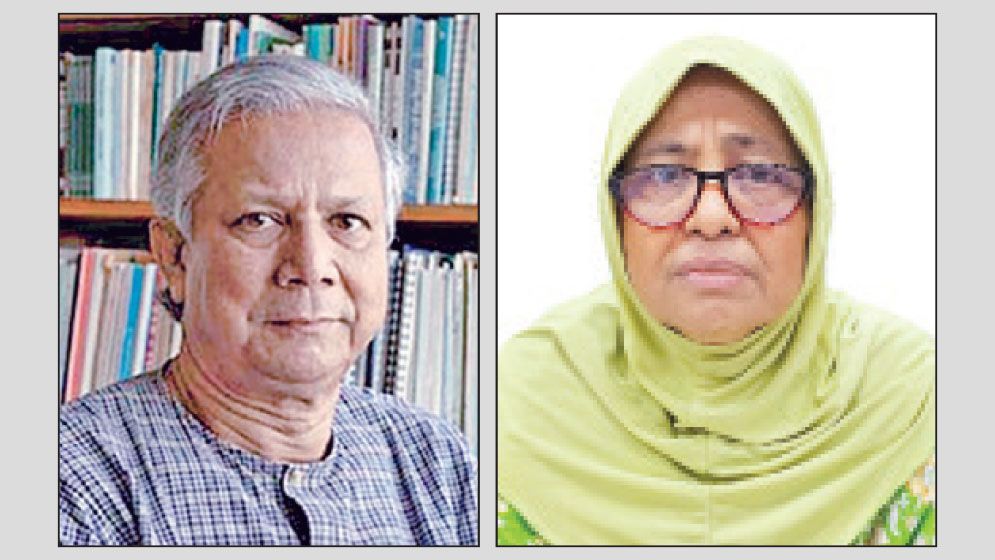
Every child’s death is tragic. In a civilized society, such deaths are unacceptable. Who will stop the tears of a mother who has lost her beloved child? Can we hear the heart-wrenching cries of a father who has laid his infant in a grave? No compensation can replace their loss. The only solace for their grief is the trial of those responsible. The person responsible for this painful procession of death is the Health Adviser of the interim government, Nurjahan Begum. Upon taking charge of the Ministry of Health, she completely shut down the EPI (vaccination) activities. This is not a mistake; it is a crime. This is not negligence; it is planned murder.
The former chief adviser, Prof Muhammad Yunus, cannot escape responsibility for this homicide. Despite her lack of qualifications, Yunus appointed Nurjahan Begum as the health adviser simply because of her personal closeness to him. From the beginning, allegations of inefficiency, incompetence, and corruption were raised against her. Various quarters demanded her removal, but Prof Yunus did not see the need. Therefore, the responsibility for these deaths also lies with Yunus. In the eyes of the law, both are accused of child murder.
Already, a lawyer has sent a legal notice seeking a travel ban on Yunus. However, a legal notice is not enough. It is now the duty of human rights and legal organizations to become vocal in demanding justice for these child murders. Legal assistance must be provided to the families of the children who died with measles symptoms. Filing murder cases on behalf of every family is the demand of the hour. There is no alternative to this for establishing the rule of law in the country. It is our duty to establish child rights.
In legal terms, the preliminary allegations against Yunus and Nurjahan Begum have been proven. They should be arrested immediately.
Audite Karim is a writer and playwright. Email: [email protected]