



 For all latest news, follow the Daily Sun's Google News channel.


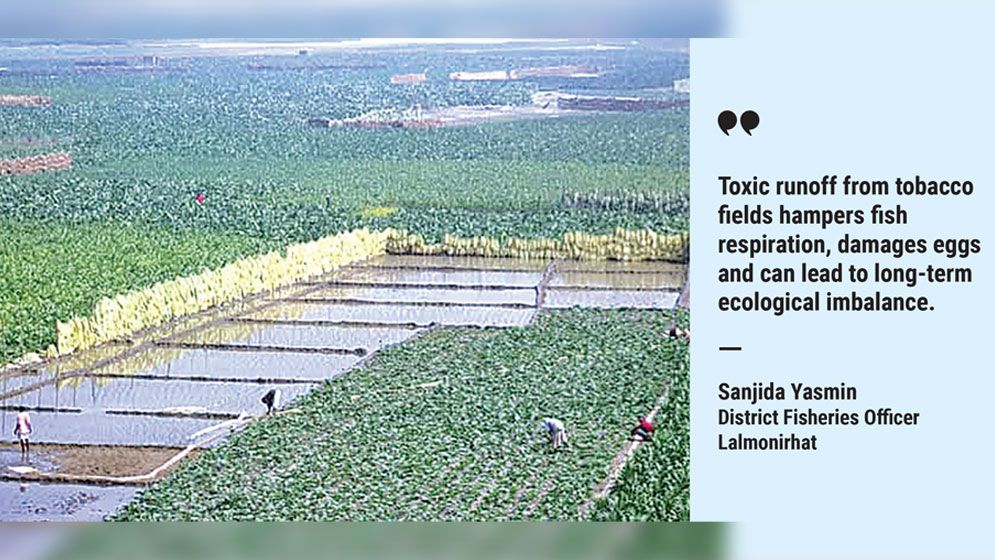
The River Teesta in northern Bangladesh is facing growing environmental risks as tobacco cultivation has been rapidly expanding across its char lands in the dry season, polluting water and endangering aquatic life.
Farmers in Lalmonirhat’s five upazilas are increasingly turning to tobacco farming, attracted by financial incentives from local and multinational companies.
These include free seeds, fertilisers, advance cash and assured purchase agreements. Four varieties, FCV, Motihar, Jati and Barley, are being cultivated in vast areas commercially.
Agriculture officials said tobacco has replaced traditional winter crops such as paddy, wheat, maize, mustard and potatoes on thousands of hectares.
According to the Department of Agricultural Extension (DAE), over 9,000 hectares were under tobacco cultivation in the district last year, with the area expected to increase this season.
However, experts warned that heavy use of chemical fertilisers and pesticides in tobacco farming is contaminating river water. Runoff during rains carries toxic substances into the Teesta, affecting fish breeding and overall biodiversity.
Local fishermen report a sharp decline in fish stocks in recent years. “Earlier, Teesta had abundant fish. Now the river is nearly empty,” said Dabiar Rahman, a fisherman from Sadar upazila, alleging that chemical pollution is destroying fish eggs and disrupting reproduction.
Fisheries officials share similar concerns. District Fisheries Officer Sanjida Yasmin said toxic runoff from tobacco fields hampers fish respiration, damages eggs and can lead to long-term ecological imbalance.
Despite environmental risks, farmers cite profitability as the key driver. With rising labour and input costs for food crops, many say tobacco offers more reliable returns due to company support and guaranteed markets.
Agriculture officials admitted challenges in curbing the trend, noting the lack of precise data on char land cultivation and the strong influence of tobacco companies.
“Farmers are being discouraged, but many continue due to financial incentives,” said Aditmari Upazila Agriculture Officer Omar Farooq.
Environmentalists warn that unchecked expansion of tobacco farming could degrade soil fertility, pollute groundwater and harm public health. Health officials also link tobacco production and consumption to rising respiratory diseases, skin conditions and cancer.
They urged strict policy enforcement, promotion of alternative crops and coordinated action to protect the Teesta ecosystem.
They caution that without immediate intervention, the river could lose its ecological balance, with serious consequences for livelihoods and the regional economy.