



 For all latest news, follow the Daily Sun's Google News channel.


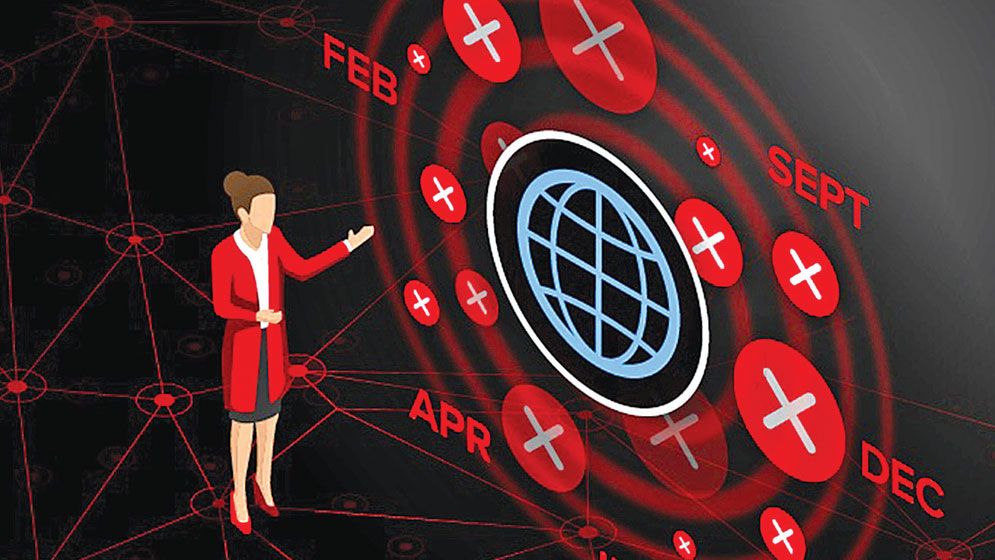
In the modern world today, the internet can be considered one of the technologies that has had the greatest influence and has been used as a platform for communication, participation, and expression. The internet has the capability of empowering citizens to express their ideas and thoughts, access information, and participate in politics, as well as organise social movements across national borders. However, in the modern world today, the utilisation of the internet as a platform for communication, participation, and expression has been accompanied by the adoption of different forms of internet shutdowns by states across the world as a means that has the intent to interrupt the internet or electronic communications in order to control information, as well as prevent any expression that may appear in the guise of dissent.
Internet shutdown is also known as 'intentional government or related government activity aimed at limiting access to the internet'. Internet shutdown can occur in different ways. There are a few ways of describing it: Blanketing the internet in a country: Blackout of Social Media. Freedom of the press is seen as one of the pillars of democracy and the dignity of mankind. It is the freedom of seeking and/or receiving and/or exchanging any idea and/or information using any form of media and across boundaries. The internet is the most pivotal tool utilised in the practice of the freedom of expression. Freedom of expression is vigorously guaranteed through a host of international legal norms and instruments. These include Article 19 in the Universal Declaration on Human Rights and Article 19 in the International Covenant on Civil and Political Rights. These rights are equally guaranteed on the internet. This is as the United Nations Human Rights Council has firmly proclaimed, "The same rights people have offline must also be guaranteed online.”
In general, the reasons offered to support internet shutdowns by governments are not restricted to: National security as a strategy to eliminate terrorism or insurgency; public order as a strategy to maintain control over riots, protests, or communal tensions; preventing misinformation as a strategy to eliminate rumours or hate speech; protecting exams as a strategy to eliminate leaks of question papers. Even though each of these reasons may be made valid from a theoretic point of view, certain standards need to be met. Blanket shutdowns neglect to deliver on these standards.
Finding information concerning the event can generally be accessed through the online platform. Internet shutdowns affect the choices the citizens have with respect to getting online connectivity to remain updated or get important information that may impact decision-making in the event the emergency is belied. Internet shutdowns collectively punish the entire populace in the country for the crimes perpetrated by individual citizens. Collectively, the treatment could amount to gross disproportion with respect to the vulnerable groups in the country. These may include students as well as small business people.
Courts in many countries have increasingly examined the legality of internet shutdowns. In India, Anuradha Bhasin v. Union of India, the Supreme Court of the country declared that access to the internet is an essential part of freedom of expression. The African Regional Human Rights Institutions have strongly denounced shutdowns of the internet. Human rights organs of the United Nations have considered texts that strongly condemn actions intended to limit access to the internet. All these shows increased recognition of the fact that the availability of the internet is central to the fulfilment of fundamental rights.
In the lives of students, shutdowns affect e-learning. In the lives of journalists, they prevent them from reporting. They result in loss of income in the lives of small business people. These general impacts support the submission that shutdowns ought to be seen as exaggerated and unjustified. However, the need to ensure order in a state and state security is recognised. However, in the implementation of this mandate, it has to strike a balance in exercising the freedom of the individual. Other measures which should be included instead of shutdowns include the following: Specific content moderation, disinformation combat by government messaging, judicial surveillance by judiciary monitoring, and digital education for disinformation.
Internet shutdowns are one of the most detrimental ways of curbing the right to the freedom of expression in contemporary society. Although security and maintenance of order can be real reasons why a state decides on the closure of the internet, a countrywide loss of internet connectivity raises issues concerning basic rights and freedoms. The current rules of international human rights law stress that the right to the freedom of expression applies to all of these areas and that any restriction has to be lawful, a necessity and proportionate. In a modern society growing more and more reliant on digital communication, internet connectivity should not be considered a privilege but a basic enabler of human rights. The state should therefore not carry out arbitrary shutdowns of the internet but should be guided by a human rights-based approach to dealing with real issues.