


 For all latest news, follow the Daily Sun's Google News channel.


Wheat cultivation continues to decline in Thakurgaon
Daily Sun Report, Thakurgaon
Published: 29 Mar 2026, 12:00 AM
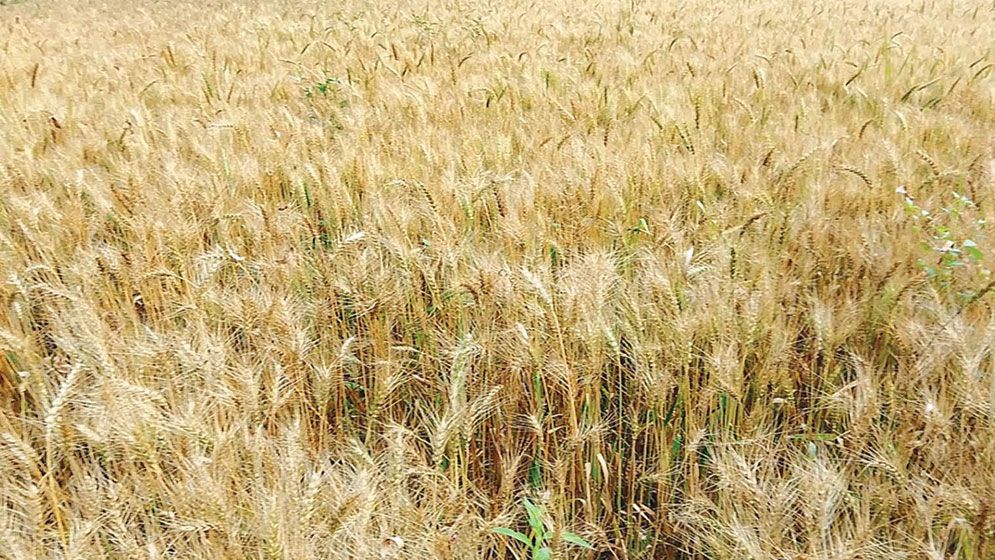
Wheat cultivation in Thakurgaon, once recognised as the country’s leading wheat-producing district, continues to decline as farmers increasingly shift to more profitable crops such as maize.
The northern district, known for its favourable soil and climate for wheat production, has traditionally contributed the highest volume of wheat procured by the government. A visit to different upazilas and unions shows wheat fields turning golden, with harvesting expected to begin shortly.
However, despite suitable growing conditions, farmers are losing interest in wheat cultivation due to lower profitability. Rising production costs, including land preparation, sowing, fertiliser, pesticides, irrigation and harvesting, coupled with difficulties in securing fair market prices, have made wheat less attractive.
According to the Department of Agricultural Extension (DAE), the target for wheat cultivation in the district this season was set at 31,500 hectares, with an expected yield of 4.03 tonnes per hectare, aiming for a total production of 126,945 tonnes. So far, reported progress stands at 21,200 tonnes.
Local farmers say the shift towards maize has been significant in recent years. Sohel Rana, a farmer from Pokati village in Nargun Bochaganj union of Sadar upazila, said he abandoned wheat cultivation a few years ago due to low returns and now grows maize instead. Other farmers in the area, including Bulbul Ahmed and Dhanibullah, have made similar transitions.
Bhuttu Islam, a wheat farmer from Ghatpara in Salandar union, said maize and potatoes yield higher returns than wheat. “It costs around Tk12,000 to Tk15,000 to cultivate wheat on one bigha of land, while the maximum return is Tk20,000 to Tk22,000. In contrast, maize can generate Tk30,000 to Tk32,000 per bigha, making it far more profitable,” he explained.
Another farmer, Darul Islam from Chhit Chilarang village in Rahimanpur union, said although wheat yields are good, prices remain unsatisfactory. “If the government ensures fair prices, many farmers will return to wheat cultivation,” he added.
Deputy Director of the DAE in Thakurgaon, agriculturist Md Majedul Islam, said farmers are increasingly shifting towards crops such as maize, vegetables and paddy due to better market prices and higher returns. As a result, wheat cultivation in the district is steadily declining.
He added that the agriculture department is providing high-yielding wheat varieties and technical support to farmers. With the introduction of improved hybrid varieties and better price incentives, wheat cultivation could see a revival in the future.