


 For all latest news, follow the Daily Sun's Google News channel.


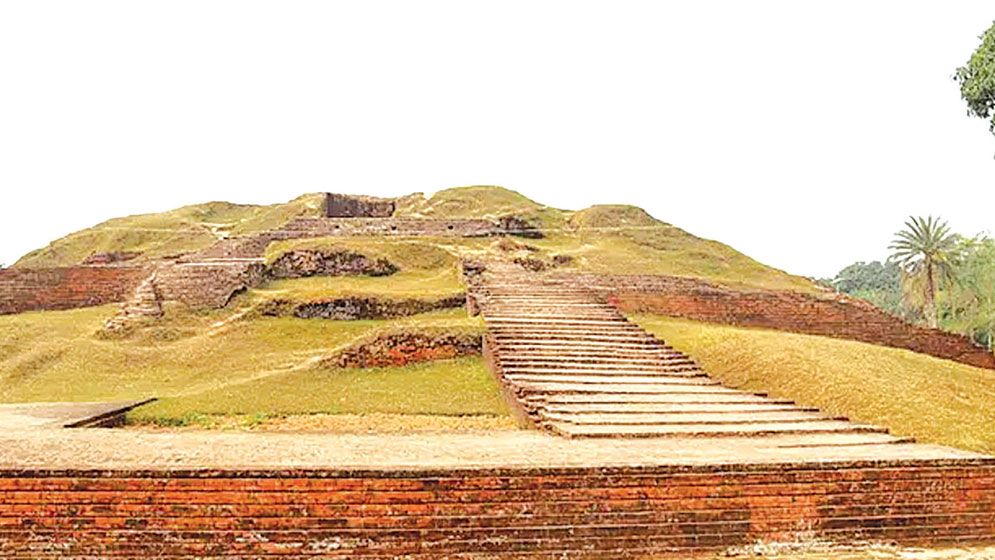
The ancient archaeological site Bharat Bhayna, locally known as Bharat Rajar Deul, in Keshabpur upazila of Jashore has recently emerged as a major tourist attraction, drawing a steady influx of visitors from the country and abroad.
Located in Bharat Bhayna village on the southern bank of the River Bhadra, the structure is believed by historians to have been built as a Buddhist temple between the 7th and 9th centuries. The monument rises approximately 11.88 metres above the ground level and is surrounded by scenic natural beauty.
Keshabpur lies about 34 kilometres away from Jashore town, while the site is around 11 kilometres from the upazila headquarters. Visitors from across the country, including students and professionals, are flocking to the site daily.
Locals said improved accommodation and dining facilities could significantly boost tourist numbers, contributing to the local economy and increasing government revenue. Currently, entry fees are set at Tk20 for adults and Tk10 for students, while over a hundred shops and related infrastructures have developed around the site.
Regional Director of the Department of Archaeology in Khulna, Loveli Yasmin, said the site was brought under the department in 1984 and that various artefacts recovered during excavations support the belief that the temple dates back to between the 7th and 9th centuries.
According to sources, noted archaeologist Kalipada Nath Dikshit first surveyed the site in 1922–23. Excavation work was later conducted by the Department of Archaeology under the Ministry of Cultural Affairs in phases during 1984–85 and from 1996 to 2016–17, with activities continuing.
Experts confirmed the structure as a Buddhist temple based on excavation findings. Architecturally, it features a cruciform design with a square central chamber and four projecting arms on each side. The structure contains 14 chambers of varying sizes, believed to have been used for religious purposes.
Scholars noted similarities between the site’s architectural style and renowned Buddhist complexes such as Somapura Mahavihara, located in Paharpur, Shalban Vihara in Mainimati and Vikramashila Mahavihara in Bihar, indicating its significance in the evolution of temple architecture in eastern India.
Excavations have uncovered human fossils, including skulls and limbs, a bull’s head, and terracotta plaques, which are now preserved in a small on-site museum.