


 For all latest news, follow the Daily Sun's Google News channel.


We, the people of Bangladesh, pay homage to the Father of the Nation today on his 106th birth anniversary. It is that old yet abiding thought in all of us – that Bangabandhu Sheikh Mujibur Rahman lives among us, with us. That we shine in his glory is a truth which endures and will endure despite the efforts expended by his detractors to erase him from our history.

Many moons ago, I met Bangabandhu on an evening which has remained an indelible part of my life. I have remembered his affection. I watched him interact with others as a summer breeze wafted in, to mingle with the scent of the roses in that charming ambience. As I age, in the lengthening hours of a cool, quiet summer evening in London, on a sultry afternoon walk through my village outside Dhaka, in the quiet hours I spend in a Kolkata bookstore, on the aircraft carrying me home across the vast expanses of the sky, I let my thoughts find their way into the alleys, lanes, highways and woodland paths of history, into the story of my nation.
That story is the epic tale of Bangabandhu. I walk back, to thoughts of the Father of the Nation, to the recollections I have of Bangabandhu Sheikh Mujibur Rahman. He was the North Star in our lives. He was the boatman who took us around the bend in the river – to remind us of heritage, of the destiny we would carve out of heritage. He told us the land was ours, to own and to pass on to the generations to come. He led us to a shining land of liberty. He called it Shonar Bangla.
My fascination with, indeed study of, Bangabandhu Sheikh Mujibur Rahman commenced in June 1968 at the beginning of the trial of the accused in the Agartala Conspiracy Case. It deepened in early 1969, when demands for the withdrawal of the case and his release were being made vociferously in what was then East Pakistan. I had never seen a picture earlier of the man who was one day to lead Bengalis to freedom. I assumed, though, that he was of short stature, like any average Bengali. Or he might quite resemble Sher-e-Bangla A.K. Fazlul Huq. It was not until Bangabandhu’s photograph (he had a huge moustache and wore thick dark-rimmed glasses, all of which accentuated the personality in him) appeared in ‘The Pakistan Times’ one day in February 1969 that I got to know him better, in a manner of speaking.
Late in June 1970, newspaper reports spoke an impending trip by Bangabandhu to West Pakistan as part of his election campaign. As a high school student in Quetta, Baluchistan, I wondered if it would not be a good idea getting his autograph. Like many other schoolboys at the time, I was in those days chasing all the famous men and women I could, to collect their signatures in my autograph book. I had by then collected quite a few signatures, one being Zulfikar Ali Bhutto’s.
On a late afternoon, I trooped down to the Baluchistan Awami League office and explained to Mir Mohammad Khan Raisani, chief of the provincial branch of the party, that I needed Bangabandhu’s autograph. Could he help? To my utter but pleasant surprise, handed me an invitation card to a dinner being hosted in Bangabandhu’s honour on 1 July. My happiness touched the heavens. I was on top of the world.
I literally skipped and danced all the way home. Our family were delirious with joy. On the appointed day, in the morning, I went to the railway station to see the leader arrive by Bolan Mail from Karachi. When he appeared at the door of the carriage he was in, all that crowd of Pathans and Baluchis cheered. I stared at Bangabandhu. I had not known that a Bengali, could be that tall. But it was dinner that evening which remains an unforgettable event for me. As Bangabandhu walked toward the guests assembled on the lawn (and among those present were Abdul Samad Achakzai and Yahya Bakhtiar), I readied myself to shake hands with him. I was the only schoolboy in that big crowd of political adults.
Bangabandhu shook hands and exchanged greetings with the guests, all of whom had stood up as he approached. When he approached me, I bravely put out my hand to him. He was a trifle surprised at spotting a mere teenager in that crowd. Raisani explained who I was. Bangabandhu did not take my hand. His hands went to my cheeks, which he pulled in affection. He asked me about my parents, about my school. And then came the question: “Deshe jaabi na?” I was at a loss for words. He asked again, this time with a slight amendment to his earlier question: “Bangladesh-e jaabi na?” It was magic hearing him use the term ‘Bangladesh’. Thenceforth, with my friends and my teachers, I discarded ‘East Pakistan’ and spoke of Bangladesh, even when months later Pakistan’s soldiers went on committing genocide in my country.
The day after the dinner, as I came out of school with my friends, Bangabandhu’s entourage passed by. I waved at him; he waved back vigorously. My Pakistani friends were impressed. The next time I saw Bangabandhu was on the day he came home from imprisonment in Pakistan in January 1972. Earlier, on 8 January, I had walked into the offices of Bangladesh Betar for an audition in news reading. Someone rushed in with the news that Bangabandhu had been put on a plane out of Pakistan and no one knew where he had been sent. I decided not to sit for the audition, ran back home and sat down with the radio.
In the evening on 8 January the BBC World Service informed the world in its six o’ clock news broadcast: ‘The East Bengali political leader Sheikh Mujibur Rahman has arrived in London.’ A couple of hours later, it was sheer joy hearing Bangabandhu speak at a press conference at the Claridge’s Hotel: “Gentlemen of the world press, I am happy to share the unbounded joy of freedom won by my people in an epic liberation struggle.”
On 10 January, I hung on to the rear of the truck carrying Bangabandhu all the way from Tejgaon airport to the Race Course. It was a moment in eternity. It was eternity itself. We all slept easy that night, for the Liberator was back home amongst us. I met him on an April day that year, for I was worried that if English medium education was to be done away with, my future was as good as over. To my amazement, he remembered me, wanted to know when I had returned from Quetta. Was my family okay? He reassured me that everything was in place, that I should go home and prepare for my school leaving examinations.
Over the next couple of years, nearly every evening, through the heat of summer and the showers of the monsoon, I stood at the gates of the old Ganobhaban, for a glimpse of him as he went back home at the end of the day. It became a habit with me to wave at him every time his car emerged through the gates and headed for Dhanmondi. He waved back. And then came that evening when, even as the rain dripped through the leaves of the trees outside Ganobhaban, Bangabandhu had his car stop and waved me over to him. He asked me why I had to be at that spot every day. “To see you”, I told him.
With a twinkle in his eyes, he said softly, “You don’t have to see me every day. Don’t you have to study at home?” My response being in the affirmative, he ordered me to go back home. It was then that I said something which left even me surprised: “Once I finish my education I would like to serve in your government.” Bangabandhu looked at me, in a state of disbelief, before telling me, “All right, but first go finish your education.”
That was the last time I spoke to him. And the last time I heard him was when he spoke at Suhrawardy Udyan on Independence Day in March 1975. I woke up at dawn on 15 August 1975, meaning to have a quick cup of tea before heading off to Dhaka University to hear Bangabandhu speak (and that was a month before I would become a student of the university). Meanwhile, I turned the radio on.
The rest is a searing pain the nation has never got over. It is tragedy which shames us, our nation, at every daybreak, leaving us feeling humiliated and diminished every time twilight loses itself in the night. Bangabandhu stood by us all his life. But none of us were there for him when he needed us the most, in those terrible minutes that would silence him, silence his family, for all time.
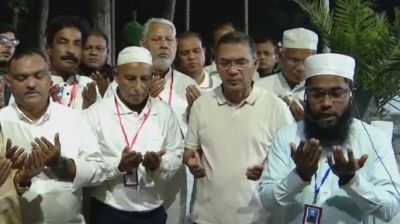
On a visit to Tungipara in August 1996, I washed the rough-hewn coffin in which his assassins had transported his remains to his ancestral home. In the light of the moon, I sat beside his grave all night, grateful for the glory he had brought into the life of our nation through his life-long struggle in defence of people’s rights. And I prayed.
____________________________________
Syed Badrul Ahsan writes on politics, diplomacy and history. He has authored two biographies of Bangabandhu and one of Tajuddin Ahmad
Read More