




 For all latest news, follow the Daily Sun's Google News channel.


Humankind is living in a politically chaotic environment in the world. The main reason is a lack of trust. Democracy cannot thrive without trust. The people must believe in the politician. If mutual belief and respect do not exist, then chaos becomes the end result. Some political scientists believe that two actions would contribute significantly to winning back trust. One is that senior politicians should tell the truth. Another one is that the state must ensure that politicians are accountable to the people. These are not happening sufficiently now.
History tells us that trust matters. Plato’s Republic outlined an ideal state but also carried his theory of justice, his explanation of the three parts of the soul and his famous allegory of the cave. Plato went through the failings of the type of government in his time, such as timocracy, oligarchy and tyranny. Timocracy is a form of government where political power is held by individuals motivated by ambition, honour or military prowess, often with property ownership as a prerequisite for holding office. Oligarchy is where a small group of people have control of a country, and tyranny is an absolute exercise of power by a ruler often lacking legal restraint. However, in the Republic Plato’s focus was Athenian democracy.

Plato suggested that we should not expect a nation or state to be run properly by soldiers, businessmen or workers but only by those who have the best general overview of what constitutes the good in society. Plato believed that a state run by soldiers would always be at war and limit freedoms for its citizens; a state run by businessmen would follow the path of envy and materialism; and a state run by workers would lack the intellectual breadth and depth to know what good governance is. Plato observed that an educated generalist, trained over many years in abstract subjects, can govern well. In fact, Plato tries linking the quality of the state and the quality of the individual. This is also known as Plato’s analogy between the city and the soul.
Plato seems to be right when we see that one president in the world thinks that the sound of windmills, which provides renewable energy, gives you cancer. Therefore, there is no need for renewable energy but rather ‘drill baby drill’ oil. If a president of a country and Plato come together, then the president who does not believe in renewable energy will abandon any belief in the primacy of truth. If the leader of a democracy no longer believes in the fundamental importance of truth, then that democracy is undermined. On the other hand, Plato believed that the search for truth and the ideal of truth was key to any successful society.
In Western democracy, we sometimes see that politicians are trying to say that truth is relative and are interested in a concept called 'alternative facts'. The current president of the United States is the front runner in all the alternative facts and fake news. If news is fake, then it will still be news, which might have arisen from the north (N), east (E), west (W) and south (S).
Plato may be abandoned by some in society because of his thoughts about women, but his search for truth has been celebrated. Plato, in the 4th century BC, observed that ‘the state in which the rulers are most reluctant to govern is always the best and most quietly governed, and the state in which they are most eager is the worst.’ In the Republic Plato gave a higher value to the philosopher than the politician. He suggested that ‘until kings are philosophers or philosophers are kings, cities will never cease from ill; no, nor the human race; nor will our ideal polity ever come into being.’
If politicians are to be trusted by their people, then they should appear regularly on the media the people trust. There is a need for strictly regulated media as well. Media should not be politicised; that is bound to be impartial, whereas politicians should be held to account and be honest and transparent. For the sake of democracy and establishing trust, politicians should put themselves in for in-depth interviews, facts should be checked, and they should be prepared to debate each other, and if something has gone wrong, then say so in a more eloquent way.
Currently the world is undergoing seismic changes. Iran-Israel war, where the US is positioning himself as a catalyst assisted by the UK. There are widespread disillusion and a loss of a sense of belonging. On the news we are watching every day that the very fabric of our democracy is being ripped and shredded. Imperialism is prevailing. School children have died inside a classroom. As millions around the world protest over Iran- Israel's war or climate crisis, our top priority should be telling the truth about science and war facts. Is there nuclear weapon development in Iran? If so, which stage? What is the purpose? These are the facts journalists need to expose.
A statistical survey suggests that in the UK the most trusted profession is nursing. This means that there are people the public respects more and more – as it trusts politicians less and less. If the politicians are to be respected, then they should demonstrate that they respect and care about society’s interests before their own. In the changing world 'trust' is the only constant that can bind a society and a country together. Stop the war, go to the negotiating table, and give due respect to people who have been on this planet for thousands of years as a rich civilisation. Don’t just follow your own whimsical interest.
In summary, a politician who thinks they can just make up facts to suit them has, in fact, abandoned truth. Various research has identified tactics and fingerprints similar to all places where there is a process of selecting politicians. The tactic is to ‘constantly divide, increase distrust and undermine our faith in institutions and democracy itself’. Current geopolitical reality should come out of it.
_______________________________________
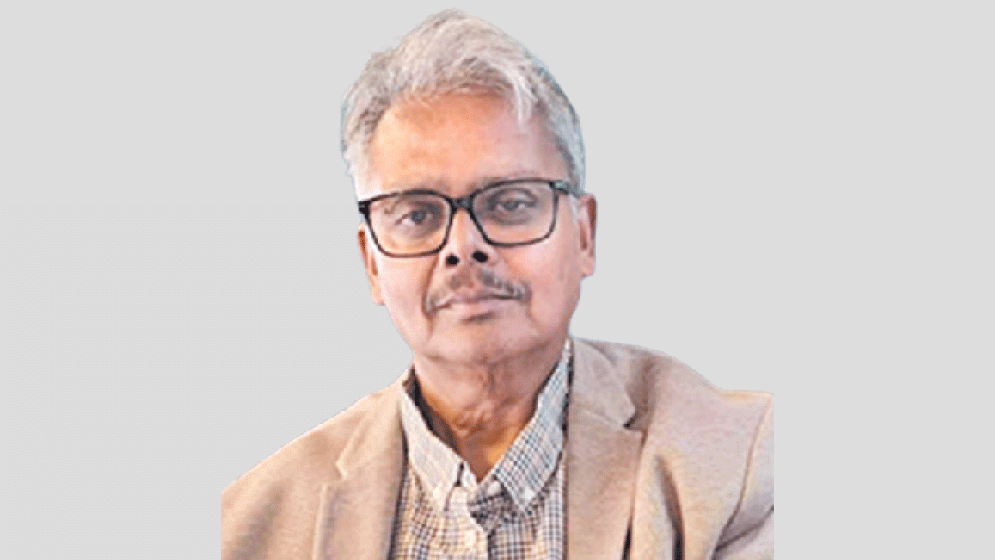
The writer is a UK based academic who writes on science, philosophy and education
Read More