



 For all latest news, follow the Daily Sun's Google News channel.


The World War- II is widely considered as the most devastating conflict in the history of human civilisation. More than thirty nations were involved in the war. The deaths of millions of people, cities reduced to rubble, and the ultimate degradation of human values forced world leaders to realise a painful truth in the post-war era: if the politics of power remained unchecked, human civilisation would repeatedly fall into the same cycle of destruction. From this realisation emerged several new structures of international cooperation and peacekeeping. At the centre of this new order stood the United Nations, an institution created with the aim of preventing war, establishing international law, and creating diplomatic avenues for resolving disputes among states.
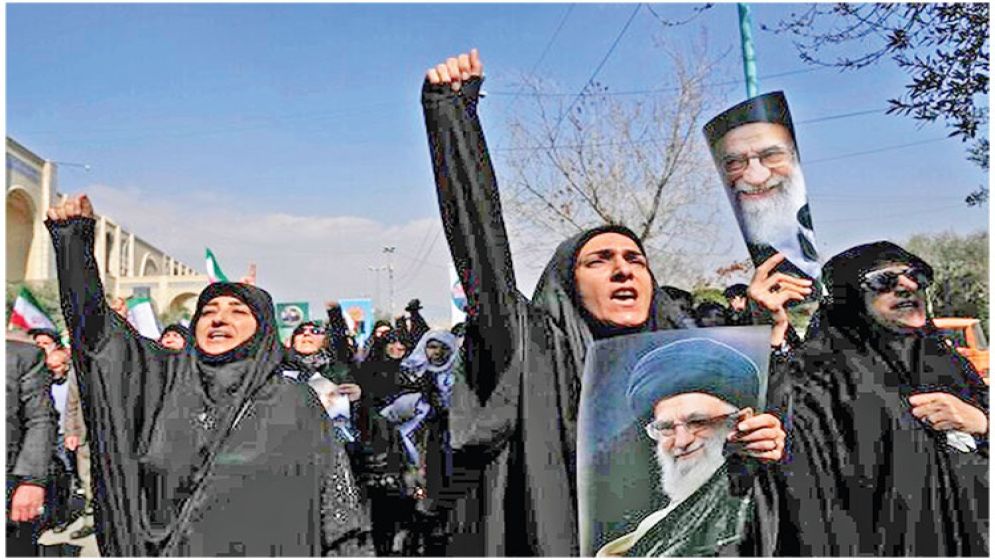
However, the rules-based world order that had evolved over the past eighty years after the World War-II, largely under the leadership of the United States, is now standing on the verge of a profound breakdown, ironically in the hands of its own architect. Global politics today is passing through a moment where the struggle of military might among major powers has placed medium-sized states in an existential crisis. The tense situation in the Middle East, particularly the military posture of the United States toward Iran, is once again raising fundamental questions about the very institutions and unity that were created in the aftermath of global catastrophe.
The institutions that were established in the name of human rights, international law, and peace, the very bodies meant to restrain war, now appear to be silent spectators. This silence is not merely diplomatic; it reflects a deeper moral, political, and humanitarian crisis. In reality, many of these institutions seem to have been reduced to puppet actors moving at the gesture of global superpowers. The drumbeats of war surrounding Iran are often presented as a matter of security or the containment of weapons. Yet such narratives largely serve as a blindfold for the global public. At its core, this conflict is a massive geopolitical chess game of power. If one looks at the map of the Middle East, it becomes clear that Iran stands on a territory beneath which lie some of the world’s largest oil reserves.
Moreover, it sits beside the Strait of Hormuz, one of the most critical maritime routes through which the lifeblood of the global economy, energy, flows. Whoever controls this strategic passage essentially holds enormous leverage over the global energy market. For this reason, Iran is not merely a country in the eyes of great powers; it is a strategic force. Bringing it under control would mean securing influence over the region’s oil market and geopolitical dominance. The tensions that have persisted for decades are therefore not simply a military confrontation; they represent a deeper contest over power balance, strategic supremacy, and long-standing geopolitical rivalry.
Conflicts and wars may arise in any region under various circumstances. Yet what is deeply alarming is the apparent absence of any effective mechanism to stop them. The United Nations and global human rights institutions were meant to prevent war and safeguard peace across the world. Today, however, these very institutions are crushed under the grinding wheel of the political interests of powerful states. Whenever the question of taking action against a powerful country arises, complex procedural rules and diplomatic manoeuvring quickly dissolve any meaningful initiative. Meanwhile, organisations such as Human Rights Watch should do little more than document destruction and show images of suffering to the world; sometimes even that becomes impossible. They possess no magical power capable of stopping a flying missile or halting an advancing tank. The reality of today’s world is disturbingly harsh: even though massive buildings and thousands of officials exist in the name of peacekeeping, they remain powerless spectators before the raging flames of war. This situation is profoundly humiliating for humanity.
The United Nations Security Council, which holds the primary responsibility for maintaining international peace, is itself structured around inequality. The veto power granted to five powerful states enables them to block any decision they dislike instantly. But, the unity and sincerity required to implement them in reality are largely absent among world leaders.
This struggle for power, combined with structural weaknesses in global governance, has pushed peace-loving people across the world into a state of profound uncertainty. After the World War-I, the League of Nations was established in an attempt to maintain international peace. Yet its failure ultimately paved the way for the Second World War. If today’s international system weakens in a similar manner, regional conflicts could gradually escalate into broader global confrontations. The possibility of a Third World War may still seem distant, but the current trajectory of international tension cannot completely dismiss such fears.
Therefore, the global order must be reformed and strengthened. Multilateral diplomacy needs to be reinforced, the real capacity to enforce international law must be enhanced, and global institutions must become more accountable and effective. At the same time, dialogue among major powers must intensify in order to reduce tensions.
The writer is a student at the Department of Economics, Eden Mohila College
Read More