


 For all latest news, follow the Daily Sun's Google News channel.


Cuba soon going to 'fall', Trump tells CNN
He also says, ‘I’m going to put US foreign secretary over there for negotiations’
Agencies, Washington
Published: 08 Mar 2026, 12:00 AM
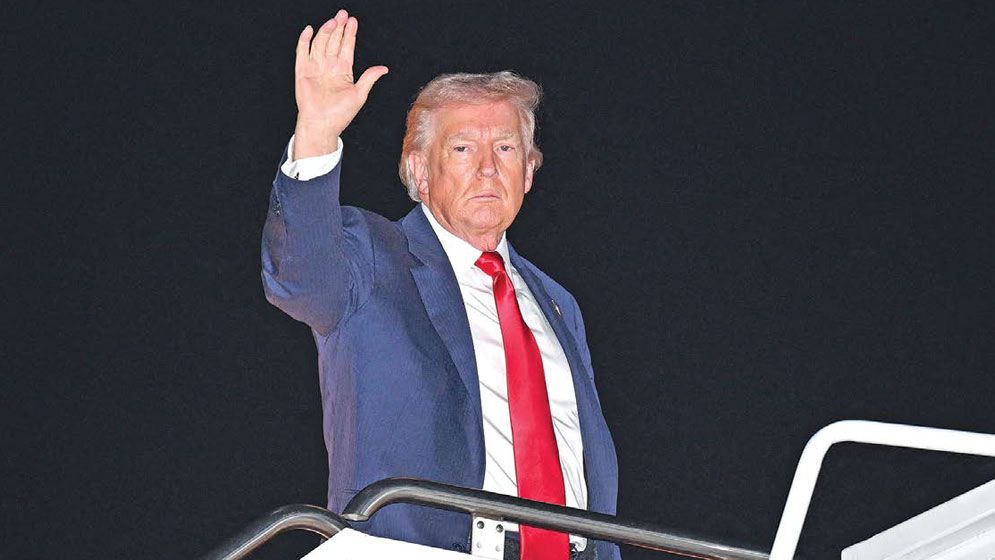
US President Donald Trump told CNN on Friday that Cuba “is going to fall pretty soon.”
“Cuba is gonna fall pretty soon, by the way, unrelated, but Cuba is gonna fall too. They want to make a deal so badly,” he told CNN’s Dana Bash in a phone interview when touting US military success in his second term.
“They want to make a deal, and so I’m going to put Marco (Rubio) over there and we’ll see how that works out. We’re really focused on this one right now. We’ve got plenty of time, but Cuba’s ready — after 50 years,” he added, explaining that Iran is the current priority.
He added of Cuba: “I’ve been watching it for 50 years, and it’s fallen right into my lap because of me, it’s fallen, but it’s nevertheless fallen right into the lap. And we’re doing very well.”
A day earlier, Trump said at the White House that it’s only a “question of time” before American Cubans can return to their home country, appearing to say that’s next on the administration’s agenda after the ongoing war with Iran.
“He’s doing some job, and your next one is going to be, we want to do that special Cuba,” Trump said Thursday referring to his Secretary of State. “He’s waiting. But he says, ‘Let’s get this one finished first.’ We could do them all at the same time, but bad things happen. If you watch countries over the years, you do them all too fast, bad things happen. We’re not going to let anything bad happen to this country.”
The day after Cuba was crippled by another 24-hour nationwide blackout, US President Donald Trump suggested the country was next on his administration's agenda, saying it was "just a question of time" before there would be change on the island.
Standing in front of an awkward-looking Lionel Messi, Luis Suarez and the other stars of the Inter Miami soccer team on Thursday, Trump told the team's owner, Cuban-born magnate Jorge Mas, that they would soon be "celebrating what's going on in Cuba", adding that the Cuban authorities "want to make a deal. So badly you have no idea."
While the exact timeframe is not clear, what emerges from Trump's latest comments is that he and his administration intend to keep up the pressure on Cuba as a key part of his plans in the region.
The reference to putting the US secretary of state "over there" could hint at a possible trip for face-to-face negotiations.
While that initially seems unlikely, this has been a year of unlikely events in the Americas, starting with the forced removal of Nicolas Maduro from power in Venezuela on 3 January.
In the wake of the US military action in Venezuela, Cuba, its closest regional ally, lost its main source of crude oil.
Under pressure from the Trump administration, none of Cuba's other energy partners, particularly Mexico, has been able to step up to fill the breach in oil supply left in Venezuela's absence.
Evidence of the fuel crisis is increasingly clear across the length and breadth of the island.
With only a small part of the state's garbage trucks operating, rubbish is piled high in the streets. Amid fears of a widespread public health crisis, some residents have taken to burning rubbish piles at night, filling the streets with acrid smoke.
Even in more affluent parts of the capital, Havana, people have been cooking with firewood during the blackouts.
The lack of fuel does not just mean cars are difficult to run, but generators too.
Few residents have solar panels or any other option beyond the country's crumbling Soviet-era electrical grid. The island's thermo-energy plants simply cannot generate enough electricity for domestic consumption without more crude oil.
In that context, Trump and Rubio have repeatedly indicated that it is not the time to ease off on squeezing the island as hard as possible.
Such pressure may be a strategy to put Cuba in a weaker position at the negotiating table.
Critics say ordinary Cubans are most affected by the policy - not the leadership - and question if the strategy is designed to prompt some kind of internal uprising on the island.
Read More