



 For all latest news, follow the Daily Sun's Google News channel.


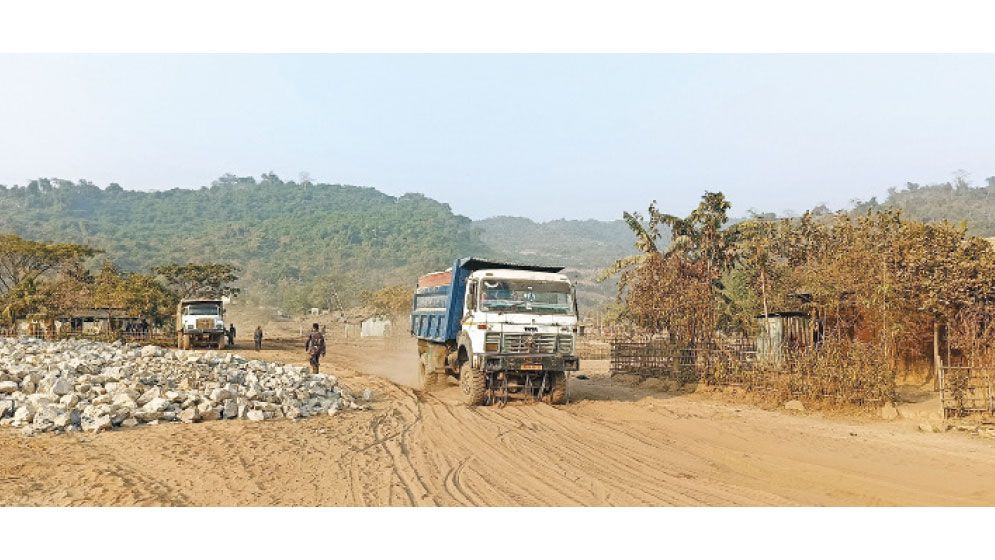
Despite generating substantial revenue for the government, three customs stations in Sunamganj have seen no significant infrastructural development over the past three decades, according to traders and local stakeholders.
The Barachhara, Charagaon and Bagli customs stations, located in Sreepur Uttar Union of Tahirpur upazila along the Meghalaya border, play a vital  role in the national economy through the import of coal and limestone from India. The commodities are brought in under letters of credit (LC) by Indian trucks, contributing an estimated Tk150–200 crore in annual revenue to the state exchequer.
However, despite this sizeable income, basic infrastructure at the ports remains underdeveloped. There are no paved roads for transporting goods to and from the customs stations, and key border roads are reportedly in poor condition.
Traders said the absence of modern weighing machines to measure imported coal and limestone has created opportunities for irregularities and revenue losses.
Allegations have also surfaced that, instead of the permitted 12 tonnes per truck, 18 to 19 tonnes of goods are being transported in some cases due to the lack of proper monitoring equipment. Traders claimed that although cases are occasionally filed, enforcement measures often remain ineffective.
In addition, smugglers are reportedly transporting coal and stone across the border through organised syndicates, depriving the government of significant revenue. The three customs stations were established in 1994; since then, traders said, no substantial development has taken place in the port areas.
Businesspeople alleged that during the tenure of the Awami League government, political influence and syndicate practices affected operations at the ports, while infrastructural development remained neglected.
In 2014, coal exports from Meghalaya were halted following a court order in India over environmental concerns, leading to disruptions in coal imports through the border. Traders and workers said the prolonged suspension severely affected livelihoods in the region, forcing many labourers to migrate in search of employment. Although imports have resumed intermittently, uncertainty continues to impact the local economy.
Local importers have expressed frustration over the lack of basic facilities, including accommodation and rest areas for traders and workers. They claim that due to the poor condition of roads, transportation costs have increased significantly, and accidents frequently result in financial losses.
Sabuj Alam, general secretary of the Tahirpur Importers Group, said that despite collecting around Tk200 crore annually from the ports, the government has not allocated sufficient funds for their development. “Traders often have to repair damaged roads at their own expense,” he said.
Khasrul Alam, president of the Tahirpur Importers Group, urged the government to allocate at least 20% of the revenue generated from the three customs stations for infrastructural improvements. “If a portion of the revenue is reinvested locally, it will create a more business-friendly environment and ensure continued revenue collection for the government,” he said.
Anwar Parvez, customs superintendent of Bagli customs station, said that higher authorities have been informed about the need to install modern weighing machines. “If excess goods are detected, cases are filed accordingly,” he added.
Meanwhile, newly elected MP for Sunamganj-1 constituency, Kamruzzaman Kamrul, said he would work toward the infrastructural development of the ports and take measures to prevent smuggling to safeguard government revenue.
Stakeholders believe that comprehensive development of roads and port facilities would not only increase government income but also improve the socio-economic conditions of thousands of workers, traders and local businesses dependent on the customs stations.