




 For all latest news, follow the Daily Sun's Google News channel.


Uncertainty grows over BD-US tariff deal
As the US tariff situation remains fluid following a Supreme Court ruling, trade bodies call for broader consultations and a thorough review of the agreement signed by Bangladesh

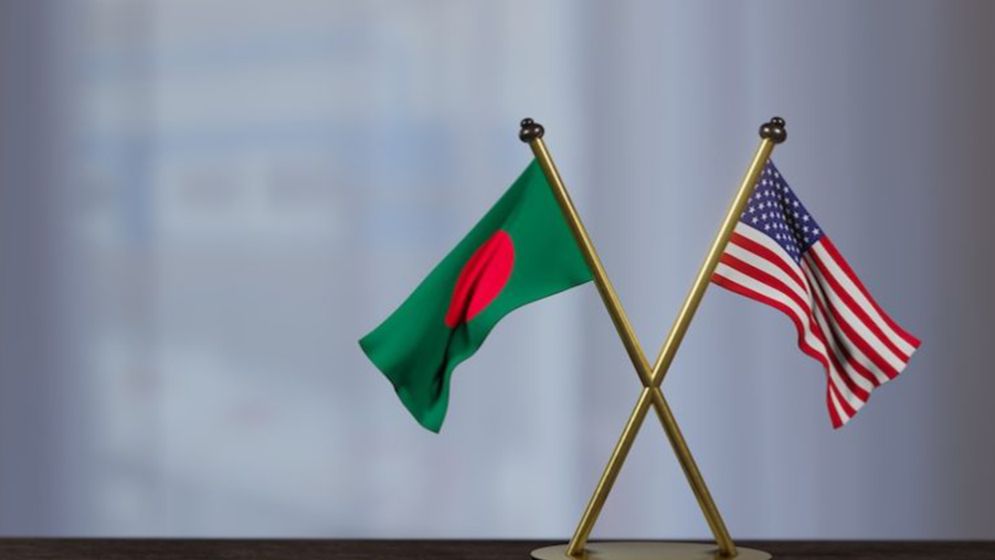
Although Bangladesh has not yet received any official written communication from the US administration regarding the new reciprocal tariff, business leaders have urged the government to proceed cautiously and avoid rushing into decisions without broader consultations. Recommended Stories
US President Donald Trump announced new global tariffs after the Supreme Court struck down his sweeping tariffs.
They emphasised the need for further meetings with economists, business leaders, lawyers and policymakers to properly review the agreement.
Some also alleged that the previous interim government signed the Agreement on Reciprocal Trade (ART) with the US in haste, without adequate consultation.
As part of ongoing discussions, the Ministry of Commerce held a meeting at the Secretariat on Wednesday to determine the next steps regarding tariff issues involving the United States.
Commerce Minister Khandaker Abdul Muktadir, the state minister, the commerce secretary and other senior officials attended the meeting.
Economists including Dr Selim Raihan, executive director of the South Asian Network on Economic Modeling (SANEM), and Dr Mohammad Abdur Razzaque, chairman of Research and Policy Integration for Development (RAPID), were present.
Business representatives included Mir Nasir Hossain, former president of the Federation of Bangladesh Chambers of Commerce and Industry (FBCCI); Anwar-Ul-Alam Chowdhury (Parvez), president of the Bangladesh Chamber of Industries (BCI); and Taskeen Ahmed, president of the Dhaka Chamber of Commerce & Industry (DCCI).
‘An unequal and unethical deal’
After the meeting, Bangladesh Garment Manufacturers and Exporters Association (BGMEA) President Mahmud Hasan Khan told Daily Sun that the association had urged the minister to take a decision only after careful review.
“We should not rush, as this is a crucial issue. We are still unclear whether the tariff rate imposed on us is 10% or 15% under Sections 122 and 301 of US domestic law. So, we need to observe the situation,” he said.
He added that the ministry could arrange further consultations with economists, business leaders and legal experts before making a final decision.
Bangladesh Knitwear Manufacturers and Exporters Association (BKMEA) President Mohammad Hatem described the agreement as “unequal and unethical.”
He alleged that the interim government had signed the deal in haste, without adequate consultation with the business community. “Various issues, including US tariffs, were discussed at the meeting. The next decision on the trade deal should be reviewed carefully, as many aspects remain unclear,” he said.
Hatem also suggested that the issue be discussed in Parliament. “The deal appears to reflect the interest of one country. It was imposed on Bangladesh. Do we not have the right to discuss it?” he questioned.
He noted that while the apparel sector may benefit from the agreement, other sectors could be adversely affected.
‘US tariff situation still evolving’
Commerce Minister Khandaker Abdul Muktadir said the situation regarding US retaliatory tariffs and trade agreements remains “an evolving scenario,” and the government will decide only after thorough review. About the new tariff, he said, “We have only heard these announcements through various channels. We have not received any official written communication. Under US law, the relevant legal provisions must be approved by Congress within 150 days,” he said.
The minister added that the previous government had signed a trade agreement with the US shortly before the political transition, but there is still insufficient clarity to comment conclusively on its implications.
“We are examining its pros and cons. It is natural for any agreement to have both positive and negative aspects. We are reviewing them and will decide on the next steps accordingly,” he said.
Responding to questions about whether the interim government had kept the agreement confidential and rushed the process, he acknowledged that non-disclosure agreements were in place during negotiations.
“However, this is a sensitive matter. The country with which we signed the agreement is very important to us. For various reasons, it would not be appropriate to make unintended comments in this evolving situation,” he added.
20 countries sign trade deals with US
Bangladesh is among 20 countries that have signed or are in the process of signing trade agreements with the US to reduce the burden of additional tariffs.
The other countries include the United Kingdom, European Union, India, Japan, Switzerland, Vietnam, Indonesia, Cambodia, Malaysia, Taiwan, Thailand, South Korea, Argentina, Ecuador, El Salvador, Guatemala, Liechtenstein and North Macedonia. On 20 February, President Donald Trump announced a 10% across-the-board tariff for at least 150 days following the Supreme Court ruling.
Earlier, Bangladesh signed the ART on 9 February, securing a reduction in reciprocal tariffs to 19% from 20%.
In April last year, a 37% tariff had been imposed on imports from Bangladesh under President Trump’s sweeping “Reciprocal Tariffs” policy.
On 21 February, Trump said the temporary tariff would be raised from 10% to 15% on US imports from all countries – the maximum level allowed under the law – in response to the Supreme Court’s decision.