


 For all latest news, follow the Daily Sun's Google News channel.


No Skills, No Future: How Long Can We Ignore This?
Dr Mohammad Zahir Raihan and Md Nurunnabi
Published: 25 Feb 2026, 12:00 AM
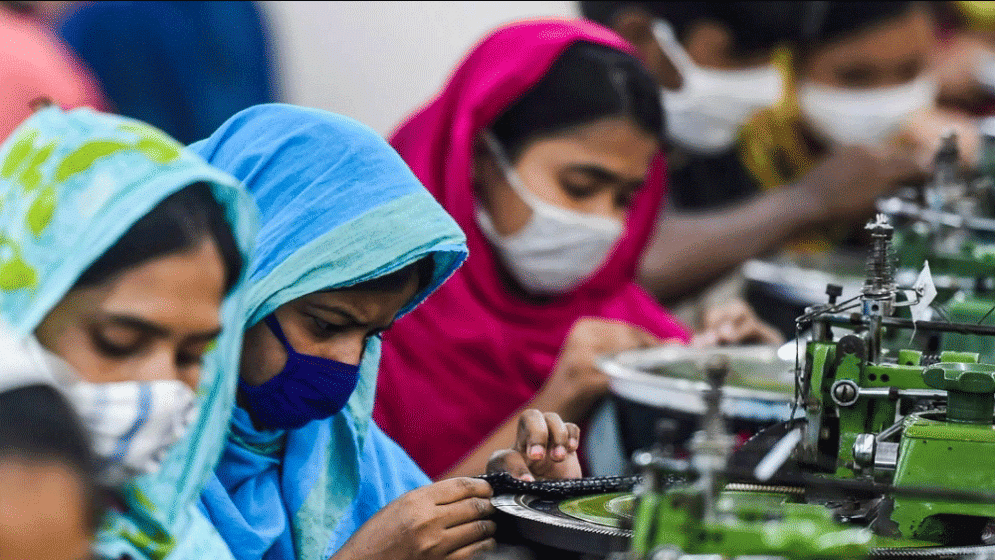
File Photo
On paper, Bangladesh has never looked stronger. Economic growth has expanded, universities have multiplied, and each year hundreds of thousands of young people graduate with degrees in hand. Yet walk into any job fair, training centre, or migration office, and a different country appears. A country where employers cannot find workers, graduates cannot find jobs, and families still mortgage land to send a son abroad for work that requires little more than physical endurance. This contradiction is no longer anecdotal; it is structural.
According to the Bangladesh Bureau of Statistics (BBS), unemployment reached 4.63% in the current fiscal year, with about 2.7 million unemployed people, half of them youth. More revealing is what lies beneath the number: only 16% of employed workers hold formal jobs, and roughly 84% work in informal employment. At the same time, employers regularly complain they cannot recruit skilled technicians, supervisors, machinists, or digital technicians. The paradox is striking; Bangladesh does not suffer from a shortage of people; it suffers from a shortage of employable skills. The question, therefore, is no longer academic: is our governance structure capable of producing a skilled workforce, or has it outgrown its institutional design?
Bangladesh is passing through the narrow window economists call the demographic dividend when the working-age population is larger than the dependent population. But such windows do not stay open forever. They reward preparedness and punish hesitation.
Every year, around 700,000 graduates enter the labour force, yet many remain unemployed or underemployed because their qualifications do not match labour demand. Meanwhile, agriculture still absorbs a massive share of workers – more than 42% of employment – while industry and services struggle to absorb educated youth.
This mismatch has consequences beyond economics. Youth frustration has repeatedly surfaced in public protests, migration surges, and social anxiety. When education stops guaranteeing livelihood, trust in institutions erodes quietly but steadily.
When the domestic economy cannot absorb workers, Bangladesh turns outward. In 2025 alone, more than 1.1 million Bangladeshis went abroad for jobs, and remittances crossed $30 billion for the first time. Since 2004, over 14.4 million citizens have found employment overseas. Migration has saved the economy repeatedly by stabilising foreign reserves, reducing unemployment pressure, and supporting rural households. But migration also exposes a deeper truth: Bangladesh exports workers, not skills.
Part of the problem lies not in policy ambition but in governance architecture. Skills development in Bangladesh is dispersed across multiple ministries and agencies, including education, labour migration, industry, technical boards, and various training authorities, each operating its own programmes, certifications, and training centres. As a result, the system functions in fragments rather than as a unified whole: curricula evolve in parallel without alignment, mandates frequently overlap, certification standards vary across institutions, and labour market forecasting remains weak and inconsistent. Even well-funded programmes struggle to create systemic impact because responsibility is shared but accountability is not. When outcomes fail, no single institution owns the failure.
A nation trying to move into higher productivity sectors cannot rely on fragmented training ecosystems designed decades ago for a different economy. Bangladesh has invested heavily in training infrastructure over the past decade, often supported by international partners. Buildings have been constructed, equipment procured, and thousands trained. Yet the central question remains largely unanswered: How many trainees secured sustainable employment?
Completion certificates are easy to count. Employability is harder. The labour market is evolving faster than training curricula. Automation is entering garments. Artificial intelligence is reshaping services. Even overseas employers now demand certified technical competencies rather than general labour. A recent study on Bangladesh’s technology readiness found outdated curricula and weak alignment between education, industry, and policy institutions, a structural barrier to future workforce competitiveness. In short, training supply exists. Demand-driven training does not.
A carefully designed Ministry of Skills Development could transform accountability in the workforce ecosystem rather than add bureaucracy. It could unify fragmented certification under a national framework aligned with industry demand, develop labour market intelligence to forecast domestic and global skills needs, and integrate overseas employment training with migration policy. Public funding could shift from enrolment counts to employment outcomes, while industry could actively co-design and co-finance training. Ultimately, such a ministry would align workforce policy with Bangladesh’s broader economic goal of moving from labour abundance to a productivity-driven advantage.
Creating a ministry is not a magic solution; many countries have changed signboards without changing outcomes. Bangladesh’s experience since 2018 with the National Skills Development Authority (NSDA) offers a cautionary example. Established under the Prime Minister’s Office with a strong institutional foundation, NSDA was mandated to lead coordination, quality assurance, and systemic reform in national skills development. Yet bureaucratic rigidity, overlapping mandates, leadership discontinuity, and limited sector-specific reform experience have constrained its effectiveness. The focus has too often remained on structures and training numbers rather than employment outcomes, industry alignment, and productivity gains. The lesson is clear: reform must be functional, not symbolic. Whether through a new ministry or a strengthened authority, what matters is concentrated responsibility, result-based policy, enforceable cross-ministerial coordination, and measurable labour market results, not institutional prestige.
Bangladesh is no longer a low-wage economy by default. Rising living standards demand rising productivity. And productivity depends on skills, not degrees, not buildings, not training statistics. For decades, growth was powered by labour availability. The next phase will be powered by labour capability.
We stand at a quiet policy crossroads. Continue with fragmented oversight and incremental adjustments or redesign governance around human capital itself. The debate is not truly about creating a ministry. It is about acknowledging that skills are no longer a sectoral issue. They are the economy.
If the next generation of Bangladeshis is to compete globally at home or abroad, skills governance must move from the margins of public administration to the centre of national strategy. The country’s demographic window will not wait, nor will it tolerate institutional inertia. The real test for the new government is whether it will act decisively and proactively now or wait until economic necessity forces reform.
The writers are a Professor of Finance at Bangladesh Open University and a Programme Officer at SICIP, Finance Division, Ministry of Finance respectively