


 For all latest news, follow the Daily Sun's Google News channel.


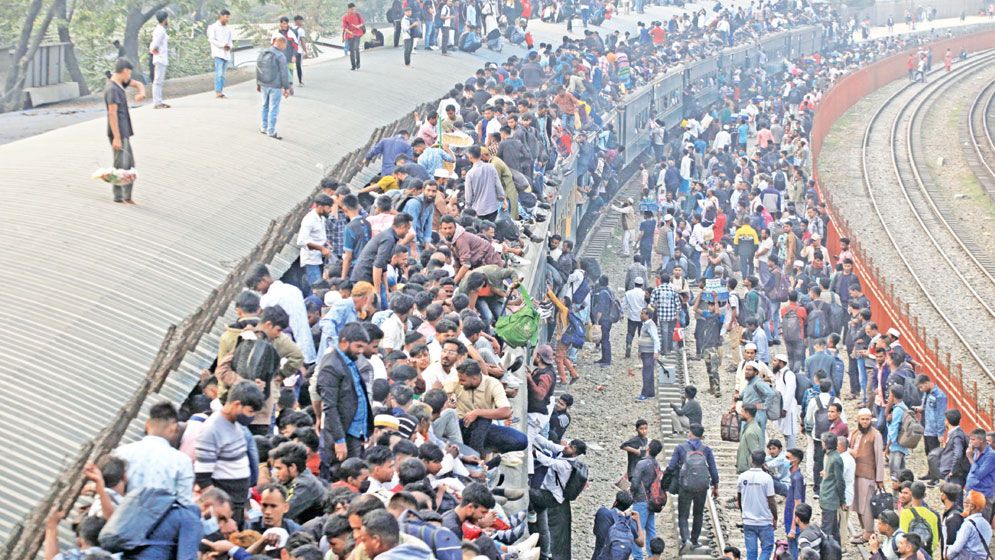
People throng the Airport railway station in the capital on Tuesday, as many start leaving the capital through different routes to cast their votes in their respective constituencies in the national election tomorrow. -NAZMUL ISLAM
After years of elections clouded by allegations of rigging, opposition boycotts and voter intimidation, Bangladesh is witnessing an extraordinary surge of determination from citizens desperate to reclaim the ballot.
From rooftops of trains to overcrowded launches and jammed highways, tens of thousands of people are pushing through chaos and cost to return home and vote, turning the journey itself into a quiet act of defiance.
The government’s declaration of a four-day public holiday ahead of tomorrow’s parliamentary and referendum polls has triggered a mass exodus from Dhaka, with families leaving the capital in droves.
Train stations, bus terminals and river ports were overwhelmed from Monday night, as voters sought to reach their home constituencies at almost any cost.
At Mohakhali and Gabtali bus terminals, the crowds swelled steadily from early Tuesday morning. Inter-city buses were scarce, forcing passengers to wait for hours. The shortage quickly spiralled into chaos by afternoon, with many unable to secure any transport at all.
Ashraf Hossain, a private-sector employee, waited more than three hours at Gabtoli with his wife and two-year-old child. “I arrived at the bus terminal at 10am, but the bus has yet to arrive, and I don’t know how long I have to wait,” he said.
The pressure spilled beyond Dhaka. At Chandra in Gazipur, hundreds of garment workers gathered from dawn amid a severe bus shortage. When a bus did arrive, people rushed forward in desperation. Sheikh Shahjahan, officer-in-charge of Savar highway police station, said the crowd caused heavy congestion on the Nabinagar–Chandra highway.
With demand far outstripping supply, allegations of fare gouging quickly followed. Angry passengers blocked the Nabinagar–Chandra highway at Baipail in Ashulia around 8am, accusing operators of charging exorbitant prices. The blockade was lifted two hours later.
“Bus operators are taking advantage of the rush,” said Md Jamil, a garment worker. “The usual fare to Magura is Tk 500–600, but now they are asking for Tk1,200.”
Unable to afford inflated fares or find buses, many workers, including women and children, were seen travelling in pickup vans and trucks, clinging to whatever transport was available.
Rail travel offered little relief.
Kamalapur and Bimanbandar railway stations were packed from early morning, with passengers standing shoulder to shoulder inside carriages. Several trains departed carrying passengers on their roofs, a sight usually reserved for Eid holidays.
Ashraful Haque, travelling atop the Nilsagar Express to Nilphamari, said the risk was worth it. “I could not vote during the past elections and this is the first time I have got the opportunity to vote. That’s why I am very excited and going to my home town by any means,” he said.
By midday, Sadarghat launch terminal was equally congested, with southbound vessels leaving Dhaka at full capacity. Highways linking the capital to Chattogram, Barishal and Tangail were choked with traffic. Abdul Alim, travelling to Tangail, posted a selfie from a gridlocked road, writing on Facebook that voters were flooding out of the city.
The exodus has left Dhaka itself struggling. From Monday night, city dwellers found buses in short supply, forcing many to walk or take rickshaws home — a situation that continued into Tuesday.
The transport and bridges ministry has imposed restrictions ahead of polling day, banning taxis, pickup vans, microbuses and trucks for 24 hours during voting.
Motorcycle movement will be restricted for 72 hours from midnight on 10 February. Buses, however, are exempt. Yet for all the visible enthusiasm, many away-from-home voters say structural barriers still keep them from the polls.
Students, journalists and low-income workers spoke of exam pressure, limited holidays, work obligations and soaring fares that have made travel impossible. A journalist working in Dhaka, speaking on condition of anonymity, said election duty would once again deny him his vote.
“There is no holiday for us. The authorities should arrange a postal ballot system for us too,” he said, calling the situation “sorrowful”.
Hamida Khatun (not her real name), a private-sector employee, said rising fares dashed her plans.
“I had every intention to cast my vote, as I have done in previous elections. But the fare is too high because many people are already trying to go home. If the holiday had started a day or two earlier, I might have had the chance,” she said.
For students, timing remains the biggest obstacle.
Osman Goni, a university student in Dhaka, said upcoming exams made travel unrealistic. “Between exams and the shortage of holidays, it becomes almost impossible to make it back to our hometowns,” he said. “If the vacation for students were extended, it would be easier for us.”
Cost is proving decisive for day labourers and garment workers. Parvin Akter, a homemaker from Mymensingh living in Dhaka, said voting would cost her up to Tk1,500 – money she cannot spare.
“Besides, if I go home, it will be difficult for the people I cook for every day,” she added.
Munna Islam, a garment worker from Dinajpur, reached the same conclusion. “The fare is about Tk1,500 for one person, nearly double the regular price,” he said. “For two people, the total cost would be Tk5,000-6,000. Eid is coming soon – travelling twice is impossible for me.”
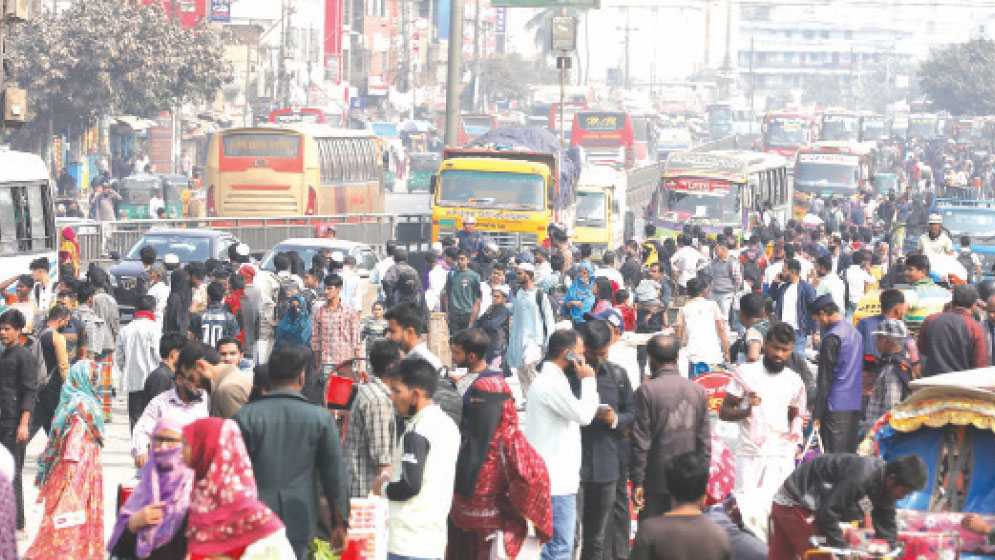
Massive crowds throng Gabtoli Bus Terminal on Tuesday to head home and vote ahead of tomorrow’s national election. -Kamrul Islam Ratan
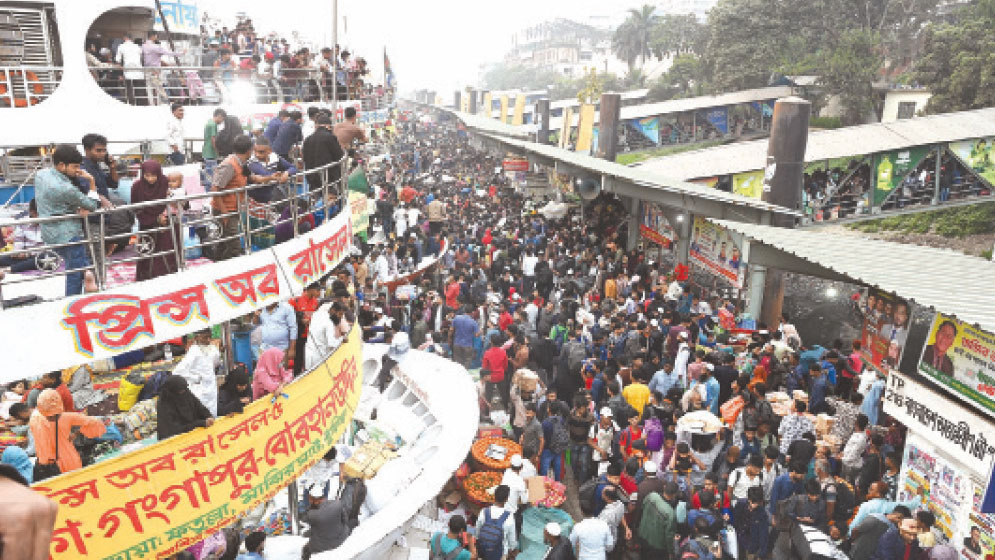
People flock to Sadarghat Launch Terminal on Tuesday to return home and cast their votes ahead of tomorrow’s national election. Daily Sun PHOTO