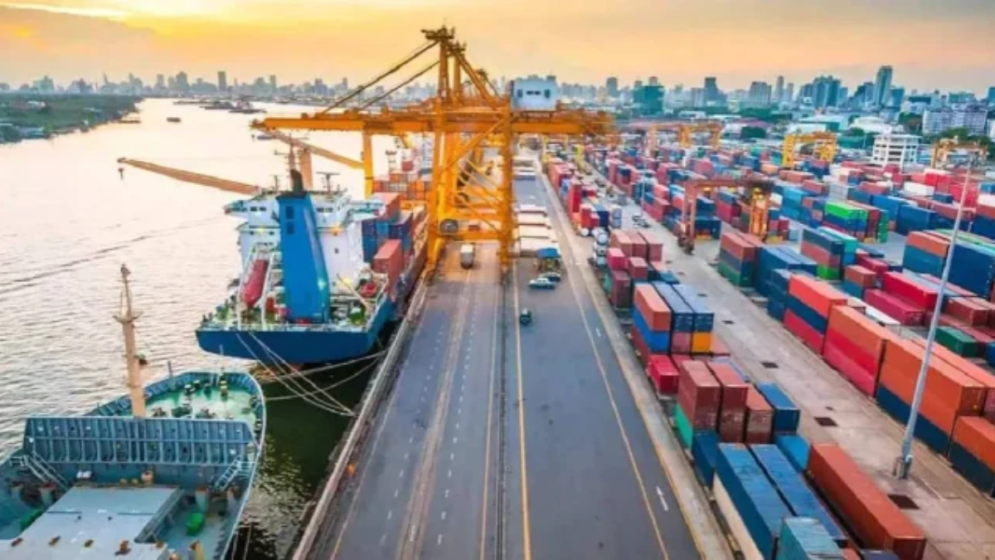
Chattogram Port is the lifeline of Bangladesh’s economy. For more than a week, operations at the port have been paralyzed. Hundreds of ships are stuck. Until last Thursday, all activities, including loading and unloading of cargo, remained suspended. Businesspeople are incurring losses amounting to hundreds of crores of taka. Bangladesh’s image is being damaged worldwide. Foreign shipping companies are growing increasingly frustrated after waiting day after day, and questions are being raised about whether they will continue to call at this port in the future.
If Chattogram Port becomes inoperative, the country’s imports and exports come to a halt. This is an essential service. Questions have been raised as to why the Shipping Adviser did not take immediate action as soon as the movement began. He did not. The Shipping Adviser only woke up after business leaders expressed serious concern. Port users voiced their anxiety over the paralysis caused by continuous work stoppages. On Wednesday evening, they held a meeting with the protesters at a hotel in Agrabad.
After the meeting, former First Vice President of BGMEA, M.A. Salam, speaking on behalf of port users, told journalists: “We sat and had detailed discussions for nearly four hours. You know that elections are ahead, followed by a three-day holiday. Then, seven to eight days later, Ramadan begins. We are worried about how Ramadan goods will be delivered. The garments sector, in particular, will operate only 18 days in February and just 16 to 17 days in March. If the port remains closed indefinitely, current consignments will not be shipped and future consignments will not arrive. We are facing unimaginable losses, especially in the manufacturing sector, and ultimately the entire population of the country during Ramadan.”
He added that if the port remains closed like this, all port-related charges will fall on businesses. “If the burden falls on businesses, they won’t absorb it—the cost will ultimately be passed on to consumers. That’s why we are worried.” Referring to the port as Bangladesh’s lifeline, he said, “I would request the Port Chairman to note that nearly 90% of exports and imports are handled through Chattogram Port. It cannot remain closed day after day.”
Business leaders strongly criticized the government’s indifference regarding Chattogram Port. As a result, the government finally reacted after six days. Last Thursday, Shipping Adviser M. Sakhawat Hossain eventually visited the port and held discussions with protesting workers and employees. However, during his visit, he faced protests from the workers. Around 11am on Thursday, outside Gate No. 4 of the port, he came under intense protest. Eventually, following discussions, the protesters suspended their work stoppage for two days. But this is not a solution. Immediate steps are needed to keep Chattogram Port operational.
Business leaders have urged the government to take swift action to resolve the deadlock created by the ongoing protests against the decision to lease out a container terminal. They warn that if this paralysis continues ahead of the parliamentary election, it could lead to a “major catastrophe.” They cautioned that if the issue is not resolved immediately, overcoming the crisis will be impossible. These observations were highlighted in a joint statement issued on Thursday by ten business organizations. They warned that if imports and exports remain suspended, commodity prices could spiral out of control during Ramadan.
The organizations issuing the statement include the Bangladesh Employers’ Federation, BCI, MCCI, DCCI, BGMEA, BKMEA, BTMA, BTTLMEA, BIGAPMEA, and BIGBA.
The current deadlock at Chattogram Port is the creation of the present government. Continuous protests began over the contract process with DP World for operating the New Mooring Container Terminal (NCT). Due to workers’ programs, operational activities have been disrupted. Container deliveries have dropped sharply. Export containers from private ICDs are being loaded onto ships only in limited numbers. Meanwhile, millions of tons of consumer goods are stranded on large vessels at the outer anchorage of Chattogram Port.
Port users say they are not concerned about who operates the NCT; they simply want cargo loading and unloading at the NCT to be completed as quickly as possible to keep the port dynamic. On the other hand, labor leaders say they wanted discussions regarding operating the NCT through DP World, but neither the government nor the port authority paid any attention to them. Therefore, they see no scope to withdraw their movement.
The decision to hand over the largest terminal of Chattogram Port—the New Mooring Container Terminal (NCT)—to Dubai-based DP World has been finalized. The contract is expected to be signed this month, after which the foreign operator will begin operations. Previously, contracts were also signed for constructing a new container terminal and handling an old one. On November 17 last year, contracts were signed at a hotel in Dhaka in separate ceremonies. For the Laldia Container Terminal, the agreement was signed by Chattogram Port Authority Chairman Rear Admiral S.M. Moniruzzaman and APM Terminals Vice President Martijn van Dongen. For the Pangaon ICT agreement, the Chairman of Chattogram Port Authority and the Managing Director of Medlog Bangladesh, ATM Anisul Millat, signed.
Under the agreement, APM Terminals has been given responsibility for constructing and operating the Laldia Container Terminal for 33 years—three years for construction and the remaining 30 years for operation. Under the public-private partnership (PPP), APM will invest Tk 6,700 crore (approximately USD 55 million) to build the terminal at Laldia Char. On the day of signing, Bangladesh received Tk 250 crore as signing money.
The process to hand over NCT operations to DP World is now underway. This process began during the tenure of the previous Awami League government. The operating term of the controversial Saif Power ended in mid-year. Since then, the NCT has been operated by the Navy’s Chittagong Drydock Limited (CDDL), which has managed it efficiently and set productivity records. There have been demands to continue operations under Drydock. However, at the highest level of government, the decision to hand over the NCT to DP World was finalized in December. Shipping Adviser Brigadier General (Retd.) M. Sakhawat Hossain has repeatedly stated that DP World would be given the responsibility.
Since June, labor organizations have been protesting against handing over the NCT to DP World. The issue eventually reached the courts, with a writ petition challenging the legality of the ongoing contract process with a foreign company. After the final verdict cleared the way for the contract, labor leaders became furious. Over the past week, repeated protests have paralyzed port operations.
Analysts say that since the country is currently going through an election, no decision regarding Chattogram Port should be taken at this time. Such a decision should be made only after an elected political government assumes office and consults all stakeholders. The government’s excessive urgency regarding Chattogram Port at the end of its tenure has raised serious questions. As a result, the country is facing multifaceted losses. On one hand, the paralysis is causing massive losses in imports and exports, which will be difficult to bear amid an economic crisis. On the other hand, many foreign ships may stop calling at Chattogram Port, and prolonged delays could lead to the port being blacklisted. Such a situation could cause the premature demise of Chattogram Port.
Therefore, the government must immediately abandon its stubborn stance and hand over the entire matter to an elected government. It must be remembered: if Chattogram Port does not survive, Bangladesh’s economy will not survive either.






 For all latest news, follow the Daily Sun's Google News channel.