


 For all latest news, follow the Daily Sun's Google News channel.


Interview
‘Ensuring accountability is a must for reform’
Daily Sun Report, Dhaka
Published: 31 Jan 2026, 12:00 AM
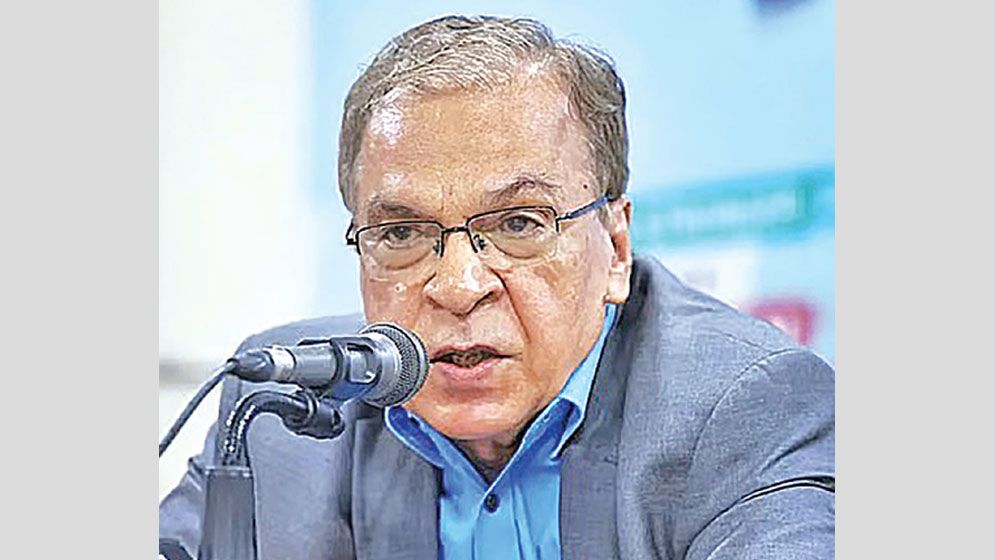
To control and prevent corruption, ensuring accountability for everyone concerned is necessary, TIB Executive Director Dr Iftekharuzzaman has said.
During a recent interview with News24, Dr Iftekharuzzaman said that to control and prevent corruption, four essential components are required. The first is political will, and the second is accountability – everyone accused of corruption, from the lowest to the highest level, regardless of identity or position, must be brought under accountability through due legal process.
He said the process must be exemplary, not harassing or vindictive.
The third thing required for a corruption-free country is institutional responsibility. While the Anti-Corruption Commission has a crucial role, several other institutions must be strengthened and made functional.
The fourth thing, which is indispensable though often overlooked, is the active resistance of citizens against corruption. People must demand corruption-free political will, justice for corrupt actors, effective institutions and must themselves refrain from corruption, said Dr Iftekharuzzaman.
Asked how far the interim government has progressed regarding reforms, Dr Iftekharuzzaman said that the interim government did take several positive steps. Reform commissions were formed, the National Consensus Commission was established, multiple white paper committees were created and a highly significant secretariat was set up to strengthen judicial independence as well as many other such measures were implemented.
“However, our concern lies elsewhere. Many reform proposals, on which there was consensus among political parties and even no dissenting notes, were not adopted,” he said, adding that, “The core objective of state reform was to establish a government accountable to the people. To achieve this, certain strategic recommendations aimed at holding the executive accountable through institutions were deliberately excluded or discarded.”
“Whether it is the National Human Rights Commission, the Anti-Corruption Commission or the proposed Police Commission, reforms were carried out on an ad hoc basis. As a result, these institutions were not truly empowered. This is where our deep disappointment lies,” said the TIB Executive Director.
Asked about his opinion as the head of the ACC Reform Commission, Dr Iftekharuzzaman said, “This is not a personal product of mine or of TIB. It was a government-formed reform commission that worked extensively, drawing from domestic experience, international standards and best practices. Our report was deliberately concise and specific – 47 recommendations in total.”
“The government itself requested us to identify ‘priority’ recommendations that could be implemented within its tenure. Some required executive decisions, some ordinances and some could be implemented by the ACC itself,” he said.
He further said, “To our knowledge, since the report was submitted in March last year, only one or two of these priority recommendations may have been partially implemented. Essentially, there has been no meaningful progress.”
“Secondly, corruption is deeply entrenched within the ACC itself. There are officials against whom credible corruption allegations exist — officials who are allegedly on the ‘payroll’ of those they are supposed to investigate. Our recommendation was simple: suspend those officials and hand them over to the courts. Nothing has happened,” Dr Iftekharuzzaman continued.
He said, “An ordinance amended the ACC Act of 2004 and introduced some positive changes. However, our core proposal was straightforward: establish an independent oversight committee – a transformed version of the existing selection committee to review the ACC’s performance every six months.”
He also said, “On 19 November, we managed to convince the relevant authorities in a one-hour meeting. They agreed, and we returned hopeful. But later, the decision was reversed. This is where sabotage occurred.”
He also said, “Those who do not want an effective, accountable ACC resisted the reform. This resistance did not come only from sections of the bureaucracy; at least seven members of the advisory council supported this obstruction. This has been profoundly disheartening.”
At one point, the interviewer said, “You are a member of the National Consensus Commission, yet there is not a single female member. Many have described the interim government as misogynistic, with religion being used to justify policies – such as limiting women’s office hours or questioning dress freedom. How do you see this?”
In reply, Dr Iftekharuzzaman said, “The absence of women in the commission is deeply painful to me. In Bangladesh, political capital has historically been built on three elements: money, muscle power and religion. These elements compete with each other as political currency.
“The hostility towards women’s rights and equality did not suddenly emerge after the fall of authoritarian rule – it would be a historical mistake to make such a claim. However, over the past 15 years’ this tendency has intensified, and in the post-July political context, it has become more pronounced.”
He further said, “Religion is increasingly being prioritised in state governance. This is not limited to explicitly religious political parties; newly emerging political forces and even mainstream parties are adopting the same model, using religion for political mileage.
“This trend fundamentally contradicts Bangladesh’s national identity, the spirit of 1971 and the values of 2024. We are a religious society, but we have historically understood the separation between religion and politics. This divisive trajectory must not be nurtured; it must be resisted.”
He also said, “To understand how to stop mob culture, we must understand its origins. Removing the debris of 16 years of authoritarian kleptocracy and immediately establishing a stable, peaceful society is extremely rare globally. “Those who see themselves as victorious after authoritarian collapse often develop a sense of entitlement – ‘now it’s our turn.’ From the afternoon of 5 August 2024, we saw widespread land grabbing, extortion, case trading, arrest trading and bail trading become normalised.
“This culture first developed within the bureaucratic structure and later spread rapidly to districts and grassroots levels. Law enforcement agencies — once instruments of authoritarianism, were not given the opportunity to rebuild moral integrity. The government also failed to show the moral courage needed to control these forces.
“Additionally, fallen political forces remain active, well-funded and organised. External destabilising influences — particularly from neighbouring countries unwilling to accept their diplomatic and political setbacks, have also contributed through misinformation and digital manipulation.”
Asked if a free and fair election is even possible in this situation, Dr Iftekharuzzaman said, “I believe that a credible election can still be held on schedule. Risks exist, as they do in any country, but they are comparatively higher now. If responsible institutions coordinate sincerely and act with integrity, these risks are manageable.
“The recent attacks on media institutions were not just attacks on organisations – they threatened the safety of every citizen. Yet beyond these threats stands a far greater force: the people.
“Those who suffered, protested and sacrificed over the past 16 years’ want one thing – a credible election and a peaceful transfer of power. If institutions align with the people’s will, such an election is achievable.”
He concluded by saying, “From an anti-corruption perspective, no. The aspirations rooted in 1971 and reaffirmed in 2024 demanded a corruption-free, well-governed state. Yet for decades, the state itself legitimised illicit wealth.
“People often pay bribes not by choice but by compulsion – 79% say they must pay to access basic services. Change must begin at the top. Political parties must reform themselves, practice internal democracy and set examples. Without that, expecting good governance is unrealistic.”