


 For all latest news, follow the Daily Sun's Google News channel.


Increasing Cyberviolence against Women
Tauhid Hossain Khan and Farzana Nizam Prity
Published: 18 Jan 2026, 12:00 AM
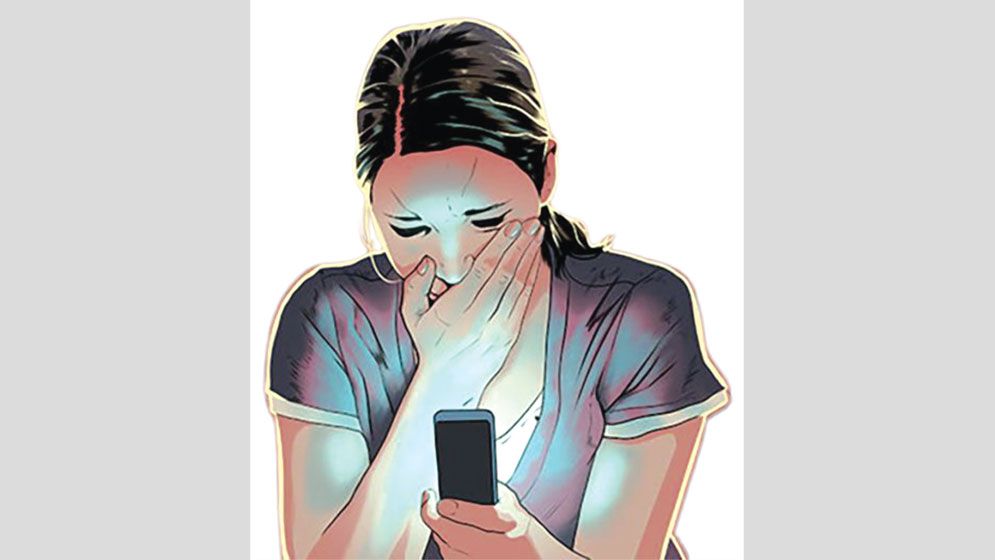
The digital age promised connection and a powerful new voice. For nearly all Bangladeshi women, however, social media has delivered something different: a landscape of fear. Behind the filters and friendly updates lies a darker reality of harassment and digital blackmail. The online world, which was once celebrated as a front door to opportunity, has become for women a platform of abuse. This disturbing shift makes the mission clear, building safer digital spaces demands legal safeguards, public awareness, and a fundamental societal commitment.
In Bangladesh, social media platforms – particularly Facebook, Messenger, WhatsApp, and TikTok – have become hotspots for virtual abuse. Many young women report receiving vulgar comments on their photos, unwanted “friend requests”, or repeated messages from anonymous accounts. The situation becomes more severe when offenders steal personal photos from public profiles and spread them in online groups with offensive captions. Victims are left both embarrassed and in long-term fear, while many young users now see online engagement as a potential risk.
Women today face a range of online threats: from edited photos to non-consensual image sharing and organised hate campaigns. Surveys consistently show that women – especially young women – are disproportionately targeted. In this case, smartphones have become a dual instrument: both a gateway to freedom and a weapon turned against them. What makes this form of violence particularly alarming is its scale and speed. A single screenshot can travel across hundreds of devices in a minute. An edited photo can be shared by strangers worldwide. A viral post is nothing but a permanent scar on the digital record. Ultimately, the cost is a heavy psychological burden. Many women of all ages experience anxiety, shame, social isolation, and even dropping out of school or leaving a job.
For many Bangladeshi women, this is not just a statistic. Recent years have produced numerous real-life incidents that reveal the depth of the crisis. Earlier this year in Dhaka, a college student’s life was overturned when her edited photos were shared by acquaintances on Facebook. The incident caused severe distress, and while her family filed a complaint at the Cyber Crime Unit, the investigation stalled. Similar cases are reported across the country. In Chattogram, a female employee faced threats for refusing a stranger’s messages. In Narayanganj, a university student was blackmailed with entirely fabricated chat screenshots, a campaign of harassment that forced her to abandon her classes and campus life. These examples illustrate how quickly digital tools can be weaponised against women.
This is not simply a “tech problem”. It is deeply rooted in the gender norms of our society. Traditional ideas about women’s conduct, morality, and honour are now reflected in digital spaces as well. The patriarchal control of women's bodies and choices offline has found a new frontier online. The same old question remains unchanged: instead of asking what he did to her, what was she doing there?
The attacks end, and a cold quiet takes hold. Because of the fear and potential scandals, victims often choose silence. In traditional communities, the stigma can be so severe that being targeted online leads not to offers of help but to whispered judgement. So-called well-meaning family advice to “be more careful” or “stay quiet” unintentionally shifts the burden to the victim. This enforced silence shields offenders and fuels the cycle of violence.
Bangladesh’s cyber laws, including the Cyber Protection Ordinance (2025), exist on paper, but victims face a wall in practice. The gap between law and justice is vast. Technical complaint forms, investigative challenges, and procedural delays create a system that discourages rather than defends. Strengthening these practical pathways is now an essential task. At the same time, social media companies bear some responsibility. Platforms often fail to remove harmful content quickly, even after repeated reporting, especially in the South Asian context. Algorithms that should detect abusive behaviour sometimes overlook context in Bangla-language posts, allowing misogynistic comments and threats to remain visible. As digital participation grows, stronger monitoring systems and region-specific moderation are urgently needed.
After all this, this digital violence against women is not merely a hopeless story; it is a national alarm. The path forward rests on three crucial pillars. First, dual-track digital literacy is a must, including teaching young women how to stay secure and young men how to be responsible online. Second, social media platforms must enhance their local response, better safety tools, and real collaboration with officials. Finally, legal reform is critical. Existing cyber laws are often too vague and slow, requiring urgent updates to specifically target deepfakes, blackmail, and image-based abuse, potentially through fast-track courts that can deliver justice before more damage is done.
Online violence is not a “women’s issue”. It is a societal failure to protect dignity in the digital age. Digital progress demands digital safety. For Bangladesh, making women’s online security a national priority is the only way to build a truly safe society.
The writers are researchers at Dr Khan Social Impact Lab, Jagannath University