


 For all latest news, follow the Daily Sun's Google News channel.


Poush Sankranti: A Celebration of Harvest, Hearth and Heritage
Mohim Chakraborty
Published: 11 Jan 2026, 12:00 AM
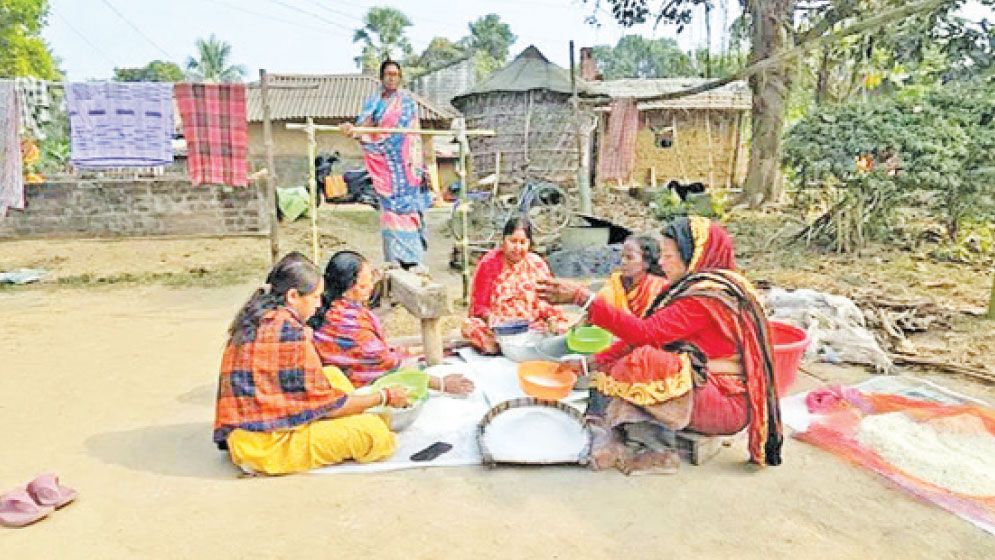
File Photo: Collected
The celebration of Poush Sankranti is a part of our Bengali tradition and culture. This quiet festival marks the end of the Bengali month of Poush when families of farmers celebrate the completion of the winter harvest. While many of its customs have been lost over time, the spirit of Poush Sankranti continues to echo across generations, carrying with it the essence of Bengali life. Traditionally, Poush was known as 'Lakshmir Mash', the month of prosperity. In rural Bengal, this period was treated with particular care and reverence. Prosperity was believed not only to arrive naturally but through conscious nurturing. Families avoided unnecessary expenses, major social events, or sudden changes to household routines in this month. These practices reflected a philosophy centred on restraint, gratitude and domestic harmony.
Winter in Bengal is gentle and intimate. Misty mornings, mellow sunlight, and calm evenings create a sense of pause in an otherwise restless year. This seasonal softness encourages reflection and community life, making winter festivals deeply home-centred rather than outwardly extravagant. Poush Sankranti naturally accompanies this atmosphere. It is not a festival of spectacle but one of comfort, shared meals, familiar rituals, and the warmth of togetherness. Its celebration mostly remains limited to courtyards and kitchens.
At the heart of Poush Sankranti lies the pitha festival. Made from newly harvested rice, date-palm jaggery (nolen gur), and fresh milk, pithas are inseparable from Bengal’s agricultural identity. Varieties such as vapa pitha, dudh puli, patishapta, and soru chakli, along with steamed and fried pithas, reflect regional diversity and generations of culinary inheritance. Once, pitha-making was a communal ritual. Clay stoves were set up in courtyards at dawn, and women gathered to shape pithas while exchanging stories and laughter. Neighbours joined in, children waited eagerly, and kitchens became spaces of shared memory. Food, in this context, was not merely nourishment, it was storytelling, bonding, and cultural transmission.
Beyond cuisine, Poush was marked by symbolic practices aimed at safeguarding prosperity. Braided straw tied to door latches, granary locks, storage chests, or household tools symbolised an effort to anchor abundance within the home. These gestures reflected an understanding that prosperity was not only earned but preserved through care and respect. Folk beliefs surrounding Poush emphasised the ideas of inviting prosperity, securing its presence, and offering gratitude for it. Though such rituals have largely disappeared, they once formed the moral framework of rural life, linking material well-being with social responsibility.
Poush Sankranti also extended beyond the home into neighbourhoods and communities. In parts of Old Dhaka, the day was synonymous with kite festivals. Winter skies filled with colourful kites of varying shapes and styles, turning rooftops into vibrant communal spaces. Friendly competition, skilful flying, and shared excitement defined the day. The festival also reinforced family bonds. Sending kites, spools, and trays of homemade pithas from a bride’s parental home to her in-laws was once a cherished custom, symbolising affection, continuity, and familial connection.
Today, much of this landscape has changed. Urban life leaves little room for slow rituals, and communal spaces have shrunk. Pithas are increasingly commercialised: packaged, modernised, and sold with contemporary flavours. Date-palm jaggery has found new expressions in cafés and fusion desserts. Prosperity is now measured digitally rather than symbolically. Yet, Poush Sankranti has not vanished. It has adapted. For older generations, it lives on through memory and nostalgia; for the young, it appears through festivals, curated experiences, and new interpretations. Between these realities exists a living tradition.
Poush Sankranti lives on because it speaks to something fundamental in Bengali identity: a deep connection to land, seasons and shared life. In an increasingly fast-paced world, such festivals offer grounding. They remind us of our cultural identify and the quiet dignity of tradition. More than a marker of harvest or time, Poush Sankranti is a cultural pause, a moment when Bengal remembers its roots, and carries that memory forward into changing times.
The writer is a student at South East University