


 For all latest news, follow the Daily Sun's Google News channel.


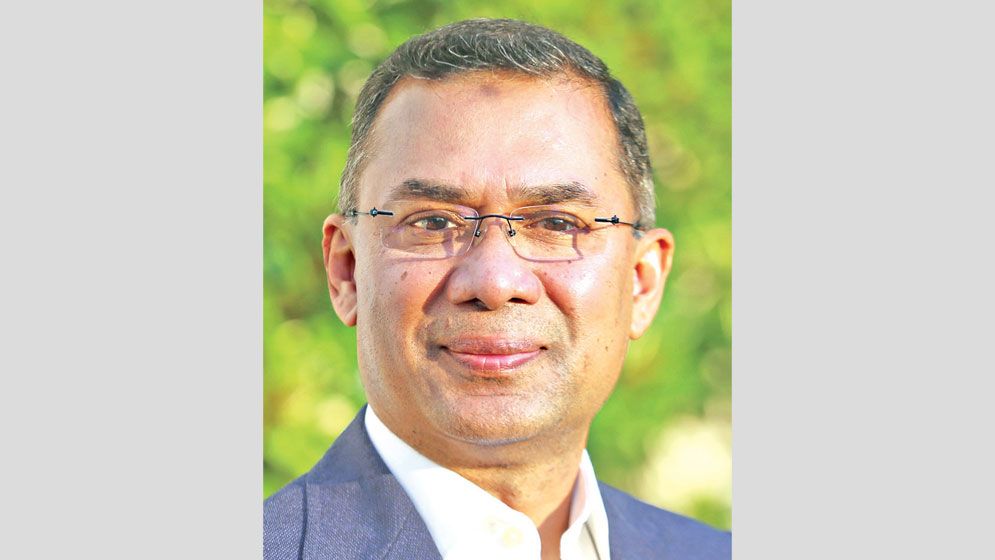
The uncompromising leader of democracy and one of Bangladesh’s most legendary politicians, Begum Khaleda Zia stood as a guardian of the nation. Throughout her life, she fought relentlessly for democracy, people’s rights, and the preservation of the country’s independence and sovereignty.
The death of the former three-time prime minister and chairperson of the Bangladesh Nationalist Party (BNP) is an irreparable loss. Over a political career spanning more than four decades, Khaleda Zia navigated setbacks, crises and conspiracies with resilience, emerging as a maternal figure who guarded the nation through its most turbulent moments.
She was a beacon of hope and aspiration for the people, dedicating her life to illuminating the country with boundless love, devotion and sacrifice. Heroes never truly die; only their physical presence departs. Khaleda Zia will therefore live on in the collective memory of the nation she served so selflessly.
Her passing has left the nation without its guardian. Yet she has left behind her eldest son, BNP’s acting chairman Tarique Rahman, to carry forward that responsibility. If Khaleda Zia was the light that guided the nation, Tarique Rahman now stands as the ray of that light, poised to illuminate the path ahead.
Since assuming the role of acting chairman, Tarique Rahman has consistently demonstrated the temperament and vision of a future statesman. His conduct and political acumen have marked him out as a leader in the making. Following his historic homecoming on 25 December, he earned admiration not only from people across the country but also from the international community.
His brief yet deeply moving speech before millions of mourners, delivered moments before the janaza of his mother, further cemented that impression. Rather than making allegations or centring himself, he spoke with humility, compassion and moral clarity—an act that resonated deeply with the nation.
“I am Tarique Rahman, the eldest son of the late Begum Khaleda Zia. If she took any loan from any of you during her lifetime, please contact me. I will make arrangements to repay it, Insha’Allah. And if anyone was hurt by any of her words or actions, on behalf of the departed, I seek your forgiveness,” he said.
After the brutal assassination of President Ziaur Rahman, Khaleda Zia entered politics in 1982 as a primary member of the BNP. Her entry gave renewed momentum to the party. Tarique Rahman, learning politics at his mother’s side, gradually rose through the ranks over four decades by serving the party in various capacities.
Preparing Tarique Rahman for national leadership stands among Khaleda Zia’s greatest achievements. She brought him close to the party and the workings of power so he could learn statecraft firsthand. Her patriotism, discipline and resolve are clearly reflected in him, and the political lessons he absorbed from her place him ahead of his contemporaries.
BNP’s political history over the past four decades shows Khaleda Zia’s leading role in the mass movement against military ruler HM Ershad. Tarique Rahman stood beside her during those struggles. In 1986, as Ershad’s downfall neared, he was placed under house arrest with his mother. He formally entered politics in 1988 as a member of Gabtoli Upazila BNP in Bogura.
Following Ershad’s fall, Tarique Rahman campaigned across the country with his mother during the 1991 general election. The BNP’s victory, powered by Khaleda Zia’s charismatic leadership, made her Bangladesh’s first woman prime minister.
Tarique Rahman displayed political foresight early on. In 1993, he introduced secret-ballot elections to select the Bogura district BNP leadership. Recognising his vision, the party elevated him to senior joint secretary general in 2002, senior vice-chairman in 2009, and acting chairman in 2018 after Khaleda Zia was imprisoned in what the party maintains were politically motivated cases.
From his mother, Tarique Rahman learned patience, tolerance and perseverance. Even during 17 years of exile, he continued to lead the party from London without surrendering to despair. Upon returning home, he outlined his commitment to national welfare and earlier proposed a 31-point state reform agenda aimed at political renewal and national reconstruction.
Just as Tarique Rahman bears responsibility towards the nation, so too does every political actor in the country. Supporting him in building a peaceful, democratic and prosperous Bangladesh would honour the vision of both Khaleda Zia and Ziaur Rahman.