


 For all latest news, follow the Daily Sun's Google News channel.


When a long political life comes to its end, a society enters a rare moral interval. Time loosens its grip on immediacy, and memory is invited to work more slowly, more carefully. The passing of Bangladesh’s first woman prime minister, Begum Khaleda Zia, places the nation within such an interval, one that demands not verdicts, but judgement of a different order. This is not the judgement of courts or parties, but the judgement of civic ethics: how power is remembered, how vulnerability is treated, and how dignity is preserved once authority has fallen silent. Human rights, at their deepest level, are not only legal claims. They are also practices of memory, restraint, and moral imagination.
Political theory has long warned against confusing power with permanence. Hannah Arendt distinguished power, which arises from collective consent, from violence, which compensates for its absence. Khaleda Zia’s political life unfolded within this tension. Bangladesh’s post-independence history has been marked by interruptions of civilian authority, where violence often stepped in to replace legitimacy. The restoration of parliamentary democracy during her leadership did not solve the structural weaknesses of the state, yet it reasserted a crucial principle: authority must return to the people, again and again, even when consensus is thin. From a human rights perspective, this mattered because rights are not protected by intentions but by procedures. Elections, parliaments, and constitutional limits are imperfect tools, yet they remain the most reliable architecture through which dignity can be claimed without fear.

Seen through a Rawlsian lens, Khaleda Zia’s role in re-establishing democratic procedure contributed to what John Rawls described as the “basic structure” of society, the institutions that distribute rights, duties, and advantages. Human rights depend on this structure remaining open and contestable. Even where governance fell short of ideal justice, the maintenance of civilian political pathways prevented a deeper collapse into arbitrariness. In fragile democracies, continuity itself becomes a moral achievement. The survival of the procedure keeps alive the possibility of reform, critique, and accountability. That possibility is a form of rights protection, subtle yet indispensable.
Read through feminist and postcolonial theory, and Khaleda Zia’s leadership acquires deeper significance. Following Iris Marion Young, her presence in the highest executive office did not dismantle patriarchy; yet, it disrupted the symbolic economy of power, loosening the association between authority and masculinity and reshaping the political imagination. Rights remain fragile when equality exists only as an abstraction; they gain substance when representation becomes visible and ordinary. At the same time, her career reflects the structural burdens Frantz Fanon identified in postcolonial governance, institutions marked by fragility and elite rivalry. Governing within such constraints, her significance lies less in perfection than in persistence, in sustaining civilian rule where shortcuts to authority have long beckoned. From a contextual human rights perspective, the ethical measure is whether leadership widens or narrows civic space, and her life, despite contestation, widened that space.
Remembered through this lens, Khaleda Zia’s life moves beyond a partisan record to become a case study in democratic endurance, showing that rights persist less through flawless leadership than through preserved civic space, symbolic inclusion, and moral restraint. Her final years sharpened this truth. As illness and confinement drew power away, vulnerability came into view, shifting attention from governance to humanity. From Kant onwards, dignity has been understood as intrinsic, untouched by age, illness, or political defeat, and her later years forced Bangladesh to confront this principle. Questions of mercy and proportionality replaced rivalry, echoing Martha Minow’s insight that societies reveal their moral architecture in how they treat those who no longer threaten them. Giorgio Agamben’s warning against reducing political opponents to “bare life” also resonates here. Public empathy during her final years suggested a refusal of that reduction, reinscribing limits on state power itself. What remains is
From these overlapping layers – democratic theory, feminist insight, postcolonial critique, and dignity-based ethics – emerges a guiding philosophy for remembrance: dignity without amnesia. This philosophy rejects two equally corrosive impulses. One is sanctification, which erases harm and converts memory into worship. The other is erasure, which strips individuals of humanity and turns memory into punishment. Dignity without amnesia holds complexity intact. It allows history to remain truthful while insisting that every human life retains moral worth. This balance is not sentimental; it is disciplined. It reflects what Paul Ricoeur described as “just memory”, a form of remembrance that neither forgets nor fixates but integrates.
Remembered through this lens, Khaleda Zia’s life moves beyond a partisan record to become a case study in democratic endurance. It shows that rights endure less through flawless leadership than through preserved civic space, symbolic inclusion, and moral restraint. She leaves an unfinished inheritance, urging future generations to strengthen institutions, extend equality beyond symbolism, and pursue justice without cruelty. How Bangladesh remembers its powerful dead shapes the moral horizon of its living; to remember Bangladesh’s first woman prime minister with dignity and without amnesia affirms that human rights are neither suspended by disagreement nor exhausted by history, but persist as an ethical demand guiding how power is exercised, vulnerability is honoured, and memory becomes civic care.
___________________________________________________________
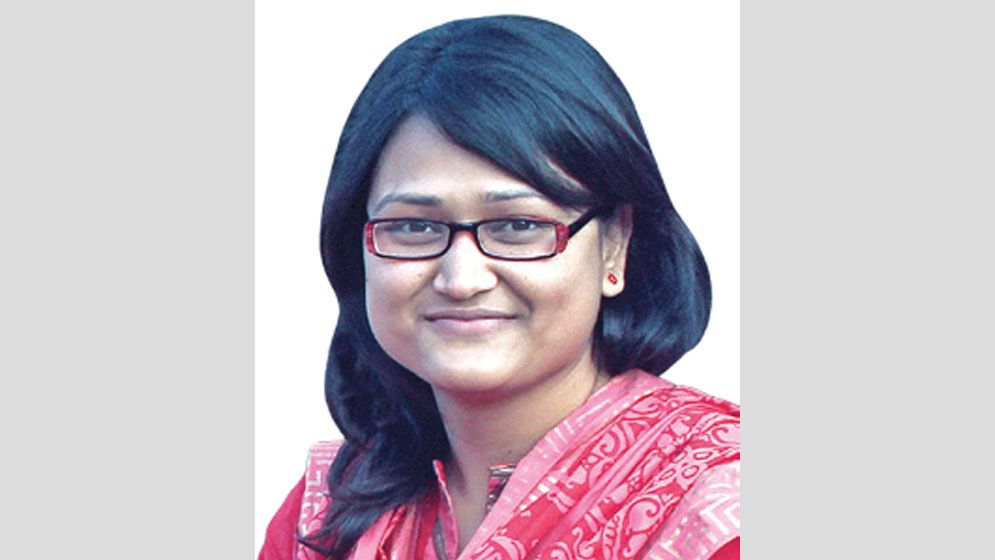
The writer is an Assistant Professor in the Department of Philosophy at IUBAT and is currently on study leave, residing in Oslo, Norway