


 For all latest news, follow the Daily Sun's Google News channel.


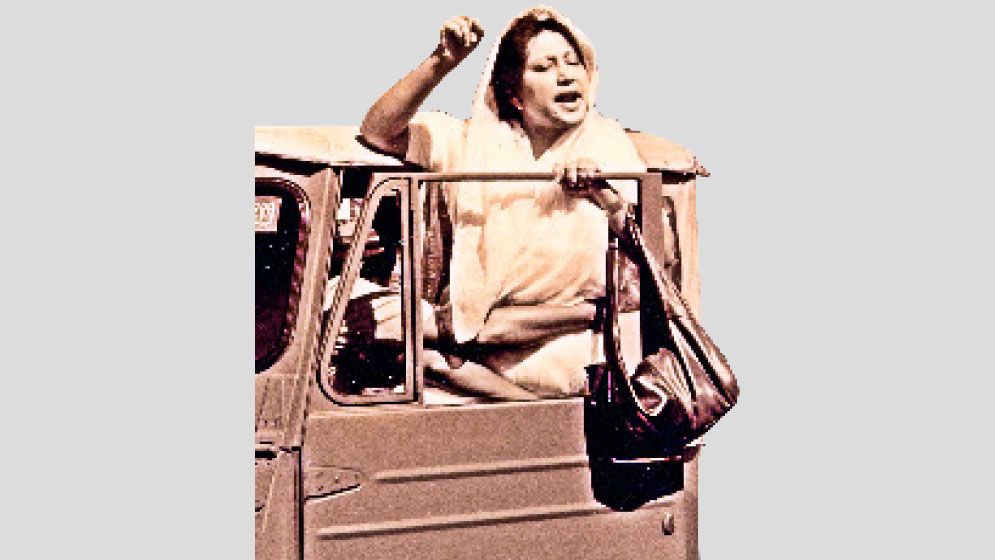
Bangladesh and its grateful citizens will always remember Begum Khaleda Zia – for her life, her struggle, her achievements, her sacrifices, and her unwavering patriotism. I had the privilege of witnessing much of her extraordinary journey firsthand, from 1991 to 2005, both as a journalist attached to the Prime Minister’s Office first from UNB and then from The Daily Star. In those years, I observed a leader whose courage, humility, and compassion were matched only by her unshakable commitment to her people and to the nation. Her farsightedness defined her leadership, allowing her to look beyond immediate political gains and focus on the long-term interests of the state and its people.
Even before ascending to the premiership, Khaleda Zia emerged as an uncompromising leader. In 1986, she boycotted a flawed general election under authoritarian rule, signalling her refusal to compromise on principle. She became the voice of a nation yearning for justice, earning the enduring title of “Desh Netri” – the nation’s leader – in the hearts of millions.
Her personal sacrifices were immense. During the military-backed caretaker government of 2007-2008, she endured imprisonment and threats, yet refused to leave the country. Her two sons were tortured and jailed, but she would not accept any plan to flee abroad. She remained in Bangladesh, steadfast in principle, a living testament to courage under unimaginable pressure. I remember discussing with colleagues at the PMO how her presence alone inspired confidence among the oppressed and hope among those who believed democracy could prevail.
I was privileged to witness Khaleda Zia’s extraordinary humanity up close. As the youngest journalist attached to the PMO during her first term (1991-1996), I travelled with her across Bangladesh and abroad, observing a leader who was soft-spoken, humble, and profoundly kind. During harsh winter nights, I accompanied her as she distributed blankets and warm clothes to the distressed in remote villages. She worked tirelessly, yet her meals were simple, her speech modest, her approach approachable.
She was equally firm in her opposition to the politicisation of state institutions and the culture of self-glorification. During her tenure, when the Jamuna Bridge project reached its critical stages – from fund mobilisation and agreements with the World Bank, ADB, IDB, and the Government of Japan to the main construction work – there was intense pressure from many quarters to name the bridge after Ziaur Rahman. She categorically refused. Instead, she named it simply the Jamuna Bridge, asserting that national assets belong to the people, not to any individual or family. This decision reflected her deep respect for state institutions and democratic norms.
She also held a firm belief in balanced and inclusive development across the country, irrespective of electoral considerations. To Khaleda Zia, public resources were never tools for rewarding loyalty or penalising dissent. Whether a region was seen as a political stronghold or not mattered little to her understanding of governance. Roads, schools, hospitals, and social safety programmes, she believed, were the rightful due of citizens everywhere. This principle informed her approach to development planning and reflected her conviction that the state must serve the entire nation, not selected constituencies.
I also recall moments of warmth during election campaigns and official travel. Once, at her Dhaka Cantonment residence on Shaheed Mainul Hossain Road, she herself offered food and snacks – a gesture that reflected her humility and affection. On several other occasions, during election campaigns and official tours across the country and abroad, I travelled with her entourage as a journalist and shared the same dining table. She ate very little and always preferred simple food, never indulging in extravagance, even while carrying the burdens of state leadership.
Khaleda Zia was never a vindictive leader. She never uttered a single negative remark about any national or political leader, even in case of rivalry or provocation. She loathed character assassination, flattering, or backbiting. She would not go out leaning toward the other side even in extremely provoked political situations; she would be no less moral than ever. This self-control was like a day and night difference between her and others in the bloody and personal attack-prone political culture.
In fact, her dedication to Bangladesh’s sovereignty and international standing was nothing less than extraordinary. Her opposition to the country’s interests was unwavering throughout international sites, from climate-related discourse to water security, and regional cooperation. She was a diplomat but acted like a missionary, showing that love of the country is one with the world.
Khaleda Zia’s political conscience was deeply shaped by the hardships she endured during the Liberation War of 1971. Though not a frontline political figure, she lived through the trauma of war at close quarters as the wife of the proclaimer of Independence, head of Z Force and Sector Commander, who fought for independence from battle field. Displacement, uncertainty, fear, and the constant risk to life marked those months. That experience gave her a lifelong veneration for Bangladesh’s independence and an instinctive wariness of totalitarian power – the very qualities that later characterised her adamant political resistance. It was that early confrontation with hardship that imbued her with the stamina to outlast a lifetime of political repression, imprisonment, and personal loss including the sad death of her youngest son in 2015.
Through every phase of struggle, governance, and hardship, she won the hearts of the people. Her simplicity, her humility, and her tireless service were evident in the streets of Dhaka and the remotest villages. She walked among the people, listened to their concerns, and took action. She was extraordinarily kind and affectionate to those around her, yet she carried the weight of the nation with unmatched dignity. She earned respect not through power alone, but through empathy, integrity, and an unwavering commitment to the public good. She was no longer the BNP Chairperson only; over the years she emerged as the national leader of Bangladesh, transcending party lines and political boundaries.
Khaleda Zia’s legacy is profound. She restored democracy, modernised the economy, advanced education, empowered women, and championed the country’s sovereignty on the global stage. She did not just change the country of Bangladesh in a literal sense of policy but also through the way she lived, thus proving that leadership is by service, compassion, and principles. As someone who has closely followed her for decades, I can confidently say that she was an uncommon leader – remarkable, generous, and deeply human. She was larger than life; her personality and popularity knew no boundary or limit.
Bangladesh has lost a towering figure, a true “Desh Netri”, and a guardian of democracy. Yet her life, her struggles, and her achievements remain etched in the nation’s memory. For those of us who witnessed her leadership firsthand, she was more than a prime minister; she was a symbol of courage, compassion, and unwavering patriotism. Bangladesh and its people will remember Begum Khaleda Zia for generations to come. She will be relevant in Bangladesh’s politics always and forever. Her legacy will continue to inspire the defence of democracy, the pursuit of justice, and service to the nation with humility and dedication.