


 For all latest news, follow the Daily Sun's Google News channel.


CORRUPTION IN HEALTHCARE SECTOR – PART II
Market flooded with counterfeit medicines
Special Correspondent, Dhaka
Published: 20 Dec 2025, 12:00 AM
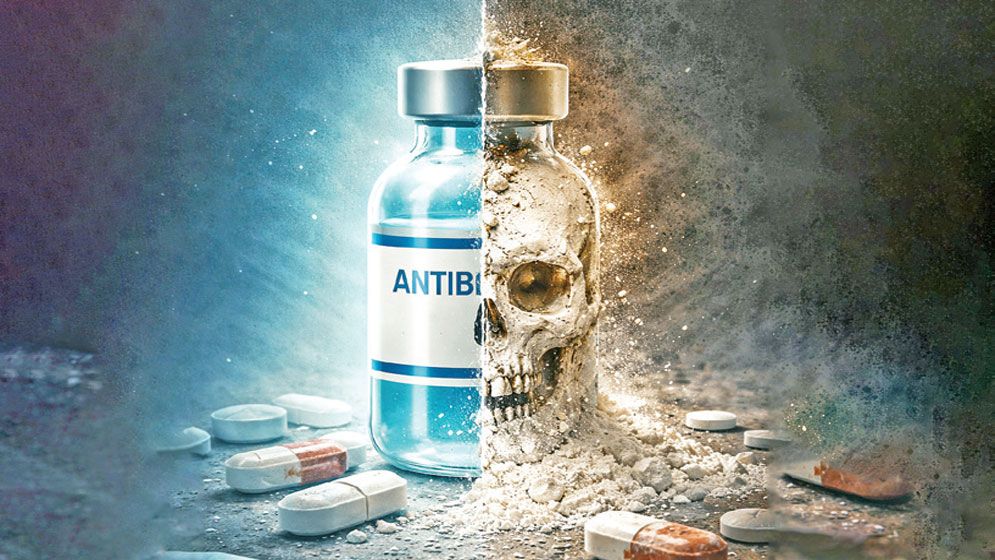
Just as medicine prices have soared beyond people’s reach, the trading of counterfeit medicines has also expanded rapidly. Differentiating genuine medicines from fake ones has become extremely difficult.
From cities to rural areas, counterfeit and substandard medicines are spreading everywhere, sparking growing concerns among patients and physicians alike.
In some cases, the prevalence of fake medicines has become so severe that many doctors have reduced their use of certain drugs, while some have stopped prescribing them altogether. One such drug is albumin injection, which is commonly used to increase plasma volume in patients following major surgery or serious trauma.
Physicians report that the market is now flooded with counterfeit albumin injections.
About a year ago, a patient died in Sylhet despite receiving albumin. Complications were also observed in several hospitals in Dhaka, leading to a decision to send the injections for laboratory testing. Doctors later confirmed that the medicines were counterfeit.
According to physicians, the fake albumin injections look so similar to the genuine product that the difference cannot be detected with the naked eye.
A study published in the international science journal ‘Nature’ found that nearly 10% of antibiotics sold in Dhaka are counterfeit, adulterated, or of substandard quality. Researchers say the situation is even worse outside Dhaka. In some cases, fake tablets made from flour and starch have been found on sale.
Consumers complain that the government has not shown the level of vigilance needed to stop this practice.
It is worth noting that in 2023, the Bangladesh government passed the Drugs and Cosmetics Act, which includes a provision for life imprisonment for producing or selling counterfeit medicines. However, there has been no instance so far of anyone being sentenced to life imprisonment under this law.
Health sector researchers and experts say counterfeit and fake medicines have spread from Dhaka to the country’s most remote areas.
Medicines with high demand and high prices are particularly prone to counterfeiting - especially gastric medicines and antibiotics, which are widely used across the country.
Researchers from Kanazawa University (Japan) and Eberhard Karls University of Tübingen (Germany) conducted the study in collaboration with the Pharmacy Departments of Dhaka University and the University of Asia Pacific.
The study was conducted in two phases. In the first phase, researchers collected 189 samples of three types of gastric and antibiotic medicines from different parts of Dhaka and tested their quality. The medicines were – Esomeprazole (used for gastric disorders), Cefixime and Amoxicillin-clavulanic acid.
Of the samples, 78.6% were collected from retail pharmacies and 20.9% from wholesale dealers. The results of the first phase showed that nearly 10% of the samples collected in Dhaka were counterfeit, adulterated, or substandard.
In the second phase, samples of the same three medicines were collected from districts outside Dhaka. Researchers found that the rate of counterfeit, adulterated, and substandard medicines there was nearly double - around 20%.
In some counterfeit medicines, flour was found as an ingredient. Researchers also found evidence that flour, starch, and even semolina were being used to manufacture fake medicines in Bangladesh.
In March 2024, detectives conducted raids in Dhaka and Barishal, and arrested five members of a group involved in producing counterfeit medicines using flour, starch, and semolina. Around 500,000 fake antibiotic tablets were seized during the operation. Police officials said the group had been producing and selling fake medicines for nearly ten years.
Due to a lack of surveillance, these medicines are reaching pharmacies in Dhaka’s narrow alleyways as well as remote villages. In many cases, patients - hoping to buy medicines at a slightly lower price - end up being deceived into purchasing counterfeit products.
Unofficial estimates suggest that Bangladesh currently has more than 250,000 medicine shops, a large number of which are operating without proper authorisation. Even among licenced pharmacies, many fail to comply with regulations due to inadequate monitoring.
In particular, most pharmacies in small towns and rural areas operate without adhering to proper rules. Many lack appropriate storage conditions, even though experts say medicines require specific environments.
Packaging clearly states storage requirements, including temperature ranges. Air conditioning and refrigeration are essential in pharmacies, yet many shops - both outside Dhaka and even within the city - lack these facilities. As a result, the quality of many medicines deteriorates over time.
Public health experts view the nationwide spread of counterfeit and substandard medicines as a serious threat to national health.
“People are not only being deceived after spending their hard-earned money, but their suffering is increasing - and many are even dying as a result,” said one public health expert seeking anonimity.
Doctors say counterfeit and fake medicines harm health in two ways - immediate and long-term. The immediate harm is patient suffering - medicines made with flour or starch simply do not work, so illnesses do not improve. Medicines containing harmful chemical substances can cause new health complications over time.
For critically ill patients, counterfeit medicines can even be fatal. Last year (2024), at least three children died in several hospitals in Dhaka after being administered anesthetic drugs. Tests later revealed that the anesthetic halothane used in those cases was adulterated.
Following the incident, the Ministry of Health ordered all public and private hospitals to suspend the use of halothane as an anesthetic.
Researchers warn that even when counterfeit or adulterated medicines do not cause immediate reactions, substandard medicines pose serious long-term public health risks.
A medicine trader from Dhaka’s major wholesale market in the Mitford area said that during normal times, law enforcement activity helps reduce the production and sale of counterfeit medicines. However, since the July uprising, police activity has not been as strong as before, and the drug administration has also been largely absent from field-level enforcement. Taking advantage of this, counterfeiters have resumed their operations.
Several other traders, speaking on condition of anonymity, said counterfeit drug production has recently been restarted in areas around Dhaka, including Keraniganj and Kamrangirchar, where clandestine factories are reportedly operating.
However, none of the traders in the Mitford area were willing to identify those involved in producing or selling counterfeit medicines. One anonymous trader said, “Previously, fake medicines were supplied directly to the market. Now they are sold online and delivered through courier services. That’s how they’re spreading across the country.”
According to the Directorate General of Drug Administration (DGDA), 302 allopathic drug manufacturers are registered in Bangladesh, of which 229 are regularly producing medicines. Production at 63 companies has been temporarily suspended due to various irregularities, while two companies have been shut down completely.
Only 20-25 companies’ products are commonly found in the market, and medicines produced by over 50 companies have long been exported to more than 100 countries. Beyond these, even sellers often do not know which companies are supplying medicines. Medicines from such unknown companies - often counterfeit or substandard - are cheaper.
The market for counterfeit and substandard medicines is most widespread at the upazila and village levels.
Specialist doctors have expressed serious concerns over the issue. They say that many companies already use low-quality raw materials, which are further adulterated or counterfeited. Such medicines pose an extreme threat to public health, and the government must take strict action to stop this practice.
Read More