
 For all latest news, follow the Daily Sun's Google News channel.


BB allows partial write-off to ease NPL burden
Daily Sun Report, Dhaka
Published: 05 Dec 2025, 12:00 AM
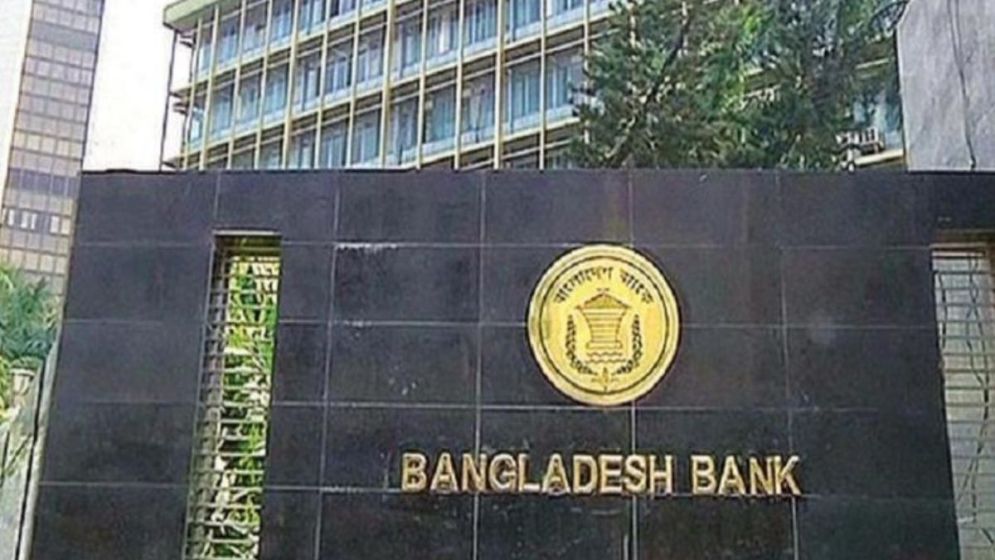
File Photo
For the first time, Bangladesh Bank has allowed commercial banks to partially write off long-standing non-performing loans (NPLs), aiming to reduce the swelling burden of defaulted assets and bring greater transparency to bank balance sheets.
The central bank issued a circular on Thursday, following an approval a day earlier, stating that banks may now write off only the uncollectible and unsecured portion of classified bad and loss loans. The eligible portion excludes any value covered by enforceable collateral under existing Banking Regulations and Policy Department (BRPD) rules.
According to Bangladesh Bank, a large portion of non-recoverable loans continues to remain on balance sheets due to the absence of partial write-off provisions, leading to an inflated picture of asset values and distorting the true financial condition of banks. The new system will allow banks to remove only the non-recoverable component, reflect actual credit risk, and focus more effectively on recovering the remainder.
Under the new policy, banks must write off accrued interest first, while uncharged interest must be recorded separately. Any payment made by the borrower without using collateral will be adjusted first against the written-off portion. If the payment exceeds that amount, the surplus will be used to reduce the outstanding loan shown on the balance sheet.
The guideline also requires banks to consider three elements together while determining total dues of a borrower: the outstanding loan value on the balance sheet, uncharged interest, and the written-off yet unpaid portion. Partial write-off will not bar banks from offering rescheduling or exit facilities to borrowers to facilitate recovery of the remaining dues. Banks may also revalue collateral using professional valuation firms if necessary.
The previous rule that prohibited partial loan write-off has been formally cancelled. Bangladesh Bank notes that the practice is widely used in countries such as India, Pakistan, Sri Lanka and developed economies under Basel standards and International Financial Reporting Standards (IFRS), making partial write-off an internationally accepted measure of risk identification and asset quality assessment.
The central bank expects the new regime to reduce unnecessary balance sheet inflation, strengthen management of bad loans, ensure more accurate reporting of assets and liabilities, and improve capital adequacy transparency.
According to BB data, the country’s banking sector is facing its gravest crisis in decades, with defaulted loans surging to Tk6.44 lakh crore by the end of September 2025, driven by years of weak governance, loan irregularities, politically influenced lending and the recent tightening of classification rules by the central bank.
As of September 2025, total disbursed loans across the banking sector amounted to Tk18.03 lakh crore. Of this, bad loans accounted for 35.73% of total outstanding credit, a sharp increase from 20.20% in December, highlighting deepening structural weaknesses in asset quality and governance.