


 For all latest news, follow the Daily Sun's Google News channel.


Khaleda Zia and the Weight of a Nation’s Love
H M Nazmul Alam
Published: 30 Nov 2025, 12:00 AM
There are moments in a country’s political life when the health of a single leader begins to feel strangely intertwined with the emotional pulse of the nation itself. Bangladesh is standing in one such moment today. The frail body of Begum Khaleda Zia lies in a hospital bed, surrounded by the quiet machinery of modern medicine, yet her presence still hovers like an old lighthouse over a coastline battered for too long. Whether one admires her politics or rejects them, it is difficult to ignore that she shaped an era, and the echoes of that era refuse to leave the national imagination.
For many years, Khaleda Zia was framed either as an adversary or as a force of stability, depending on where one stood. With time, a gentler truth emerges. She was a woman navigating a political world designed to exclude people like her. She entered that world not by slow apprenticeship but by the shock of personal tragedy, which often produces either silence or transformation. She chose the second. The transformation did not arrive as theatrics. It emerged gradually, through years of resistance, and eventually became part of Bangladesh’s collective political memory.
The rise of a young widow to national leadership in the early 1980s was never a straightforward story. It unfolded within a political culture where authority was still deeply coded as a masculine possession. Her ascent unsettled that old tradition. She stepped into the arena at a time when the sight of a woman directing political mobilisation was an anomaly. What she attempted, and ultimately achieved, turned into a reference point for the women who would enter politics after her. Her journey did not guarantee equality, but it opened a door in a wall that once appeared solid.
Her battle during the years of military rule is often retold in fragments. The city sieges, the boycotts, the marches that turned into long days of confrontation, the house arrests that attempted to curtail her movement. Each part of that journey carried a symbolic weight far beyond the immediate political crisis. It represented a woman refusing to accept that political space belonged only to men who had long dominated it. Her persistence shifted the political imagination of a generation that had never seen a woman stand at the centre of national upheaval. Feminist scholars have since treated that period as an example of gendered resistance that defied the authoritarian structure of the time.
Her later years in government produced their own complications. No administration in this country escapes controversy, and hers was no different. There were policies that succeeded and decisions that failed. Yet, within the broader history of state-building, she contributed to some of the most progressive shifts in social development, particularly in education. The expansion of opportunities for girls during the 1990s was not an isolated policy choice. It was part of a vision that recognised the country’s gender imbalance in schooling as a barrier to national progress. The investment in girls’ education became a kind of social experiment that reshaped the demographics of achievement in Bangladesh over a decade. Many women who hold degrees today owe that opportunity in part to those earlier interventions.
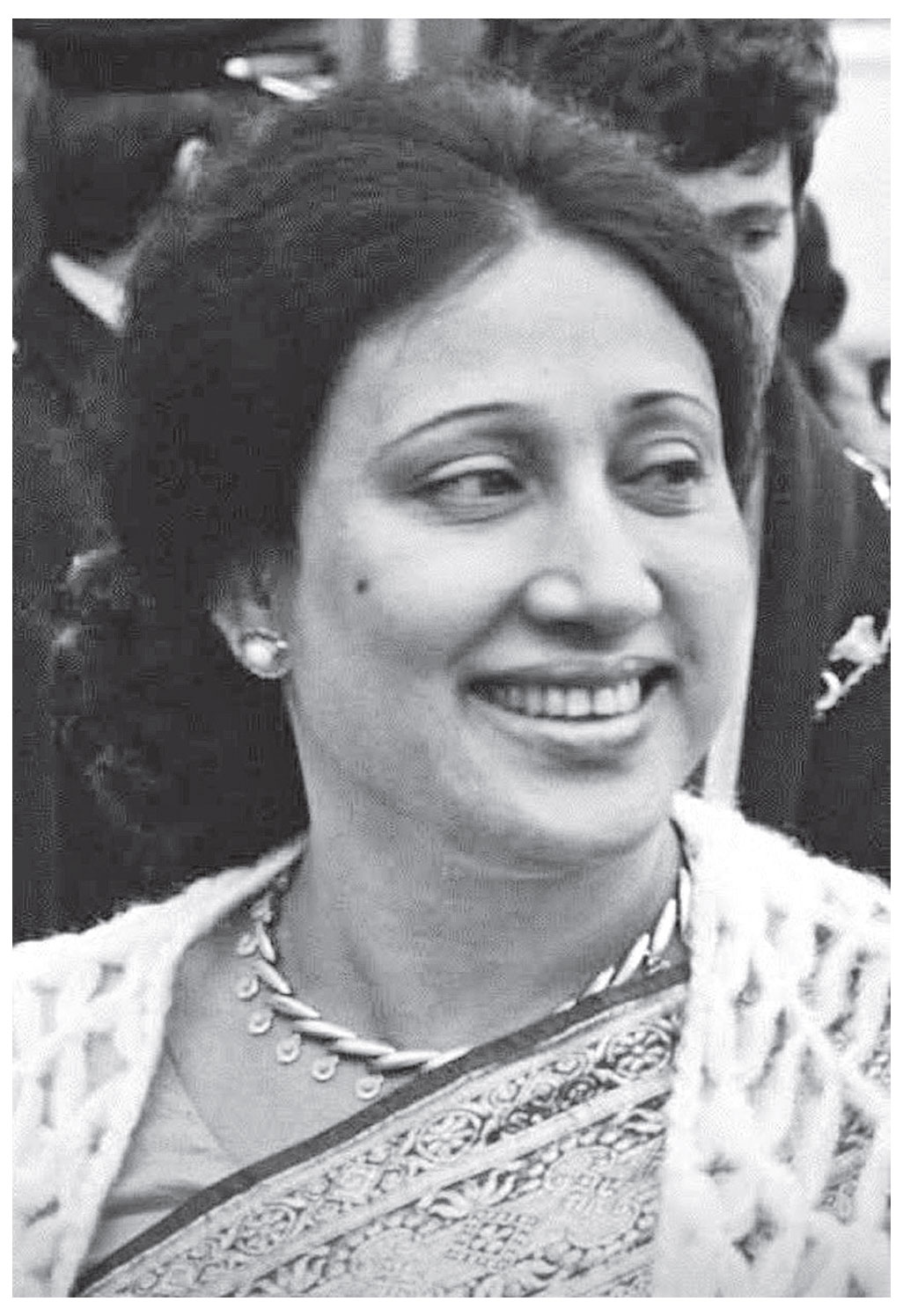
Beyond development, her presence had an intangible effect on public life. She represented an idea that leadership could be carried by someone who did not fit the country’s familiar mould of political authority. That idea matters even more now, when misogyny travels effortlessly through digital spaces and women in politics face hostility that is both loud and unrelenting. Her survival through decades of political turmoil still stands as a reminder that a woman’s leadership is not an act of symbolic participation but a force capable of shaping history.
Despite all this, the last decade of her political life was marked by a slow erosion that affected both her public engagement and her physical health. Years of illness, legal entanglements and political marginalisation pushed her gradually towards the periphery. The country watched as the once central figure of national politics became the subject of court verdicts, hospital admissions and relentless speculation. It is impossible to separate her medical struggles from the political battles surrounding her. The line between justice and judgment became blurred, and many felt that basic fairness was increasingly absent from her circumstances. The quiet resilience she maintained through this long period of deterioration became, in itself, a kind of political statement.
The 5 August shift in national power did not occur spontaneously. It accumulated over years of unrest, frustration and unaddressed grievances. The events that shaped that period included episodes of state violence, political disappearances, public anger over student movements and a deepening mistrust that cut across society. Within this broader landscape, Khaleda Zia’s silent endurance became a symbol of the consequences that long-term political hostility can inflict. Her presence in prison, and the public’s perception of injustice surrounding her trial, contributed to the evolving political mood that would later erupt into a nationwide turning point.
Her current condition has revived conversations about the place she holds in the country’s collective history. Some view her as a political figure whose era belongs to the past. Others see her as a symbol of the democratic traditions Bangladesh once fought to build. There is also a quieter group, often not politically aligned, who regard her simply as an elder stateswoman whose suffering has become intertwined with the nation’s conscience. Her illness reminds people that the human body is fragile, even when the political persona attached to it appears indestructible.
Her legacy is not contained in any single narrative. It stretches from the streets where she mobilised supporters during the years of military rule, to the corridors of government where she made policy choices that shaped millions of lives, and to the legal battles that consumed her in later years. It is a legacy threaded with flaws, courage, missteps, resilience and personal tragedy. It is also a legacy that reflects the contradictions of Bangladesh itself. A country that demands strong leadership, yet often subjects its leaders to unforgiving cycles of praise and punishment. A country that seeks democracy but struggles to sustain its democratic institutions. A country that expects vision from those who guide it, yet rarely forgives the human limitations that accompany political power.
The hospital room where she now rests has become a metaphorical space where the past and present of Bangladesh meet. Her frailty has reminded the nation of its own political fragility. Her silence mirrors the uneasy quiet that often settles after long periods of turmoil. Her survival has become a question many discuss not only as a matter of personal health, but as a symbol of national continuity.
When the history of modern Bangladesh is written with the clarity that distance provides, Khaleda Zia will appear not only as a former prime minister or the leader of a major political party. She will appear as a woman who challenged the logic of power in a society that rarely expected power to be held by someone like her. She will appear as a figure who shaped the expectations of what women could achieve in public life. She will appear as a reminder that leadership often demands a kind of endurance that stretches far beyond the political calendar.
_____________________________________
The writer is an academic, journalist and political analyst.
He can be reached at [email protected]