


 For all latest news, follow the Daily Sun's Google News channel.


India’s quiet withdrawal from Tajikistan’s Ayni airbase marks strategic setback in central Asia
New Delhi loses its only overseas military foothold amid shifting regional power dynamics
Daily Sun Report, Dhaka
Published: 09 Nov 2025, 12:47 PM
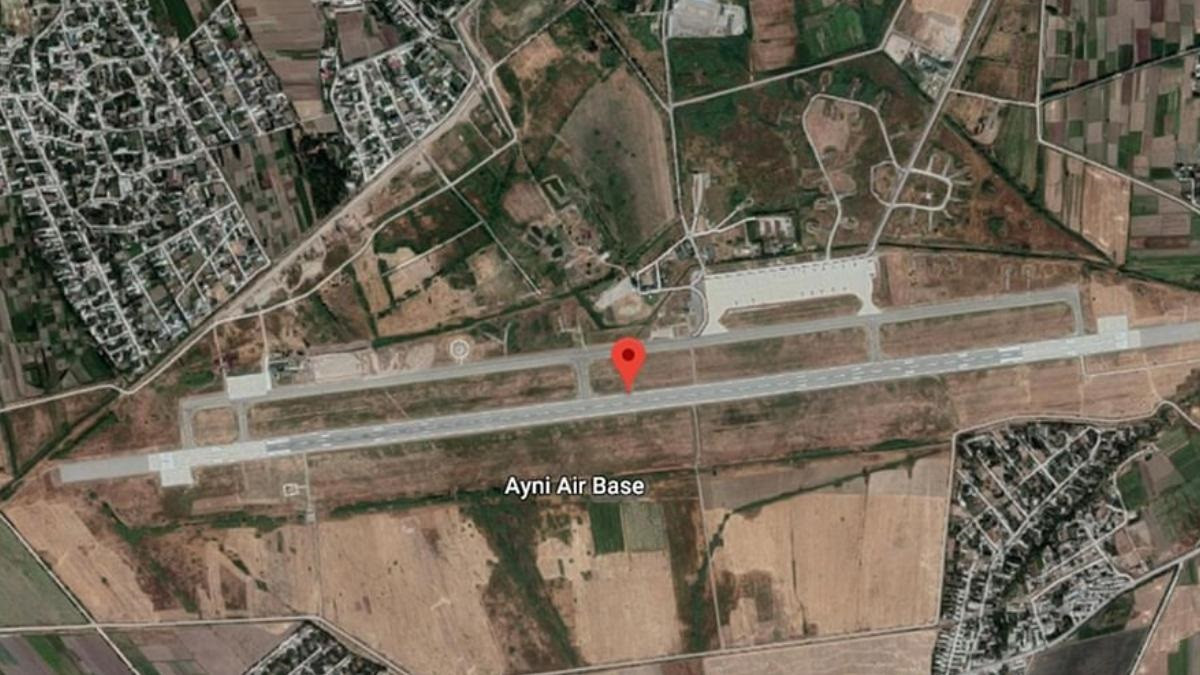
A Google Earth image of Ayni air force base
India’s withdrawal from the Ayni airbase in Tajikistan—its first and only overseas military facility—has brought a quiet end to a two-decade experiment in projecting power beyond South Asia. The move, completed in October 2025, reflects the narrowing scope of India’s strategic presence in Central Asia and the growing influence of Russia and China in the region.
Established in the early 2000s, the Ayni base—also known as the Gissar Military Aerodrome—symbolised India’s ambitions to play a more assertive role in Eurasia following the 9/11 attacks and the Kargil War. Reconstructed by the Indian Air Force and Border Roads Organisation at a cost of about $70 million, the facility featured a 3,200-metre runway, hangars and fuel depots capable of supporting major air operations. Its location, just 20 kilometres from Afghanistan’s northern frontier, made it strategically significant for India’s intelligence and logistical reach.
Unlike India’s cooperative security arrangements in Mauritius or the Maldives, Ayni represented a rare case of a distinct military foothold beyond Indian borders. It provided New Delhi with an observation post close to Afghanistan, a hedge against Pakistan’s influence, and a platform for Central Asian engagement.
However, India’s lease on the base was not renewed by Tajikistan in 2021, reportedly following pressure from Moscow and Beijing—both of which viewed New Delhi’s continued presence as an assertion of a “non-regional” actor in their shared sphere of influence. The final withdrawal was completed this year.
For Russia, the decision marks a recalibration of its strategic posture in Central Asia. Once seen as a potential partner for India’s presence, Moscow has since drawn closer to Beijing following the Ukraine war, leaving little room for independent regional balancing. China, meanwhile, has expanded its footprint in Tajikistan through Belt and Road investments and border security cooperation, making any rival military presence unwelcome.
Analysts note that the closure exposes both the limits of India’s power projection and the fragility of Central Asian “multi-vector” diplomacy—the strategy by which smaller states seek to balance ties with multiple major powers. Tajikistan, heavily dependent on Russian security guarantees and Chinese financing, has limited autonomy when Moscow and Beijing converge on a policy stance.
The Ayni episode also illustrates the shifting nature of modern basing strategies. Rather than traditional permanent installations, countries are now exploring hybrid or rotational access points that offer operational flexibility without the political cost of fixed garrisons. India’s presence at Ayni was modest, but symbolically important—it provided visibility and strategic depth in a region critical to India’s long-term interests.
Its absence now creates a vacuum that others, especially China, may be quick to fill. With Afghanistan once again at the centre of geopolitical competition, India’s lack of a northern outpost diminishes its intelligence reach and strategic leverage.
Despite initiatives like the “Connect Central Asia” policy, the Chabahar Port project, and the International North-South Transport Corridor (INSTC), India’s regional engagement remains uneven. The withdrawal from Ayni, observers say, should serve as a wake-up call for New Delhi to match its Eurasian ambitions with sustained investment, diplomatic agility, and strategic persistence.
As one analyst put it, “Ayni was never just an airbase—it was India’s statement that it could shape the geopolitics of Central Asia. Its closure is a reminder that ambition without endurance rarely leaves a lasting imprint.”
Source: The Print