


 For all latest news, follow the Daily Sun's Google News channel.


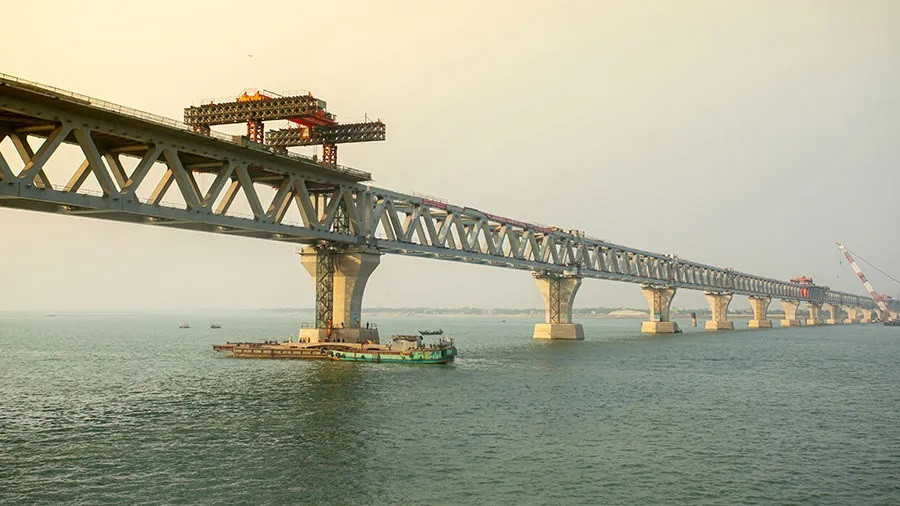
Photo: Collected
I have what many would call a strange hobby: I love watching people’s reactions to different topics on social media, as I enjoy seeing how various minds interpret the same issue. Often, I come across videos of foreigners reacting to “THE” Bangladesh, and it genuinely warms my heart to see them praising how far the country has come since 1971. I also read the comments, from proud Bangladeshis and from foreigners who have visited this country, describing how hospitable and kind we are. In most of these videos, visitors mention how Bangladeshis rush to help those in distress and even offer food to strangers. Such praise fills my heart with pride; after all, we are a compliment-loving and proud nation. Yet beneath that pride, I feel a quiet ache, a sadness that makes me wonder, “Are we truly hospitable to ourselves?”
We, for sure, have every reason to be contented about our progress. The gleaming Padma Bridge stands as a monument of resilience; motorways and flyovers now connect once-distant cities; digital start-ups promise to transform rural life. The world’s media hails our “growth miracle”. But the question is—if we are advancing so fast, why does life still feel so poor? Why does everything look better but feel worse? Why do our buildings rise while our values crumble?
Here lies the paradox of our success. In numbers, Bangladesh is a rising star; our GDP outpaces our neighbours, literacy rates climb, and our garment exports clothe a part of the world. But beneath these achievements lie moral fatigue, eroded empathy and unknown inequality. Perhaps the deeper tragedy is our spiritual decay. Online, everyone poses as a supporter of justice, yet the same voices then spread hatred and mockery. We are quick to condemn but slower to self-reflect.
Meanwhile, people’s discourse in society has turned shallow. People obsess over celebrity gossip – who married whom, who wore what – while ignoring important issues. Many of these “celebrities”, adored by millions, seem detached from any sense of dignity or spirituality. The youngsters idolise them and imitate their lifestyles and values without knowing that a true idol should inspire virtue, not vanity. In this culture of spectacle, integrity has been replaced by influence. And now, even empathy has been digitised. Someone being harassed or beaten is no longer first to be helped; they are first to be recorded. People have forgotten to run towards the victim; they have learnt to run for a better camera angle. Our moral instincts are now filtered through screens, curated for engagement rather than guided by conscience. In trying to prove our humanity online, we have forgotten how to practise it offline.
Talking about development, Nobel laureate economist Amartya Sen reminded us that this is not only about what people have but also what they have the freedom to become. By that measure, Bangladesh’s progress remains incomplete. The factories that power our exports often exploit workers with unsafe conditions and meagre wages. Urban expansion builds malls and towers while pushing the poor aside. Digital “empowerment” opens doors for some but exposes others to harassment and control. These contradictions show that growth without spiritual depth and human dignity is progress only in appearance. That is precisely the problem.
Material progress without moral grounding also distorts our sense of worth. Education, the supposed engine of transformation, mirrors this failure. Success is measured by grades and degrees, not by a person’s sense of self-respect, empathy, or ethical courage.
Nevertheless, the answer is not despair. Dignity is not an abstract dream; it is the foundation of real progress. A society that respects every life – factory workers, domestic labourers, farmers, children, minorities – is one that becomes more innovative, stable and just. When people can speak without fear, work without exploitation, and learn without humiliation, development gains depth. We are indeed a brave and hard-working nation. Our people hustle, innovate, persevere and rebuild after every disaster.
Remember that Bangladesh was born from a struggle not only for independence but also for dignity – the dignity of language, culture and self-determination. That heritage remains our greatest resource. We have built the walls of a new Bangladesh, and we should also talk about building the soul. Progress without dignity is like a river without depth: impressive at a glance but easily dried. If our next generation is to inherit more than highways and high-rises, we must redefine what it means to “develop”. We must ask not only how much we have grown, but also who we have become in the process.