


 For all latest news, follow the Daily Sun's Google News channel.


Beyond Rana Plaza: Why fire safety remains Bangladesh’s unfinished battle
Afroza Akter
Published: 17 Oct 2025, 05:13 AM
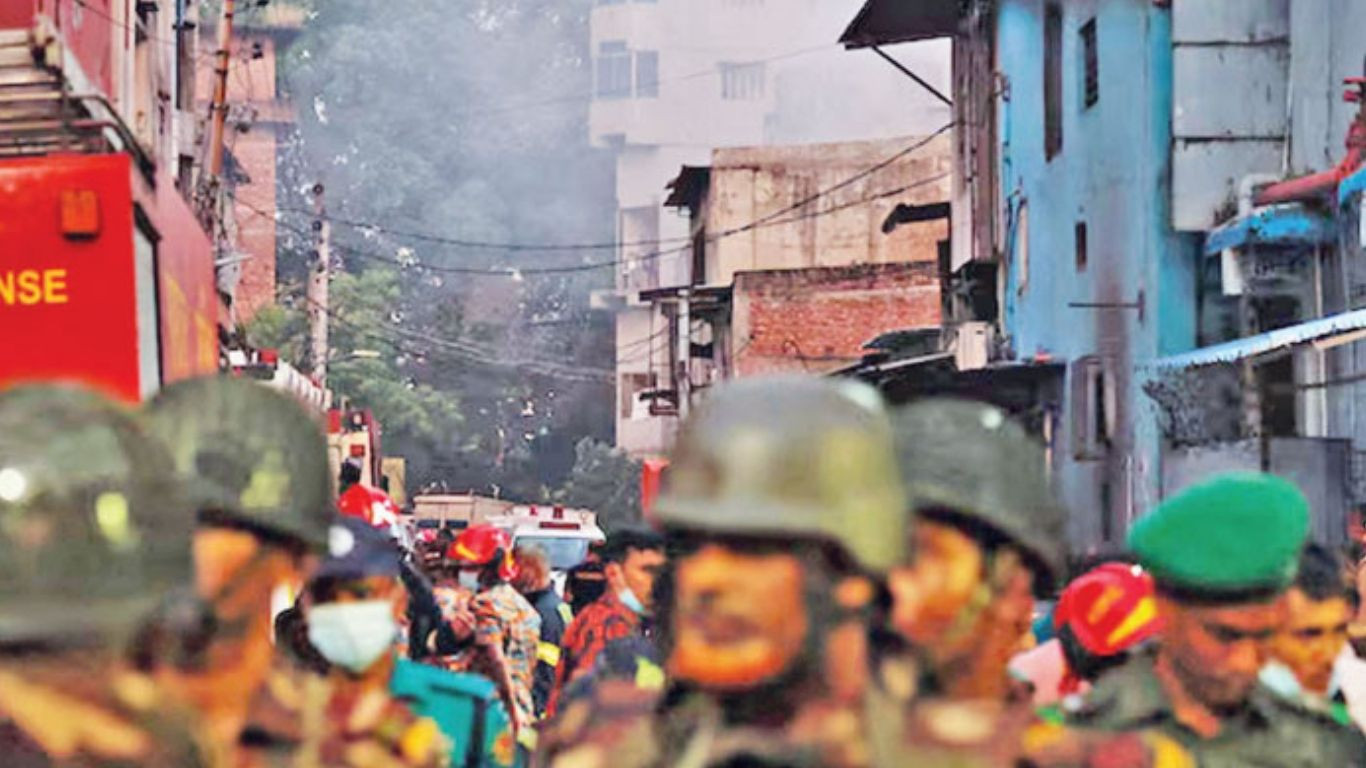
Photo: Collected
It has been more than ten years since the collapse of the Rana Plaza building in Savar exposed the horrifying cost of negligence in Bangladesh’s readymade garment (RMG) sector. That tragedy, which claimed over 1,100 lives and injured thousands more, was supposed to be a turning point — a national awakening that would forever change the way factory safety was handled. And yet, a decade later, every new industrial fire reminds us that our promises of reform remain, at best, half-kept.
The incident in Mirpur’s Rupnagar area reignited this uncomfortable truth. A fire broke out at a godown storing garments and chemicals around 11:40 AM, according to the Fire Service and Civil Defence. The blaze, which originated in the Cosmic Pharma godown that also housed a small garment factory, quickly spread. Though the flames were doused after hours of effort, the incident once again exposed how dangerously unprotected many industrial buildings remain.
The fact that the warehouse contained both garments and chemicals speak volumes about the lack of regulatory monitoring. Even a decade after Rana Plaza — and years after the Tazreen Fashions fire, Chawkbazar blaze, and Nimtoli tragedy — flammable materials continue to be stored carelessly in multi-purpose buildings without proper fire separation or ventilation. This not only endangers workers but also puts nearby residents and firefighters at risk.
Promises and Progress
To be fair, the past decade has seen notable improvements. The Accord on Fire and Building Safety and the Alliance for Bangladesh Worker Safety, both initiated after Rana Plaza, introduced a long-overdue culture of inspection, remediation, and accountability. Thousands of factories have been audited and upgraded under these frameworks, and some large export-oriented units now boast fire detection systems, emergency exits, and regular evacuation drills.
But these successes largely belong to the export-facing segment of the RMG industry — the factories tied to Western brands that were compelled to comply with safety standards due to international pressure. Outside this circle, a vast number of small and medium-sized factories, subcontracting units, and warehouses operate with minimal oversight.
Regulatory Fatigue and Institutional Gaps
Soon after Rana Plaza, a joint national resolve was made to reform industrial safety across the country. Government agencies worked in coordination with international partners, visits were regular, and the media always put security at the centre of public discourse.
But today, that enthusiasm has waned. Fire safety audits are irregular, law enforcement is incomplete, and many factories owners view maintaining safety standards as a short-term obstacle rather than a long-term responsibility. Both the Directorate of Inspection of Factories and Establishments (DIFE) and the Fire Service are under pressure due to overload and lack of manpower and administrative constraints, not to mention the corruption and administrative loopholes that allow many irregular factories to continue without fear.
Lives on the Line
The most troubling aspect of this whole situation is the consequences for the workers, who are often women. They are the main pillar of Bangladesh's most important export sector, but are also seen as the most vulnerable segment. Many still work in environments where exits are closed, doors locked and fire alarms are inadequate.
The Mirpur fire serves as a chilling reminder that despite a decade of reform, complacency can undo progress in a matter of minutes. Firefighters on the scene struggled not only with intense heat and smoke but also with narrow access roads and the absence of proper water sources. These logistical failures mirror the same infrastructural weaknesses that have plagued urban industrial zones for years.
The Way Forward
Fire safety cannot depend solely on the goodwill of factory owners or the periodic attention of policymakers. It requires a robust legal framework, consistent monitoring, and strong penalties for violations. The government must also invest in upgrading the Fire Service and Civil Defence with modern equipment, training, and staffing to handle industrial disasters more effectively.
The international community also has a role to play. Global brands sourcing from Bangladesh must ensure that their local partners uphold the same safety standards they claim to follow abroad. Short-term cost-cutting should never come at the expense of human lives. Civil society, labour unions and the media must continue to keep the issue alive in public discourse. The memory of Rana Plaza should not be reduced to annual commemorations or symbolic statements, but instead serve as a moral compass reminding us that safety is not a privilege, but a right.
12 years after Rana Plaza, Bangladesh stands at a crossroads. The world has applauded its resilience, its economic growth, and its vital role in global apparel supply chains. But true progress cannot coexist with recurring fires and preventable deaths. Until every worker — in every factory, large or small — can return home safely at the end of the day, the promise of “Never Again” remains heartbreakingly unfulfilled.
___________________________________________________
The writer is a Lecturer at Bangladesh University of Business and Technology (BUBT). She can be reached at [email protected]