


 For all latest news, follow the Daily Sun's Google News channel.


Nobel Peace Prize: The Myth of Rewarded Resistance
To reflect on the Nobel Peace Prize is to explore how the world expresses its collective conscience
Kaniz Kakon
Published: 12 Oct 2025, 04:19 AM
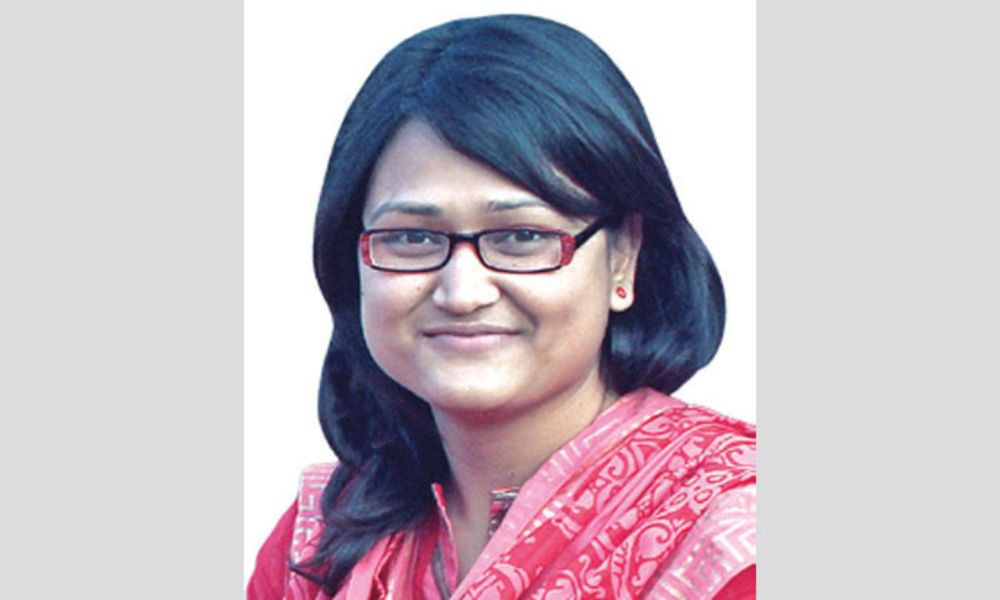
Kaniz Kakon
Every October, the world’s gaze turns to Oslo, where the Nobel Peace Prize transforms moral struggle into a ceremony. Velvet halls echo with applause, cameras capture tears of triumph, and for a moment, humanity appears united in its reverence for peace. Yet behind the spectacle lies a question few dare to ask: what kind of peace do we celebrate when we confer it as a prize? The 2025 Nobel Peace Prize, awarded to Venezuelan opposition leader María Corina Machado for her tireless work promoting democratic rights and striving for a peaceful transition from dictatorship to democracy, invites us to revisit the uneasy relationship between resistance, recognition, and reward.
Machado’s story is one of courage under siege. In a country suffocated by repression and despair, she has stood as an unyielding voice for democracy, enduring persecution and disqualification from public life. Her defiance has inspired millions who dream of freedom beyond fear. On the surface, her Nobel recognition seems both morally and politically fitting, an affirmation that the world still honours those who confront tyranny. Yet a deeper question persists: when resistance becomes rewarded, does its moral force remain pure, or does it risk absorption into the very structures it once defied?
The Nobel Peace Prize has long been more than a token of honour. It reflects how the world continually retells its moral aspirations, a mirror of hope as much as of history. The prize functions as both a mirror and a message: reflecting humanity’s yearning for goodness while reminding us that peace remains entangled with power and politics. From Henry Kissinger in 1973, honoured amid the Vietnam War, to Barack Obama in 2009, crowned for hope before history had tested his promises, the Peace Prize has often straddled the line between moral intention and political symbolism. Even when bestowed on figures of unquestioned integrity, such as Martin Luther King Jr or Narges Mohammadi, it reveals more about the global appetite for moral reassurance than about the peace achieved.
To reflect on the Nobel Peace Prize is to explore how the world expresses its collective conscience. The committee’s decisions are never merely humanitarian; they are interpretive acts within the theatre of geopolitics. In awarding Machado, the Nobel Committee reaffirms a familiar paradigm, one in which democracy and individual courage define the moral grammar of peace. Yet this conception, though noble, remains partial. It privileges a Western liberal idea of peace, rational, procedural, and state-centred, often detached from the plural, messy realities of conflict. What of the unrecognised peacebuilders in Gaza or Sudan whose struggles defy diplomatic frameworks? Their peace is no less profound, but it lacks the language of legitimacy that global institutions understand.
This reflection also resonates in Bangladesh. The country’s interim Chief Adviser, Dr. Muhammad Yunus, himself a 2006 Nobel Peace Prize laureate, embodies another layer of the paradox. His Nobel once celebrated microcredit as a means to humanise economics; today, as he leads a nation through a fragile democratic transition, the same moral aura meets the roughness of political reality. When a peace laureate governs, the distinction between moral authority and political accountability grows razor-thin. The symbolic capital that once transcended politics must now withstand its tests, justice, governance, and the restless hopes of a weary populace.
The juxtaposition of Machado and Yunus thus reveals the complex genealogy of “rewarded resistance.” One is honoured for opposing power; the other for once transforming economics and now wielding authority himself. Both embody the Nobel’s central tension: that peace, once institutionalised, risks losing its moral innocence. The Nobel often seeks moral clarity in a world of contradictions, yet its selections remind us how peace today is deeply intertwined with visibility, virtue, and the global language of recognition.
Still, both Machado’s recognition and Yunus’s role invite reflection rather than cynicism. Their paths, one of resistance, the other of governance, remind us that peace is never a static virtue but an unfinished negotiation between ideals and realities. The world must resist conflating recognition with redemption; a Nobel may illuminate a struggle, but it cannot complete it. Perhaps the prize was never meant to deliver peace, but to remind us of its absence, to name, year after year, an ideal humanity continues to betray. As French philosopher Jacques Derrida suggested of justice, true peace always exceeds representation; it lives in the restless space between what is and what ought to be.
The myth of rewarded resistance is not that resistance should not be honoured, but that its recognition ever completes the story. It never does. For Machado, the pursuit of a democratic Venezuela continues long after the applause fades; for Yunus, the harder test lies in translating moral prestige into political justice. The real measure of peace is not in awards but in what endures after them, whether the ideals once celebrated on stage can survive the noise of power. Peace, stripped of ceremony, is not a prize but a burden quietly carried by those who keep faith amid fear, resisting not for recognition but because silence itself would be surrender. And perhaps that is where the truest peace prize resides, in the invisible endurance of those who labour for justice without expecting applause.
_____________________________________
The writer is an Assistant Professor in the Department of Philosophy at IUBAT and currently on study leave, residing in Oslo, Norway